
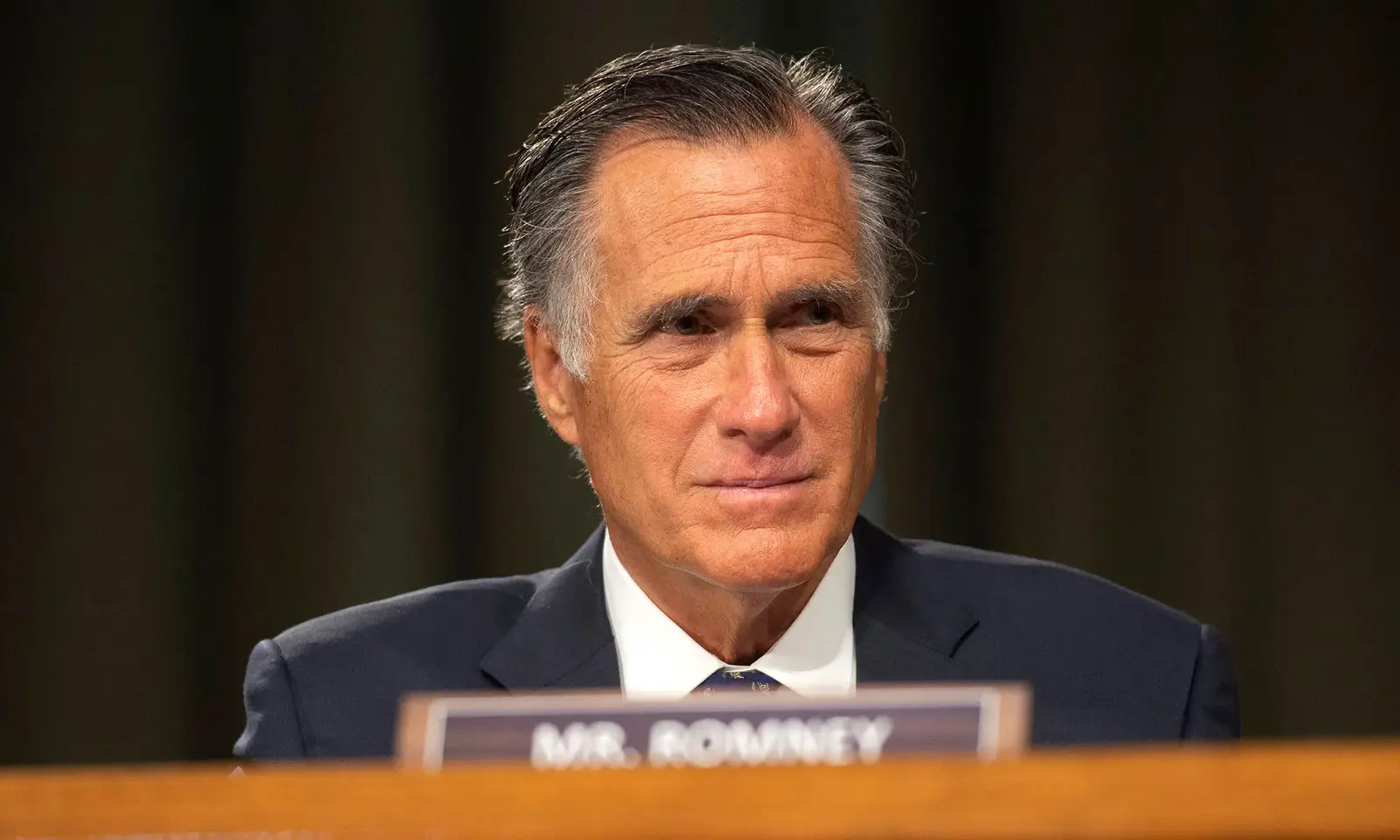
Mitt Romney has announced that he will not seek reelection to the Senate next year. There is much to say about Romney’s long career in politics, and I’ve had a front-row seat for it since I spent Election Night 1994 at the Romney for Senate “victory” party at the Copley Plaza in Boston. It is safe to say that I have been a frequent Romney critic, writing extensive denunciations of him during both the 2008 and 2012 primaries. I cast a protest vote for Newt Gingrich in the 2012 primary, but I also had a Romney–Ryan yard sign in 2012, at least until Hurricane Sandy required that it be taken indoors.
Along the way, after watching his father’s presidential campaign self-destruct over a gaffe, Romney left Michigan, made a fortune in business, changed in and out of the Republican Party, changed his positions on issues too numerous to mention, lost a Senate race to Ted Kennedy in Massachusetts by 17 points in the 1994 Republican wave, went to Utah and saved the 2002 Winter Olympics with brilliant management in a crisis, got elected governor of Massachusetts in 2002 in another Republican wave, signed the state-level model for Obamacare into law, fought a losing battle against judicially imposed same-sex marriage in Massachusetts, declined to run for reelection in 2006 (thus handing his state to a Democrat while fellow Republican incumbent governors in Connecticut, Rhode Island, and Vermont were bucking the blue wave to get reelected), ran for president in 2008 and lost the primary to John McCain, ran again in 2012, became the first Mormon to win a major-party nomination, lost the general election to Barack Obama (helping along the way to elevate his running mate Paul Ryan, later speaker of the House, and his endorser Donald Trump), then returned in 2018 to get elected to the Senate from Utah, where he has compiled a moderately conservative record but also been a vocal critic of Trump, whom he voted to convict in both of Trump’s impeachment trials.





Comments
On “Mitt Romney: The Right Man in the Wrong Time”