
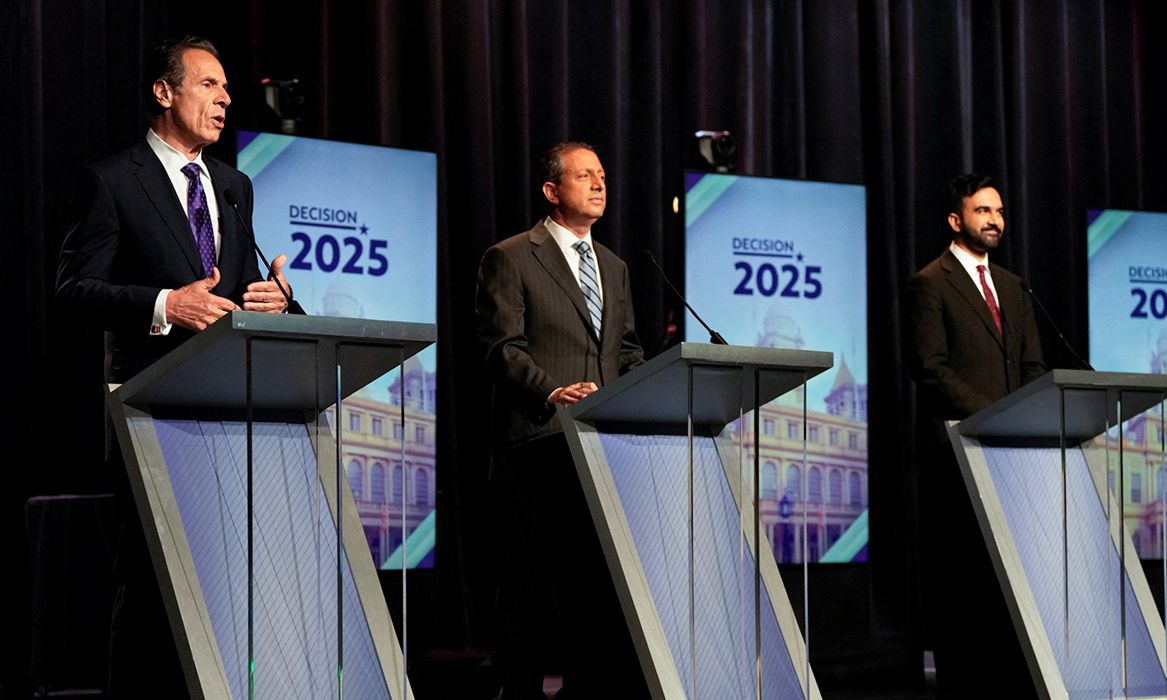
Betting markets give democratic socialist Zohran Mamdani a one-in-three chance of winning next Tuesday’s Democratic primary for mayor of New York City. If he does, it will be because primaries in New York are decided by ranked-choice voting, which doesn’t play to the strengths of scandal-tarred front-runner Andrew Cuomo.
In this system, voters are allowed to rank up to five candidates. If no candidate is the first choice of a majority of voters, the race goes to an “instant runoff.” The last-place candidates are eliminated until one candidate is left with more than 50 percent support. If a voter’s first choice is out of the running, his vote counts for his second choice, and so on. A lot of voters recall how Cuomo had to resign as governor in 2021 in the midst of scandals involving sexual harassment and Covid-related deaths at nursing homes. So some voters may rank him at the very bottom, or not at all.




Comments
On “New York’s Mayoral Race Is a Ranked-Choice Circus”