Dear Weekend Jolter,
There’s been something of a theme to our headlines about the impending Democratic takeover of Congress: “The Democrats Are Coming,” “Here Come the Socialists” . . . and here come the investigations, too.
The clamor to impeach is only the first yawp that gavel-gripping Democrats have let loose.
Setting aside the seeming inevitability of a third impeachment case against President Trump, newly empowered Democrats are openly advertising a broad suite of investigations they plan to launch once in the majority. This week’s House vote on Hegseth — which sidelined an eight-article filing brought by renegade Republican Thomas Massie — likely amounts to a brief reprieve. In two months, expect subpoenas to blanket the administration with the force of a Vesuvius awakening. In that respect, even if Trump behaves as impulsively as he always has and without heed to voter rebuke, the second half of his second term will proceed much differently than the first. Democrats promise to snarl his officials in a blizzard of oversight proceedings that will make early 2027 (and beyond) feel frigid indeed.
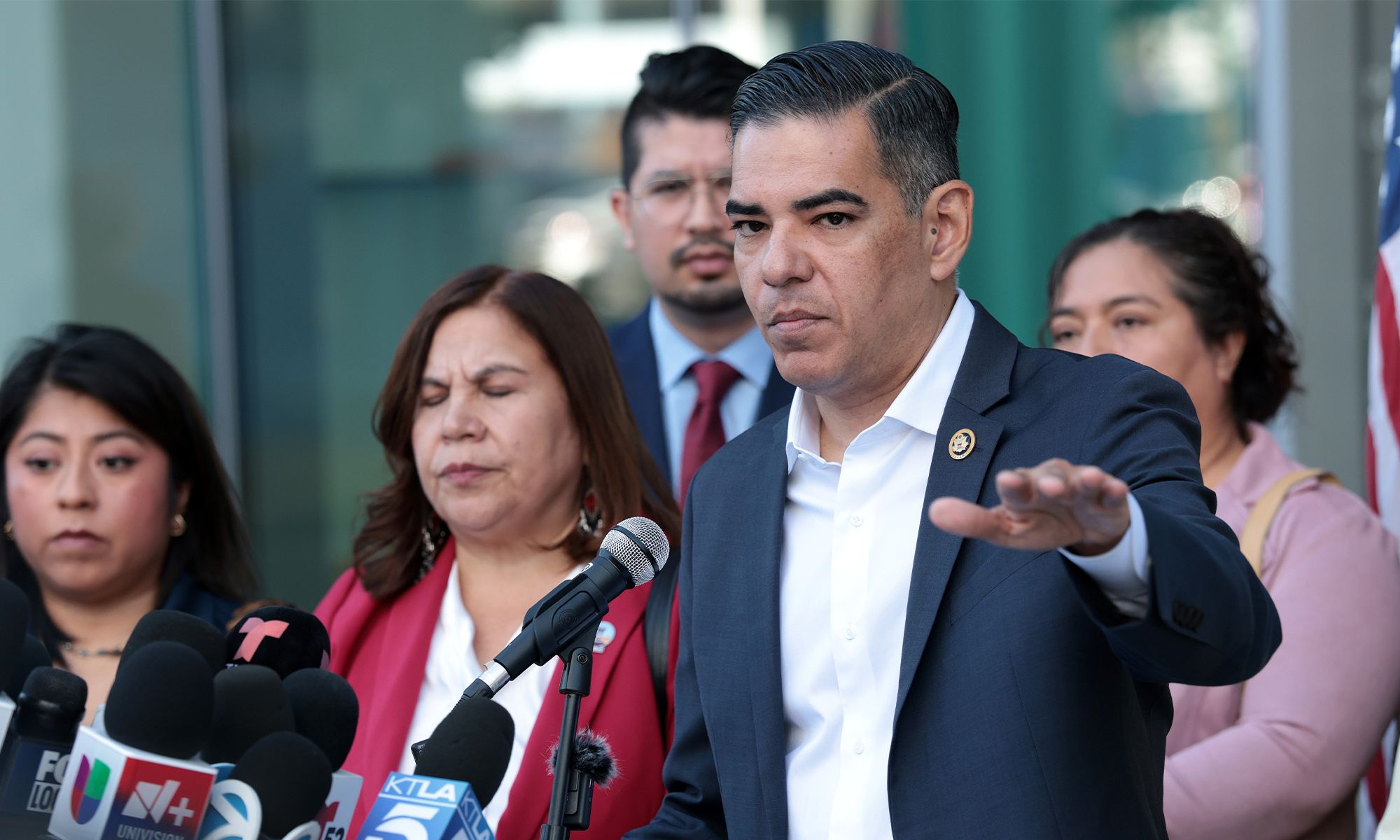
“LAWYER UP,” Representative Robert Garcia (D., Calif.), who aims to lead the oversight committee, posted on Election Night. In a letter to colleagues seeking support for the chairmanship, he vowed to “use every tool available to investigate the Trump Crime Family, corporate corruption, ICE immigration enforcement abuses, and the Epstein cover-up.” Stating a theme that Democrats will hammer for the foreseeable future, Garcia wrote that “accountability and affordability go hand in hand.”
Senator Ron Wyden (D., Ore.), indicating broader probes that reach into the private sector from his expected perch at the Senate Finance Committee, said in a statement that he plans to go after everyone “from the banks that helped cover up Epstein’s crimes, to insurance companies that are delaying and denying health care to churn a profit, to the pharmaceutical company CEOs that price gouge while enjoying Trump’s hand-delivered windfalls.” And so on.
The Trump administration is not completely powerless in the face of such efforts. Andy McCarthy writes that personnel moves such as “should be viewed with an eye toward the investigations,” as presidential claims of executive privilege are stronger for officials on the White House staff, the higher up the better.
As subpoenas prepare to take flight, Dan McLaughlin cautioned congressional Republicans against adopting the traditional playbook: of attacking hearings as witch hunts and whatabouting the allegations:
At times, defense will be warranted. Democrats will want to paint Trump policies in lurid colors that are often far removed from reality. They may make big, easily mocked mistakes of the sort that happen when a job suited for courtroom lawyers is done by speechifying politicians, some of them well into their dotage.
But Republicans should not just reflexively defend everything Trump. That is how they got into this mess. They should pick their battles. My advice on one choice they should make: Don’t lift a finger to defend corruption, greed, or influence-peddling. In fact, they’d be wise to get out front demanding answers, as Utah’s John Curtis has done.
There is plenty of it to investigate. That includes Trump and Trump’s family, from the multibillion-dollar Trump/Witkoff UAE cryptocurrency scam to Don Jr.’s Russian oligarch-paid wedding to all manner of messes made by Kristi Noem and Corey Lewandowski at the Department of Homeland Security, and on and on from there.
On the Don Jr. wedding specifically, Dan likened the spectacle to the family wedding that helped fell Boss Tweed.
But back to Secretary Hegseth. He survived his first scrape with a reinvigorated House this week, but Andy looks ahead to Democrats’ likely 85-seat majority and projects a redo in the new year, “even if Democrats will no longer have the bipartisan cover of Massie leading the charge.”
* * *
Before getting to the week’s highlights, a quick word (or more) about NationalReview.com’s new look. You probably noticed by now that you’re looking at a completely redesigned website. We meant to do that. We hope you like the new look as much as we do: For a quick guide to what’s different, and what will always stay the same, check out our CEO’s announcement here and Rich Lowry’s video tour here. Go ahead and explore: the complete NR archives, the store, our new videos, and much more.
NAME. RANK. LINK.
EDITORIALS
Once more, a plan that would hurt those it’s trying to help: Elizabeth Warren’s Plan to Abolish Credit Cards
On the two Huangs: The Nvidia Scandal Is a Warning Shot
On our relationship with Israel: The Aid-to-Israel Question Is a Red Herring
ARTICLES
Philip Klein: Why Policy Will Make a Comeback in 2028
Christian Schneider: Three Cheers for Gridlock
Tanner Nau: How Things Went from Bad to Worse for North Carolina Republicans
David L. Bahnsen: Midterm Mayhem for the Free and Virtuous Society
Daniel Samet & Danielle Pletka: The Last Internationalists
Matt Brooks: The Jewish Vote Moves Toward the GOP
Jianli Yang: We’re Using Ideological Labels All Wrong
Daniel Foster: The Rise of the Rosé States
Mark Antonio Wright: A Defiant Stephen Miller Will Double Down on Trumpism
Ramesh Ponnuru: How This Administration Talks About Itself
Rebeccah Heinrichs: The U.S. Must Reject Russian Narratives on Ukraine
Inez Feltscher Stepman: How the Electoral College Dies
Brad Raffensperger: The Republican Party Must Be Bigger Than Any One Person
Andrew Stuttaford: China Wins (Twice?)
Elliott Abrams: Where Does the U.S.-Israel Relationship Go from Here?
John Gustavsson: Why Russia Is Targeting European Freezers
Abigail Anthony: California City Approves Protections for Polyamorous Arrangements
Michael Brendan Dougherty: AI Will Dehumanize the Job Hunt
Chelsea Follett: It’s a Golden Age for the Golden Years
Will Swaim: The Man in the Empty Gray Suit
Brittany Bernstein: Russell Brand Exposes the Right’s Persecution Complex
CAPITAL MATTERS
Marc Joffe, with a California story: An Intellectual History of California’s Proposition 40
LIGHTS. CAMERA. REVIEW.
Brian Allen reviews an unusual photography show, finding beauty in twilight: Richard Avedon, Fashion Guru, Does Old Age
Armond White, on a bitter cinematic pill: Bitter Christmas: A Bah Humbug to Moviemaking
NRO HAS A NEW LOOK, BUT THE EXCERPTS REMAIN
David L. Bahnsen explains the broader, crucial lessons of last week’s midterm blowout, going beyond the tariffs-or-war debate:
What I want to suggest . . . is that these election results capture the very essence of the twin deficits in the Trump-era moment: a newfound contempt for both the free and the virtuous society. . . .
A disdain for the second half of our conservative mantra is even more evident in the last two years. Voters time and time again cited “corruption” as a dominant factor in their voting. Attempts to bribe voters with $5,000 we do not have to give them is an economic perversion, but it was first a moral perversion — and the right used to know that (“how dare President Biden run on student loan forgiveness,” we used to say). But the $5,000 atrocity pales in comparison to the grift and debauchery we have seen in the president’s family crypto adventures, the use of pardons with financial conflicts, and the nonstop obsession with vanity projects and other misguided priorities of public funds. These things do undermine the virtuous society, and they were relevant to voters — perhaps as relevant as any other issue.
But not all undermining of public virtue speaks to economic interests and crony self-dealing. Sometimes virtue is as simple as basic character and morality. No exit poll asked about the president’s tweet celebrating the gruesome murder of Rob Reiner and his wife at the hands of their own deranged son, but any movement that can’t condemn that is a movement that has lost moral authority in the quest for a virtuous society.
I have plenty of opinions about the diminishment of competence in this administration relative to the first term. I share the same disdain for this administration’s use of lawfare and other abusive power moves that so many others have. I do not believe those things should be ignored. Nor do I believe the inexplicable ability to take a 70-30 issue like the president’s admirable priority to control the border and turn it into a 30-70 issue through incompetent and misguided implementation, excess, and technique should be ignored. Personnel is policy, and that has been a massive net negative the two years (I would not say that about the first term). Lawfare rationalized as “you did it to me” does not become okay. And the immigration issue should have been one that held the American people’s support. Yet I am happy to relegate all of these matters to second-tier concerns in the midterm results.
Fundamentally, conservatives seek to promote a free and virtuous society. The policy portfolio of the administration and the personal character and behavior of the movement’s major evangelists have undermined both. On these two fronts, the throttling the GOP took was neither a surprise nor something to bemoan. What should be bemoaned is if those in denial about the state of affairs, and those with their own self-serving agendas, win the day. The Burkean right — classical conservatives who believe in a Reaganite vision for American society — must use the moment to stand up and never succumb to the temptation the last ten years have produced. The new right’s opposition to a free society and a virtuous one has been on full display for ten years. On Tuesday night, we got a chance to see how it plays electorally, as well.
Dan Foster coins a term:
After last Tuesday’s pasting, the phrase “rosé states” occurred to me . . .
A rosé state isn’t a purple state in the ordinary sense. Purple states are places where Republicans and Democrats enjoy something approaching parity, either as a persistent structural fact or a punctuated equilibrium, and where elections are routinely competitive.
By contrast, a rosé state is one whose underlying political disposition is recognizably Republican, but where that disposition is conditional on a relatively normie GOP keyed to the same sorts of kitchen-table issues and “commonsense” values typically associated with independents.
Again, these states aren’t centrist, if centrism describes the views or the vibe of the marginal members of each party’s coalitions — the Susan Collinses or Joe Manchins. Rosé-state Republicans start from a baseline of legacy conservative views. They believe in low taxes, gun rights, relatively light regulation, and the importance of public order. They are ordinary social conservatives, open to the modulation of social norms over time but starting from broadly traditional priors and skeptical of sweeping, novel visions for remaking the cultural order in the name of either “progress” or revision.
But they also form a powerful constituency for something that has become rare in Republican politics: competent governance, conducted by reasonably normal people, in the service of order and prosperity. As the great Yuval Levin is fond of saying, American political parties live or die on the strength of the visions they offer voters about how to make them safe and rich.
Inez Stepman sounds the alarm:
In the wake of the 2026 midterms, we are on the cusp of a total transformation of the U.S. election system. After decades of Republican dominance in state legislatures, Democrats now control enough state governments to push the National Popular Vote Interstate Compact past its 270-vote activation threshold and dismantle the Electoral College from below.
But it seems like the right has barely realized the importance of the fight that’s about to begin.
Arizona, Michigan, Nevada, Pennsylvania, and Wisconsin all gained Democratic trifectas in this election (in addition, both houses in New Hampshire flipped blue, although the state retains its Republican governor). Formerly red states like Georgia, North Carolina, and Texas have divided chambers.
For decades, activists in blue states have exploited a clever loophole scheme to eliminate the constitutional framework of the Electoral College. According to proponents, if state legislatures control their electors to that body, the state can choose to pledge them to the national popular vote winner, regardless of which candidate that state’s voters support in that election. Eighteen states and Washington, D.C., virtually all solidly blue — and crucially representing 222 Electoral College votes — have signed on. Virginia is the latest entrant to the compact after Democratic victories there last year. To mitigate fears of throwing Democratic state electoral votes to Republican candidates in the interim, the compact includes a clause triggering its existence only if enough states sign on to reach the 270-elector majority necessary for victory.
If all new Democratic trifecta states pass the compact, they would claim 71 electoral votes, without needing a single divided state — activists only need states representing a mere 48 electors to activate the compact. If not stopped in the courts, they could use this to destroy the Electoral College system and fundamentally transform elections in the United States.
ICYMI, Will Swaim penned a thorough examination of the man who did too little:
Xavier Becerra is California’s Zelig, a man who shows up in or near every important event but rarely plays a real part — or, worse, plays a disastrous one. And he rises, Becerra does. For more than 30 years, he has floated through Democratic politics leaving fewer footprints than Bigfoot. After just 18 months in the state legislature, he entered Congress in 1993 and stayed for twelve terms. He left only when Jerry Brown appointed him attorney general after Kamala Harris left that post for a seat in the U.S. Senate. He left the AG’s office when Joe Biden tapped him to run the Department of Health and Human Services during the Covid and migration crises. After all that, as recently as that debate fiasco in March, nearly half of California’s likely primary voters didn’t know enough about Becerra to have an opinion, according to a poll by the UC Berkeley Institute of Governmental Studies. . . .
Joe Biden airlifted Becerra out of Sacramento in March 2021, just when California’s attorney general most needed rescuing. After four years of making headlines by suing Trump, Becerra landed one of Washington’s biggest jobs: secretary of health and human services, with an enormous budget, some 80,000 employees, and responsibility for helping steer the nation through Covid. The appointment, announced three months earlier, came as a surprise to almost everyone, including, it seems, to the president himself. Biden’s preferred candidates had fallen away, and the incoming president was so unfamiliar with Becerra that he mangled his name — “Ba-CAR-ee-ah,” which sounds like a lettuce-borne stomach illness. Despite the fact that Becerra had no experience running a public health agency, the Senate confirmed him on March 18, by a vote of 50 to 49.
Within months, his new Democratic colleagues were wondering what to do with him. By January 2022, senior Biden administration officials were privately discussing replacing him. The Washington Post, relying on interviews with 28 administration officials, advisers, and experts, reported that Becerra had failed to coordinate the government’s pandemic response. One senior administration official complained that he was taking “too passive a role” in the administration’s defining crisis. Dr. Eric Topol, a prominent Covid researcher, said he was “like a ghost” and demanded that he “step up or step aside.” The White House worked around Becerra, transferring pandemic management to Jeff Zients, who dealt directly with Anthony Fauci and other officials nominally under Becerra’s supervision. The health secretary had become a spectator at — a specter in — his own department.
The administration’s immigration crisis proved even more humiliating. Biden’s border policies produced an influx of unaccompanied migrant children, overwhelming the shelters that Becerra’s department was supposed to supervise. White House Domestic Policy Adviser Susan Rice demanded faster action. Becerra resisted changes that he considered risky and reportedly demanded written presidential authorization. Rice grew increasingly frustrated. According to a February 2024 Axios investigation, she privately called Becerra an “idiot” and a “bitch-ass.” During one cabinet meeting in which Biden himself was berating Becerra, Rice reportedly slipped a note to Homeland Security Secretary Mayorkas, the man who had served as Becerra’s go-between in l’affaire Vignali: “Don’t save him.” (Rice’s spokesperson denied the account.)
But it would be unfair to suggest that Becerra accomplished nothing at HHS. He helped New York Times investigative reporter Hannah Dreier win the 2024 Pulitzer Prize. Beating Secretary Becerra like bongo drums, Dreier found that more than 250,000 unaccompanied migrant children had entered the country over two years, that Becerra’s HHS had been unable to reach more than 85,000 of them in follow-ups, and that children as young as twelve were found working in slaughterhouses, food-processing plants, auto-parts factories, and on roofing crews. Worse, Dreier documented repeated warnings about the problem that had reached Becerra’s department — and, in some cases, Becerra himself. When Representative David Kustoff confronted Becerra with the 85,000 figure at a congressional hearing, the secretary disputed the Times’ characterization. Becerra might have blamed his boss, the president, for flooding the nation with hundreds of thousands of illegal immigrants, including those children. Instead, he explained — in terms familiar to anyone who has ever visited the Department of Motor Vehicles — that HHS was not responsible for migrant children once it handed those kids over to sponsors.
Becerra’s liberal critics nearly lost their minds when reporting revealed that HHS entrusted children to sponsors it had inadequately vetted. The HHS inspector general found that safety checks were never carried out, sponsor records were often incomplete, and follow-up calls weren’t made on time. Agency employees had warned that pressure to clear shelters — pressure from someone higher up the HHS org chart — compromised children’s safety. When Senator John Cornyn of Texas asked Becerra for an explanation, the secretary — defender of the poor, the tired, the huddled masses — responded, “We do not have jurisdiction. We cannot spend money on things we do not have jurisdiction over.” Translation: Once Becerra’s department handed over a child, what happened next was somebody else’s problem.
CODA
The progressive-rocker par excellence Steven Wilson has a new album out, and I haven’t even bought it yet, which gives you an idea of my misplaced priorities lately. (Sketched out, right now those look like work > family > new Steven Wilson record, as opposed to the proper inverse of that.) So until I get around to buying it, here’s a classic from Porcupine Tree, a song that took me a few listens to love, but that I’ve never grown tired of since. The first four minutes are introductory. Spend time with it, ideally using speakers that pick up a song’s nuances, and hopefully you’ll have a similar experience.
Until next time.





Comments