
Last week, a reporter e-mailed me with some questions about the Nobel Peace Prize, and the possibility of a Korean award this year, or next. Did I think such an award in the cards? Would the committee (the Norwegian Nobel Committee) ever give a share of the award to President Trump?
The reporter also said this: “The peace prize has always been hated by conservatives and lauded by liberals, but with Trump now getting mentioned, does that upend traditional thinking?”
I will deal with the last question first. Conservatives have not always been hostile to the Nobel Peace Prize (although a lot depends on what you mean by “conservative”). Many conservatives lauded the awards to Andrei Sakharov, Lech Walesa, Mother Teresa, and Liu Xiaobo, to name just four of the better-known selections.
Anyway, let me quote Lou Cannon — as I do in the introduction to my history of the prize. Lou, as you know, is a veteran American political journalist. When I began work on my book, he e-mailed me, “Most writing about the Nobel prize tells us more about the writer than about the prize or the recipients. If the winner is someone we don’t like, we scorn the prize. If it’s a favorite, we praise it.”
So true. In golf, we have an expression: “Every shot pleases someone.” Every Nobel selection pleases some people and displeases others. It has been that way since the prize began in 1901.
There has already been a Korean award, as you may recall. It was given in 2000 to Kim Dae-jung, the president of South Korea. He got it chiefly for his “sunshine policy,” his policy of détente toward the North. He and Kim Jong-il held a summit in Pyongyang. Kim Jong-il said he would reciprocate with a visit to Seoul, but it never happened.
Presenting the Nobel to Kim Dae-jung, the committee chairman, Gunnar Berge, compared the sunshine policy to Ostpolitik — Willy Brandt’s policy of détente toward East Germany. (Brandt was the chancellor of West Germany, and he won the Nobel Peace Prize in 1971.) There was always the danger of “reverses,” said Berge, but the Nobel committee “adheres to the principle, ‘Nothing ventured, nothing gained.’”
Sadly, the sunshine policy went nowhere. It was later revealed that there had been South Korean payments to the North, just before the summit — dubious business deals worth $500 million to the North Koreans. Was Kim Dae-jung trying to bribe Pyongyang, for the summit? Was he increasing his chances of winning the Nobel Peace Prize?
In any event, Kim Dae-jung was a great man — a father of South Korean democracy, indeed of East Asian democracy — whatever his flaws.
In that year, 2000, Kim Jong-il did not share in the peace prize. That would have been strange, right? The monstrous dictator of a monstrous dictatorship, clutching a Nobel Peace Prize. Yet Chairman Berge did nod in his direction: “North Korea’s leaders deserve recognition for their part in the first steps toward reconciliation between the two countries.”
Okay, this year: If there is a peace deal on the peninsula, or an arms-control deal, will there be a Korean prize? Yes, certainly. No doubt about it.
For one thing, a Korean prize would be in keeping with the testator’s will — a will often honored in the breach, to be sure. Alfred Nobel gave three criteria for his peace prize. The first and foremost is “fraternity between nations.” The second, you can interpret as arms control — disarmament, more strictly. (The way Nobel put it is, “the abolition or reduction of standing armies.”)
Even the third criterion would sort of apply to the Koreas — “the holding and promotion of peace congresses.” You could stretch North–South meetings to mean peace congresses.
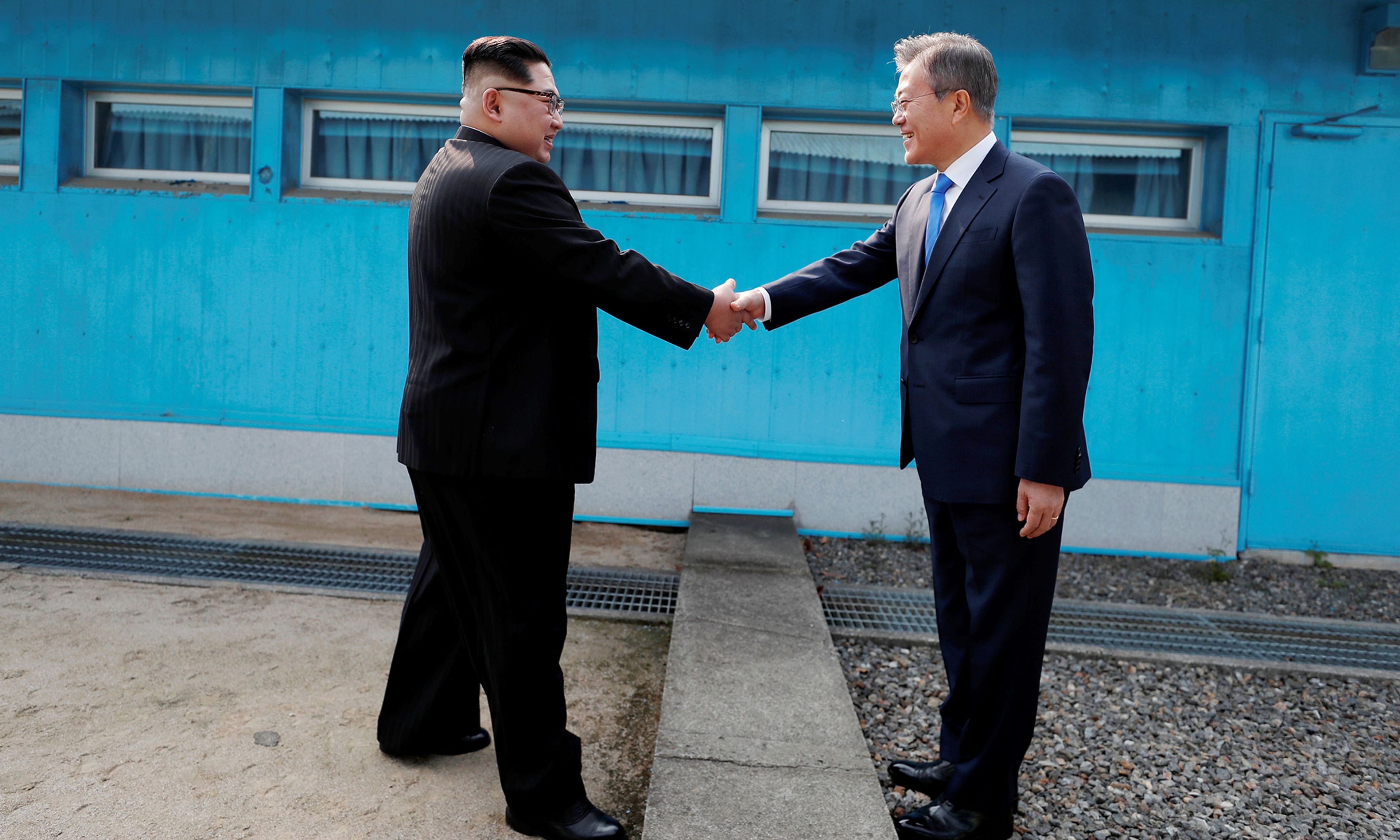
Now, who would get the Nobel? The South Korean president again? (This time it’s Moon Jae-in.) Solo? How about the North Korean dictator, Kim Jong-il’s son, and Kim Il-sung’s grandson, Kim Jong-un? (“That crazy fat kid,” as Senator McCain calls him.) Is that imaginable? Hmmm. It would be weird — very weird. The boss of a gulag state, a Nobel peace laureate. But I can sort of see it.
The committee has given the prize to bad men before — chiefly Le Duc Tho and Yasser Arafat. (They won in concert with Henry Kissinger, in the first instance, and with Yitzhak Rabin and Shimon Peres, in the second.) You don’t have to be a saint to make peace or win the prize, the committee has said over the years. You don’t have to be Mother Teresa.
All right, how about Trump? Would the committee include him, as part of a Korean Nobel? If he played a clear role in peacemaking or disarmament — yes, I can see it. I wouldn’t bet the ranch on it. But I can definitely see it.
Wouldn’t that be something?!





Comments