
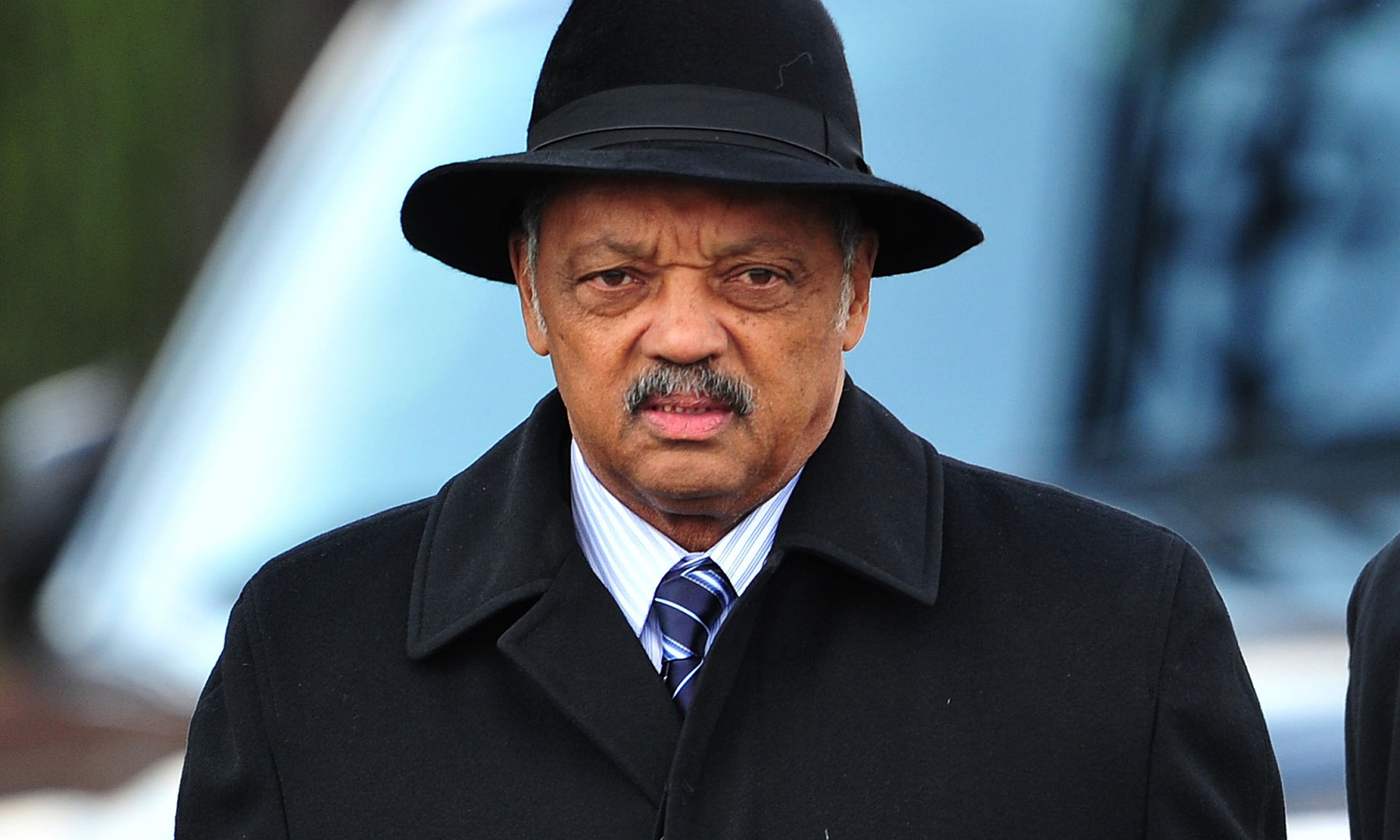
Jesse Jackson has died, at 84. In his youth an earnest crusader for black civil rights who was with Martin Luther King Jr. when he died, Jackson’s place in history was secured in 1984 and 1988 when he became the first black presidential candidate to gain significant popular support. He won Louisiana and D.C. and garnered 3.2 million votes in 1984; and carried D.C., Puerto Rico, and eleven states and 6.9 million votes (29.3 percent of the overall vote, second only to nominee Michael Dukakis) in 1988. Jackson sweeping the Deep South on Super Tuesday that year on the strength of the black vote effectively handed the nomination to the northeastern liberal Dukakis over the comparatively moderate Al Gore, who had banked on southern moderate support to break the party out of the exhausted New Deal liberalism that had led to disaster under Walter Mondale. In the 1970s, Jackson spoke out passionately against abortion, calling it murder and equating it with genocide. A sample from 1977:
That was no longer Jackson’s stance once he was seeking public office in the 1980s, and more’s the pity. Charity toward the departed suggests leaving off further discussion of Jackson’s public career here, but not without noting the man’s abundant gifts as a public speaker in his prime. As P. J. O’Rourke described Jackson’s convention speech in 1988: “I did, however, want to hear Jesse Jackson speak. He is the only living American politician with a mastery of classical rhetoric. Assonance, alliteration, litotes, pleonasm, parallelism, exclamation, climax and epigram — to listen to Jesse Jackson is to hear everything mankind has learned about public speaking since Demosthenes. Thus Jackson, the advocate for people who believe themselves to be excluded from Western culture, was the only 1988 presidential candidate to exhibit any of it.”





Comments