
I look forward to reading Quin’s take on why CNN and Fox have decided to limit the number of candidates in the Republican primary debates they’re hosting later this year.
It strikes me as a reasonable point prima facie: Yes, having more than ten candidates on a state is unwieldy, and the GOP debates last cycle, which topped out at nine people on stage, were not the best venue for candidates to get a lot of their views across.
But 2012 wasn’t some kind of aberration – the biggest 2008 Republican debates were bigger than 2012’s (ten candidates) and a number of the 2008 Democratic debates had nine candidates on the stage. It felt at times like a bit of a circus, but giving individual candidates an opportunity to say their piece seems more important than having a perfect overall production.
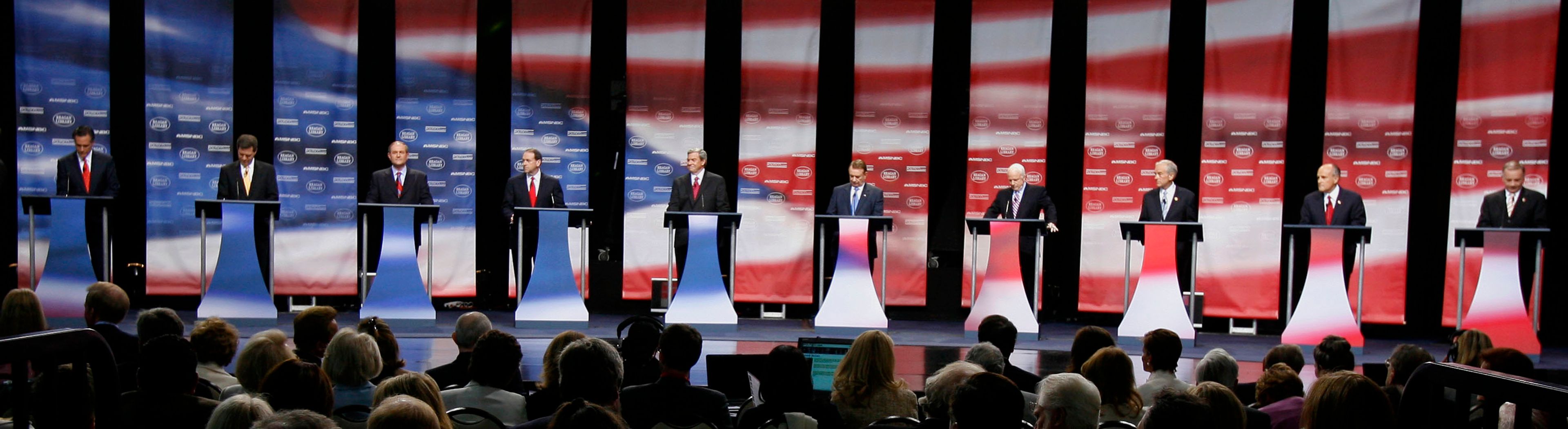
Yes, this is a TV spectacle, not the Athenian assembly, but is it so much harder to put twelve candidates up there than it was ten? And surely the RNC has a good chunk of leverage over media outlets who are struggling to hold onto primetime viewers these days.
If getting a camera shot of a dozen-plus candidates at a time is a problem, Amy Walter of the Cook Political Report and Kristen Soltis Anderson of data firm Echelon Insights both happened upon the same solid idea:






Comments