
For years, Vladimir Kara-Murza, the Russian democracy leader, campaigned for the release of political prisoners. Now he needs help, for he himself is a political prisoner, arrested in Moscow on April 11. I have a piece about him on the homepage, here. An extraordinary person, one of the most extraordinary I have known. (This is a very common sentiment about Vladimir.)
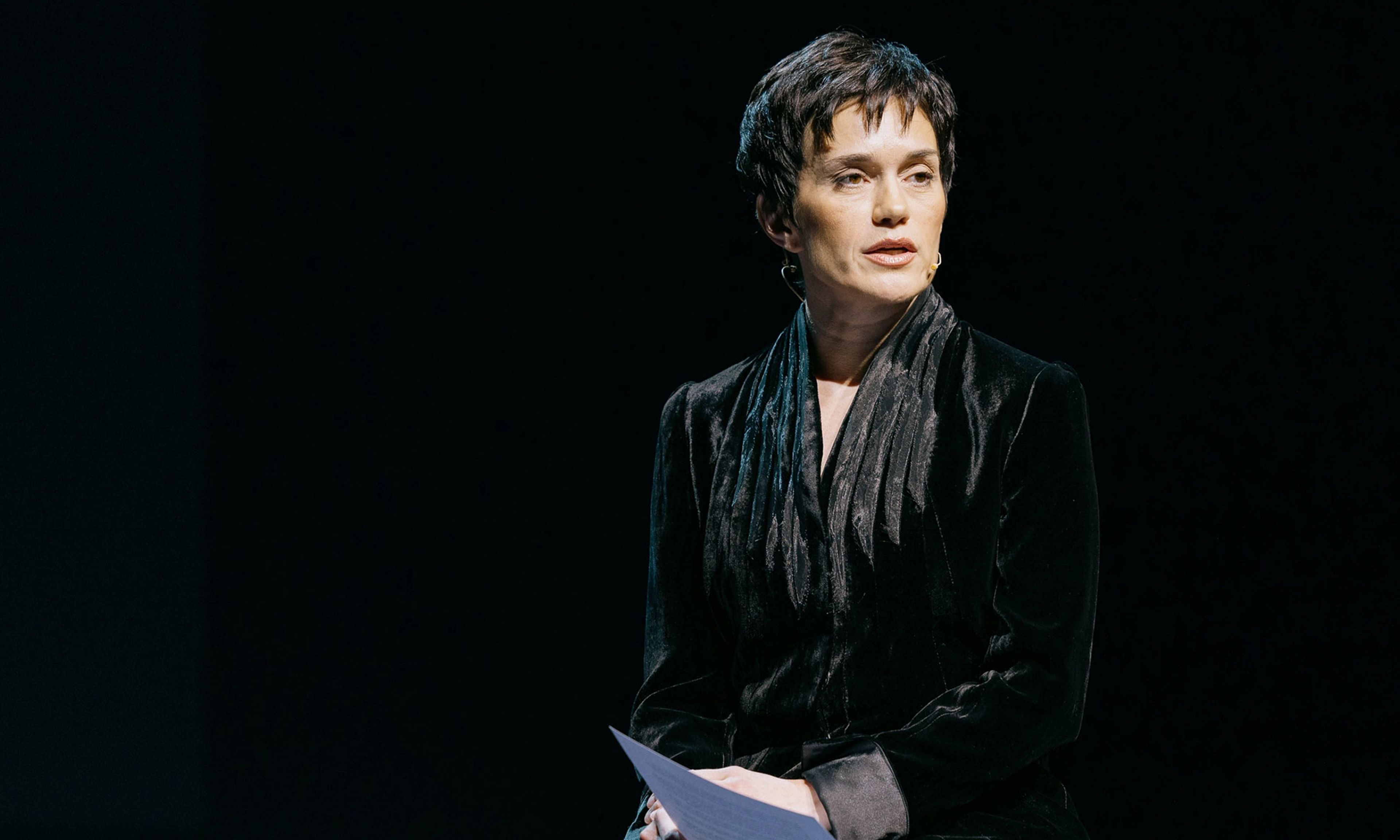
For years, he attended the Oslo Freedom Forum. He could not be there last week, however, for obvious reasons. Evgenia Kara-Murza appeared in his stead. She is Vladimir’s wife, a private person. She does not like being in the public eye. But she will do it when her husband is unavailable — when he has been subject to a poison attack (as he has been twice) or when he has been throw into prison (as now).
I podcasted with Evgenia Kara-Murza on May 20, here.
In Oslo last week, she read a message from Vladimir. In it, he spoke of Russian dissidence, Russian dissent. And he focused on the year 1968 — August, in particular. The Soviet Union had invaded Czechoslovakia, to put down the Prague Spring. The Kremlin was saying that everyone across the vast USSR supported the invasion. Trade unions, workers’ collectives, academic institutes — they all passed resolutions, supporting the invasion.
But seven people held a protest in Red Square. Let me call the roll — the roll of honor: Konstantin Babitsky, Larisa Bogoraz, Vadim Delaunay, Vladimir Dremliuga, Viktor Fainberg, Natalya Gorbanevskaya, Pavel Litvinov. They held a small Czech flag and also some placards: “Shame to the occupiers!” for example. “Long live free and independent Czechoslovakia!” “For your freedom and ours!”
Within five minutes, the KGB pounced on them, and led them to their terrible fates. (Viktor Fainberg had his teeth knocked out on the spot.) But the protesters had proven something: Support for the invasion of Czechoslovakia was not unanimous in the USSR.
Years later, Natalya Gorbanevskaya, a poet, reflected, “A nation minus me is not an entire nation. A nation minus ten, a hundred, a thousand people is not an entire nation.” So, thanks to the Red Square protest, the government “could no longer say that there was nationwide approval for the invasion of Czechoslovakia.”
In his message to the Oslo Freedom Forum, Vladimir Kara-Murza quoted a Prague newspaper in ’68: “Now there are at least seven reasons for which we will never be able to hate the Russian people.”
Today, said Vladimir, the Kremlin has invaded yet another sovereign state. This time, not seven but many thousands of Russians have protested. Some 15,000 have been detained. Each one of the protesters, said Vladimir, “makes me proud of my country.”
In detention, he was asked by a fellow prisoner whether he wished he had remained silent — about the Ukraine war and other abuses and crimes of Putin’s government. The answer was no. And he had never given an easier answer, Vladimir told the Freedom Forum, through Evgenia.
He quoted Boris Nemtsov, his mentor and friend: “The cost of freedom is high.” (Nemtsov was the Russian opposition leader, murdered in February 2015 about 200 yards from the Kremlin wall.) Kara-Murza added, “The cost of silence and complicity is unacceptable.”
People such as Vladimir Kara-Murza remind me of a statement by José Martí, the Cuban independence hero: “When there are many men who lack honor, there are always others who have within themselves the honor of many men.”
Again, for my piece on the political prisoner Kara-Murza, go here.





Comments