
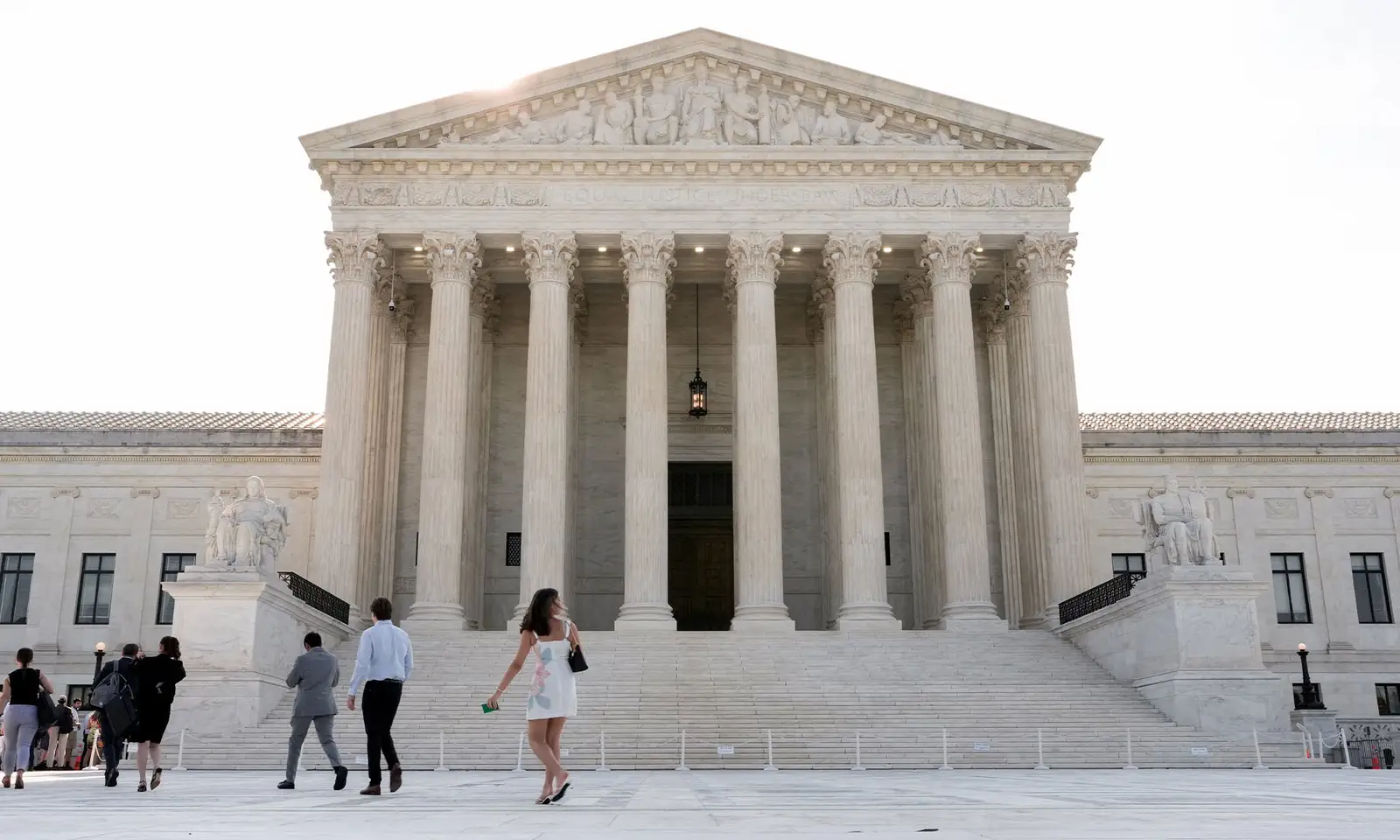
The Supreme Court this morning, in Trump v. Barbara, settled by a 5–4 vote the long debate: Children born in the United States are entitled to birthright citizenship under the 14th Amendment even if their parents are illegal aliens or transients. The opinion by Chief Justice John Roberts commanded six votes, although Justice Brett Kavanaugh joined the dissenters on the constitutional rule and joined the majority only on the theory that Congress had extended birthright citizenship further than the Constitution required. Justices Clarence Thomas, Samuel Alito, and Neil Gorsuch all wrote dissents. The Thomas dissent alone, which Gorsuch joined, runs 94 pages. Justice Ketanji Brown Jackson also wrote a characteristically heated concurrence. I’ll be working through the opinions in the Corner. I’ll start here with a summary of how we got here.
There’s an extensive backstory to Barbara that will be familiar to regular readers, and I’ve written at length on them; I’ll summarize here briefly. The Constitution of 1787 did not define American citizenship, other than to require the president to be a “natural-born citizen.” Other references in the Constitution to citizenship, such as in Article III’s federal court jurisdiction rules or regarding the privileges and immunities of citizenship, discussed citizens of states. Nonetheless, there are relevant authorities from the pre-Civil War period suggesting that the background American rule was that citizenship derived from place of birth. As James Madison wrote: “It is an established maxim that birth is a criterion of allegiance. Birth however derives its force sometimes from place and sometimes from parentage, but in general place is the most certain criterion; it is what applies in the United States; it will therefore be unnecessary to investigate any other.”




Comments
On “Supreme Court in Barbara Rejects Effort to Limit Birthright Citizenship”