
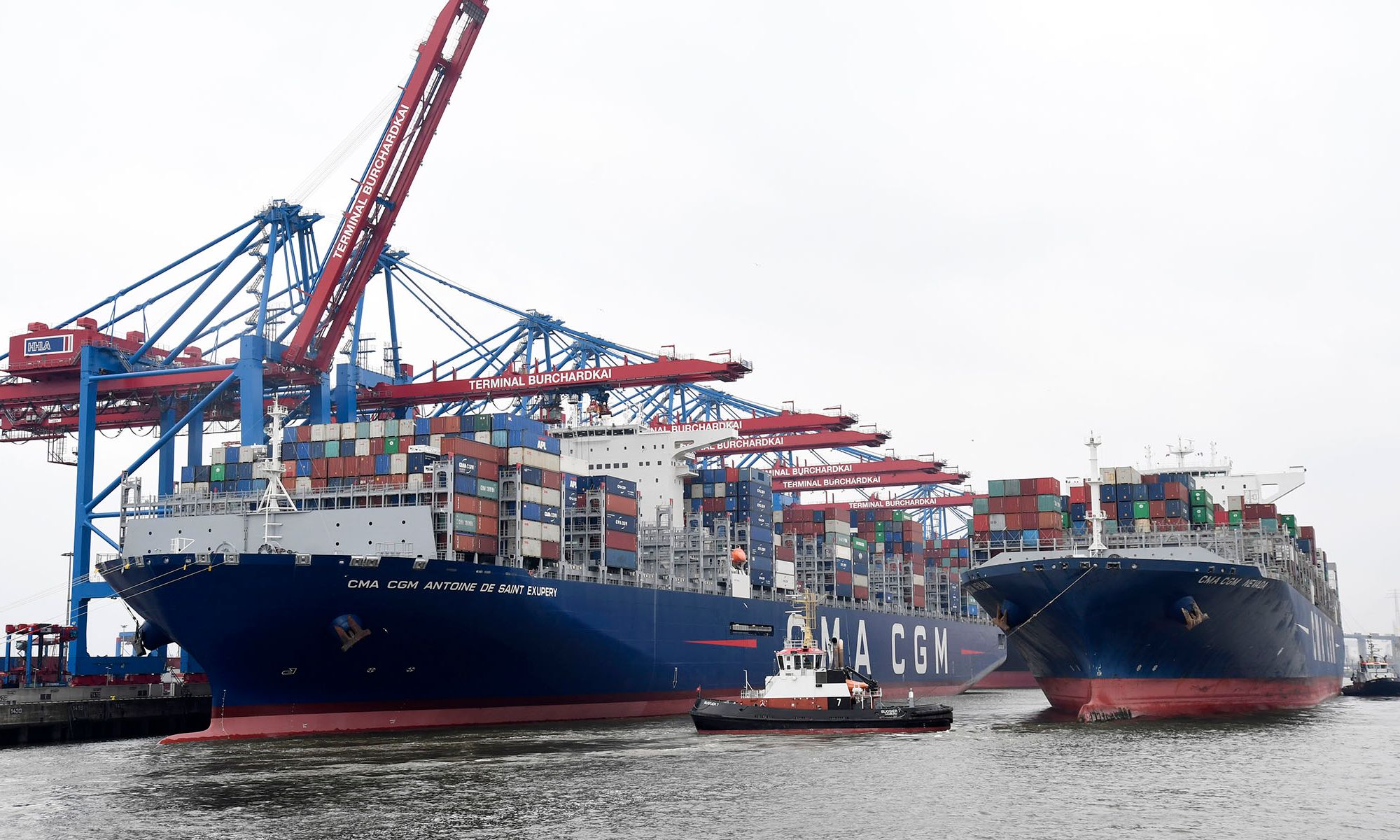
CMA CGM is a French ocean carrier, one of the largest in the world. Like all ocean carriers, it has made extraordinary profits in the past year due to skyrocketing shipping prices. The French government would now like some of those profits.
A group of French lawmakers is calling for a temporary tax of as much as 25% on what it calls the “superprofits” of energy and transport giants including CMA CGM, TotalEnergies SE and Engie SA. The money is meant to help fund measures aimed at protecting consumers’ purchasing power. While the plan doesn’t have government backing, it has shone a spotlight on the closely held Marseille-based shipping firm whose net income more than tripled to $7.2 billion in the first quarter.
CEO Rodolphe Saade defended CMA CGM in a hearing before the French senate, saying the money is being invested in the future of the company and going to benefit the French economy. This portion of his remarks is worth highlighting:
“When my freight rates were at $350, where were you?” Saade asked senators during the hearing. “We weren’t sure at one point if we would get through the week. No one came to speak with us or say something. We had to figure it out.”
For context, the Freightos Baltic Index currently puts East Asia-to-Mediterranean rates at around $12,000.
Now, nobody should shed a tear for CMA CGM here. They’re doing very well. But the French government’s attitude toward the carrier is worth considering.
In ordinary times, ocean carriers make very small profits. They are often propped up by their native governments. Back in 2013, the French government invested $150 million in CMA CGM, and a representative of the sovereign wealth fund got a seat on the board of directors.
In May 2020, CMA CGM got a $1.1 billion loan, 70 percent guaranteed by the French government. The initial government stance on Covid was that transportation companies would need to be bailed out because they were vital to the economy and would go under without government help.
That turned out to be wrong, as ocean shipping became more important than ever before, and carriers were operating at maximum capacity month after month. Excessive demand drove prices up all around the world, and carriers, for basically the first time, made huge profits. These profits were not due to lack of competition, and carriers are investing in new ships and better technology. CMA CGM made a profit in the first quarter of 2020, before it got the $1.1 billion loan, and it hasn’t looked back.
Now, after propping up the company for years, the French government wants to portray CMA CGM as a robber baron.
In their own bit of Bidenistic economic theorizing, French government officials have begun asking CMA CGM to lower its prices to fight inflation. Finance minister Bruno Le Maire said, “A small number of companies have during the crisis made profits in sectors such energy or transport. . . . I want them to give me strong proposals so that they give back a part of their profits to the French people.”
This is no different from Biden asking gas-station owners to lower their prices. CMA CGM competes on a world market and doesn’t just set its prices willy-nilly. And shipping prices have been, slowly but noticeably, declining for more than a month.
But CMA CGM complied, probably imagining it could head off future criticism by throwing the government a bone. It announced a €500 discount per container for consumer goods imported into France. When the price of a container is $12,000, that’s not much, but the company framed it as doing its part to fight inflation.
Of course, that wasn’t enough in the eyes of politicians, leading to calls for the profit tax. Just like the demands to lower prices, French politicians have framed the tax as a way to help consumers against inflation, as the revenues would go to programs designed to increase purchasing power. But that rests on the same flawed logic of California’s proposals to send people checks from its budget surplus. You can’t solve inflation by sending people money.
CMA CGM is experiencing the double-edged sword of corporatism. When times are good, huge government-supported companies are patriotically serving the people. When times are bad, though, they become targets immediately. The French government is basically saying, “We didn’t give you all that money and support for nothing; pay up!”
The answer to Saade’s question — “When my freight rates were at $350, where were you?” — is this: They were nowhere to be found because it wasn’t politically advantageous to notice. Consumers (i.e., voters) were getting goods at low prices, and inflation was low and stable. “People who buy things” is a pretty sizable voting bloc, though, and when they get upset, politicians are going to come knocking. And it’s hard to cry, “Laissez faire!” in the present when you were happily taking government support in the past.





Comments