
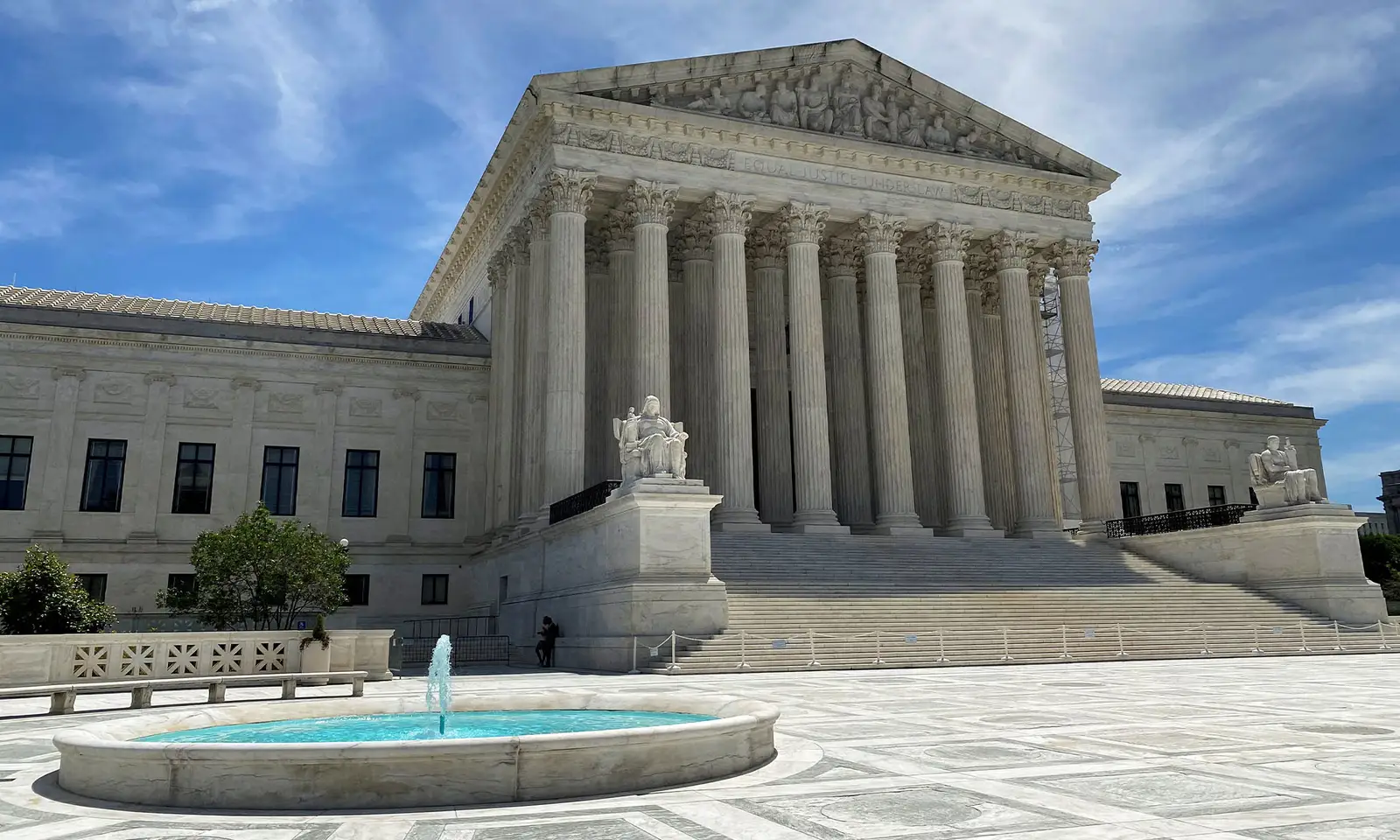
There are two immediately alarming things about the Supreme Court term limits proposed by Joe Biden and Kamala Harris. One is that it’s transparently being done to overthrow the current majority on a Court that has regularly rebuked the Biden-Harris administration for exceeding its legal powers, in order to substitute more pliable judges who will read executive lawmaking power more broadly. The other is that it appears that Biden and Harris are trying to do this legislatively (which would, in turn, require breaking the Senate filibuster) rather than by constitutional amendment, when it is patently unconstitutional to do so.
But wait! Have they really done either of those things? As critics such as Ramesh Ponnuru, Adam White, and Josh Blackman and partial defenders such as Ilya Somin observe, these two features — applying the limits to the justices already on the Court and doing so legislatively rather than by constitutional amendment — are features of the leading Democratic bill on the topic, but Biden and Harris have yet to release details of their own scheme. That gives them some deniability in signaling the more radical way of doing this to their supporters while allowing them to say later, if there is a lot of blowback, that this is not what they meant.





Comments
On “The Ethical Danger of 18-Year Supreme Court Terms”