
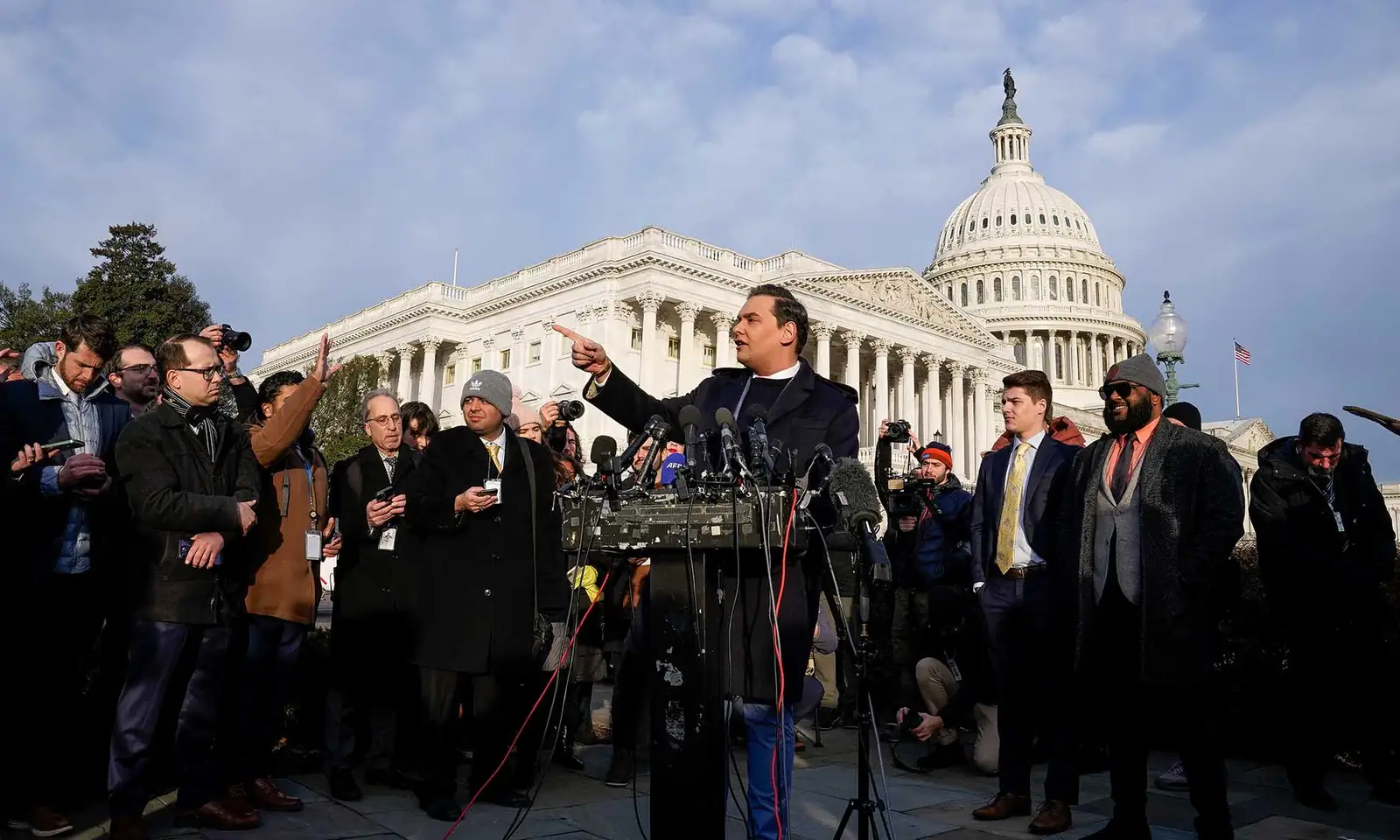
The House of Representatives has voted to expel George Santos. We can debate whether or not this was justified, but what is not debatable is that this is unprecedented in all of American history. The House has unquestioned constitutional power to expel any member at any time for any reason, but that sweeping power has long been constrained by norms and precedents against doing so simply on the basis of the House’s own conclusions of wrongdoing by a member. Rewriting those norms and precedents for this case may open a door that Congress will find difficult to close.
American politics has long had an extremely strong norm against removing elected members of the federal government from office absent either a criminal conviction or actual treason. That reluctance goes back to the famous case of John Wilkes, who was expelled from Parliament in 1764 for criticizing the king. Wilkes was in part a free-speech hero, but the scandal of his expulsion made a deep impression upon the Founding generation. As one historian has written, “In the years between 1768 and 1770 no English political figure evoked more enthusiasm in America than the radical John Wilkes.” Consider how this norm has developed in our history:



Comments
On “The House May Regret Breaking Norms and Precedents to Expel George Santos”