
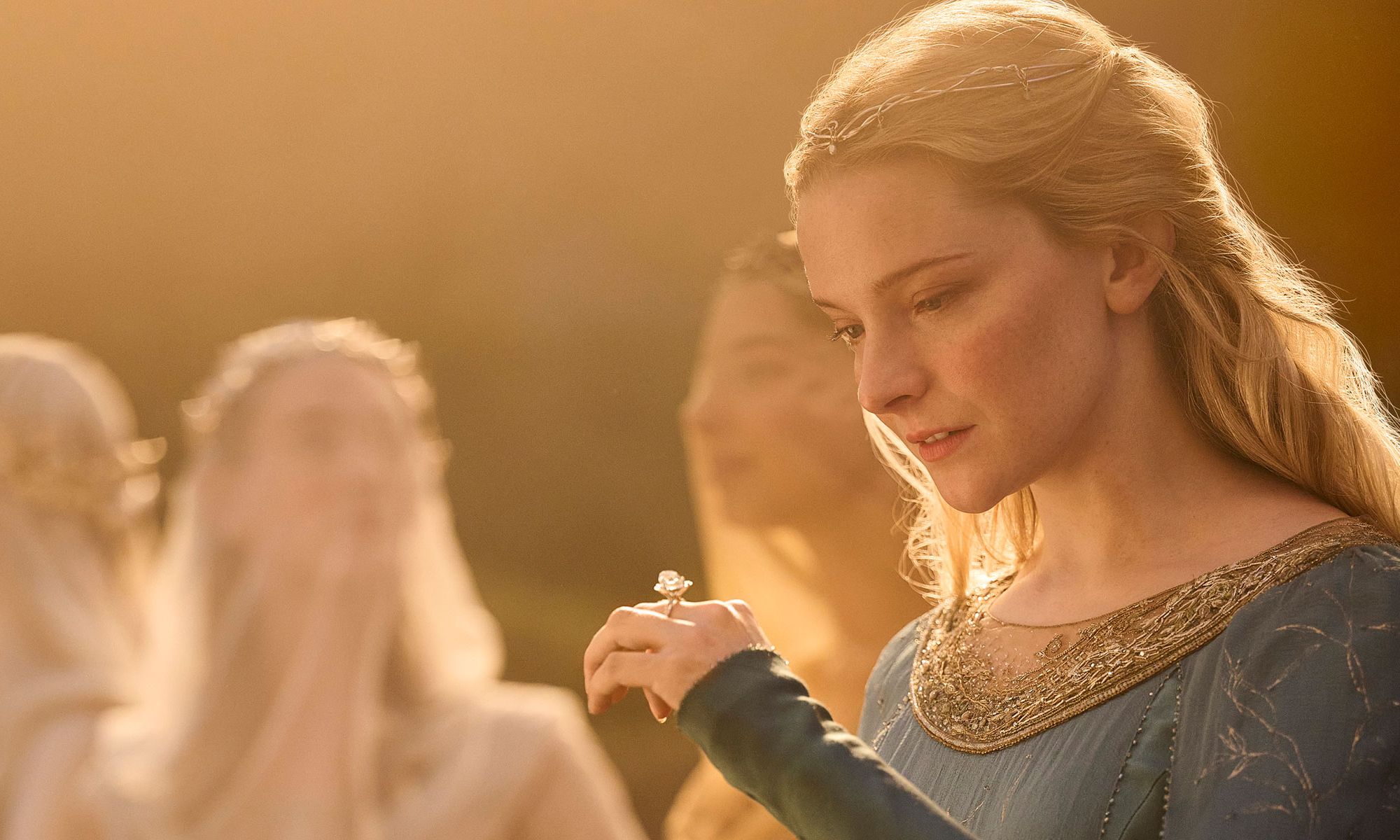
By the end of the first episode of the second season of The Lord of the Rings: The Rings of Power, I wanted to destroy the Rings of Power — and maybe also The Rings of Power. Amazon’s Lord of the Rings TV show, which purports to adapt events of the Second Age in J. R. R. Tolkien’s elaborate mythology (The Lord of the Rings depicts the Third Age and some of the Fourth), dropped the first three episodes of its second season this past Friday. They revealed that the show has thus far failed to earn back the trust of viewers (including me) who had come to doubt, after a disappointing first season, that it could reach the heights of Peter Jackson’s Lord of the Rings trilogy — to say nothing of Tolkien’s work.
Part of this failure comes from the consistency between seasons one and two. The second season picks up shortly after the events of the first, continuing its various plot lines. The elves are debating what to do with the rings they have just created, with Galadriel (Morfydd Clark) still stung by her failure to realize the apparently human Halbrand was her ancient enemy Sauron (Charlie Vickers). The dwarves are struggling with the very geology of their great homeland of Khazad-dûm, while the dwarven king and his son feud over relations with the elves. The men of Númenor, and of what was formerly the Southlands but is now Mordor, deal with the aftermath of a battle that blinded the former’s ruler and destroyed the latter’s homeland. Oh, and “The Stranger” and two harfoots are in Rhûn, for some reason. Meanwhile, Sauron lurks and schemes in the background. With most of the same people behind and in front of the camera, the overall aesthetic (which is pleasant enough) and approach of Rings of Power differs little from the first season.


Comments