
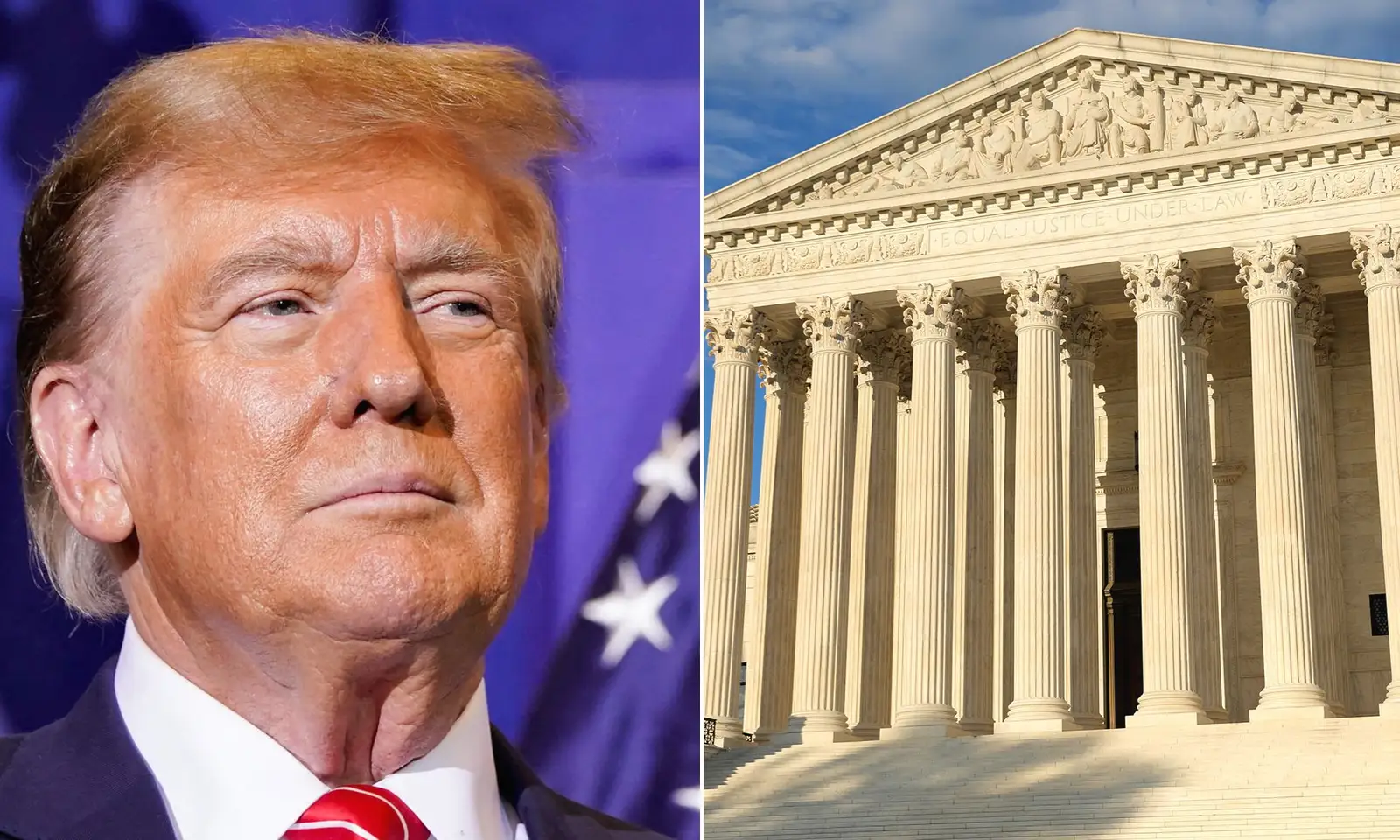
I will have more detail later on this morning’s Supreme Court argument in Trump v. Anderson regarding whether the Colorado Supreme Court was right to throw Donald Trump off the ballot on the theory that Section 3 of the 14th Amendment disqualifies him from serving in federal office again after he “engaged in insurrection.” The short summary, for now: It seems very unlikely that the Court is inclined to let a state remove Trump from the ballot before Election Day, the Court is unlikely to reach the merits question of what it means to engage in insurrection, and the decision isn’t likely to be a close one — but it is very possible that we get a fractured decision, with different justices citing different reasons to throw out the Colorado ruling. That’s by no means a certain outcome; with a huge number of legal issues to address, the fact that different justices were thinking about different things doesn’t preclude them from coming together on at least one conclusion that commands a majority. The work of building that consensus may yet lie ahead in chambers and in the exchange of draft opinions.
Several of the justices were concerned about the implications of allowing a single state to kick off what could be a series of conflicting decisions on throwing a candidate off the ballot, and perhaps a cycle of retaliations (a worry especially raised by Justice Samuel Alito). Justice Amy Coney Barrett and Chief Justice John Roberts focused on the state process and standards of review. Justice Neil Gorsuch zeroed in on the technical arguments about whether the president is an “officer of the United States” or holds an “office under the United States” covered by Section 3. Justice Brett Kavanaugh argued vigorously for following the 1869 precedent of Griffin’s Case, under which disqualification could take place only under processes established by Congress (although Alito openly doubted Kavanaugh’s rationale for claiming that Congress had acceded to Chief Justice Salmon P. Chase’s view in that case of the meaning of Section 3). Justice Clarence Thomas suggested that states even in the 1860s excluded only state, not federal, officials. Even the Court’s liberals were not sold. Justice Elena Kagan kept returning to the idea that the presidency is a national office and not just the concern of a single state. Justice Ketanji Brown Jackson found it “troubling” that Section 3 never mentions the president: “If there’s an ambiguity” about whom Section 3 covers, Jackson asked, “why should we construe it against democracy?”




Comments
On “Trump Is Unlikely to Be Disqualified — for Now”