
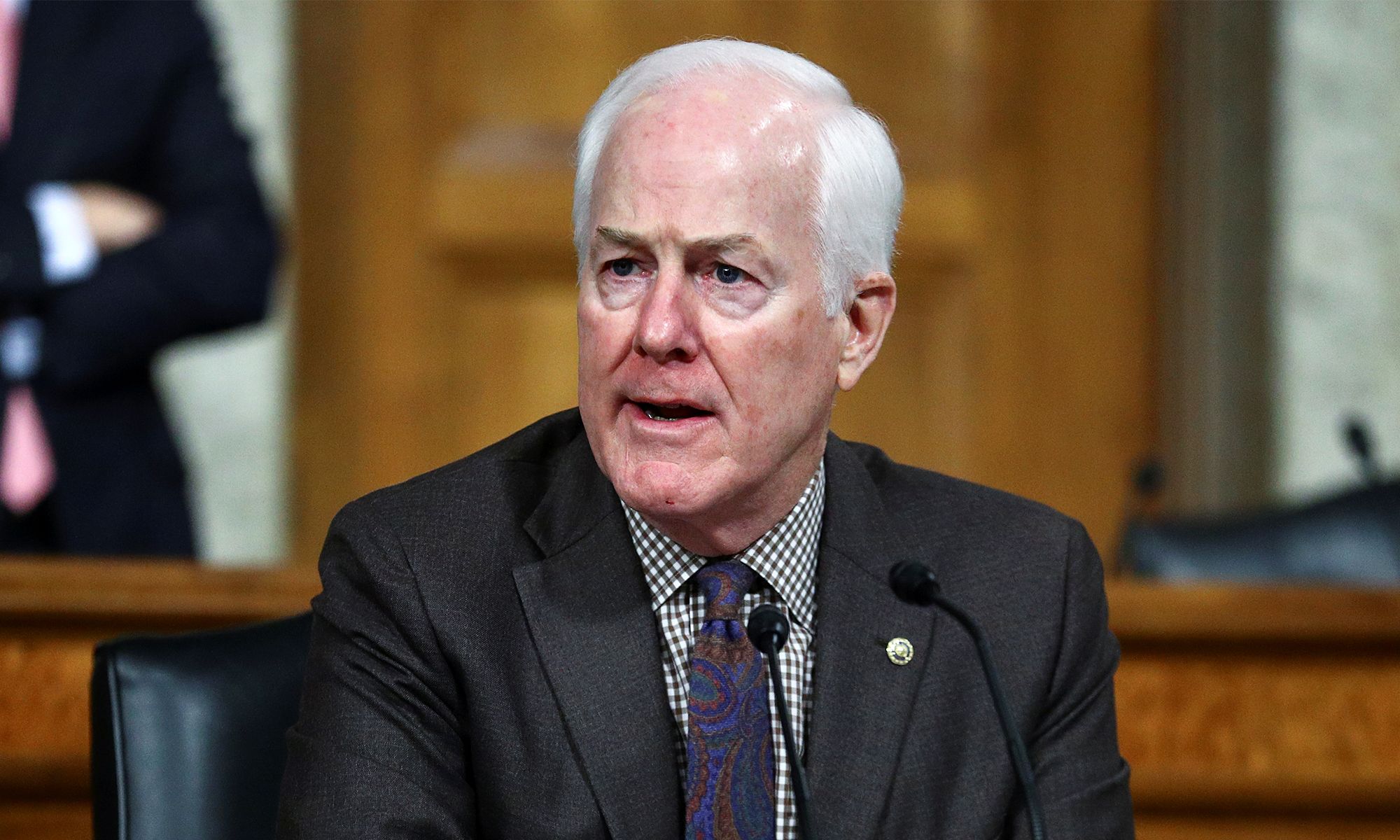
Per the ever-well-informed Olivia Alfariz at Bloomberg, it seems that Senator John Cornyn (R., Texas) is insisting that the remaining vacancy in the Northern District of Texas be filled by someone other than the current nominee, the superlative Elliot Gaiser. Could this work? Probably not.
Apparently, Cornyn is pushing “former federal prosecutor Steve Fahey” for the seat. Fahey seems well qualified, and I hear he’s quite good. He also seems like a standard-issue “Cornyn pick” — a longtime former AUSA who was the criminal and civil chief for the Northern District. The trouble is that it seems he left the office in 2021, which means he doesn’t have a recent FBI background investigation. Indeed, under the traditional BI system, you need to refresh it every five years in order to maintain your security clearance, so there’s no question that Fahey’s prior BI is no longer valid.
That’s a problem. During Covid, we were able to get judicial BIs done over the course of a few weeks. My understanding is that they have gone back to taking longer now that the excuses of social distancing no longer apply.
This presents two alternatives: First, (R., Iowa) can slot him in for a hearing on Wednesday without a BI and hope that the FBI can complete a rush job in time for his markup circa December 10. Or, second, Cornyn can prevail upon Grassley to hold a third nominations hearing during the lame duck which would either be just before or just after Thanksgiving and — per standard timing practices — result in a markup either on December 17 or Christmas Eve.
Neither of these options is good. Let’s start with the second one: A third hearing. Maybe Grassley will have to do this anyway for, say, the remaining North Carolina seat, but asking for a third hearing borders on breaking china for the sake of breaking china. Leaving aside that a third lame-duck hearing is itself a very aggressive action, requiring further Chairman-elision of customs like the 28-day rule, getting Fahey out of committee in time for Floor consideration would probably require further tweaks to committee practice — such as written-question and markup timing.
Chairman Grassley has done a great job barreling through Democratic objections to get outcomes on judicial confirmations, but he’s the one doing it. He’s the one who’s going to be on the receiving end of Sheldon Whitehouse’s revenge next Congress. Demanding a third hearing is writing a check drawn from Grassley’s account of political capital. That it’s being done by the likes of Cornyn and possibly Thom (R., N.C.) — who are very selectively playing ball with leadership when it comes to confirming judicial and executive-branch nominees — is galling. They want maximum flexibility to vote their consciences and, at the same time, maximum accommodation from leadership. Perhaps Cornyn really did learn a thing or two from his many years among the right-wingers of the Senate Steering Committee? It’s the sort of behavior one comes to expect from a Rand Paul.
At minimum, any successful demand of leadership for personal accommodations should come with a commitment to stop causing problems for leadership as it juggles nominees while walking across a tightrope suspended above crocodiles as Trump and his base scream at them. Support Zach West; attend all markups; attend all votes; don’t block en bloc inclusions without objectively reasonable explanations; etc. Will Cornyn and Tillis do that?
More galling still is the BI issue. By and large, the BI process is one of the few that generally still works in the Judiciary Committee. Yes, in Trump 45, Democrats used to jerk us around on it — a favor we returned during Biden. But for the most part it’s nonpartisan, professional, and important.
One of the last fights I undertook on behalf of Mitch McConnell was helping to rally Senate Republicans in opposition to the incoming Trump administration’s self-serving proposal to end the BI process. I’m pretty sure that Cornyn and Tillis were allies in that fight.
Now Cornyn wants to blow it up on his way out the door? Why? To protect the sanctity of his bipartisan Federal Judicial Evaluation Committee (FJEC)? I ran one of those when I was counsel to then-Senator Jeff Flake; they’re fake — fugazi as we say in Jersey. These commissions have no identity independent of the individual senators who possess election certificates and votes. The minute John McCain passed away in 2018, I was on the phone with the Flake office to scrap the committee-approved selection and replace him with the guy Flake and Don McGahn wanted. He’s a judge now.
Maybe Cornyn just doesn’t want Gaiser because he works for Trump? That’s odd given that Gaiser is a full-spectrum traditional conservative, whose mentors include Edith Jones, Naomi Rao, Sam Alito, and C. Boyden Gray. Is it really the case that those kinds of establishment-friendly people should be blackballed for having worked for Trump? Again, returning to my Flake days, that was the position of the Trump 45 Presidential Personnel Office when my DOJ appointment was pending: “We don’t care how much DOJ and Counsel’s Office wants him; he works for Jeff Flake. No dice.” (Or so I was told at the time.) Is that really the example Cornyn — and perhaps Tillis — want to emulate?
In the end, we have a U.S. senator who seems to be insisting that the BI process be scrapped and Judiciary Committee norms be abandoned, all because an otherwise-qualified nominee worked for someone he doesn’t like. Sound familiar?
Among ’s superpowers is an uncanny ability to get his enemies to mimic his behavior.





Comments