
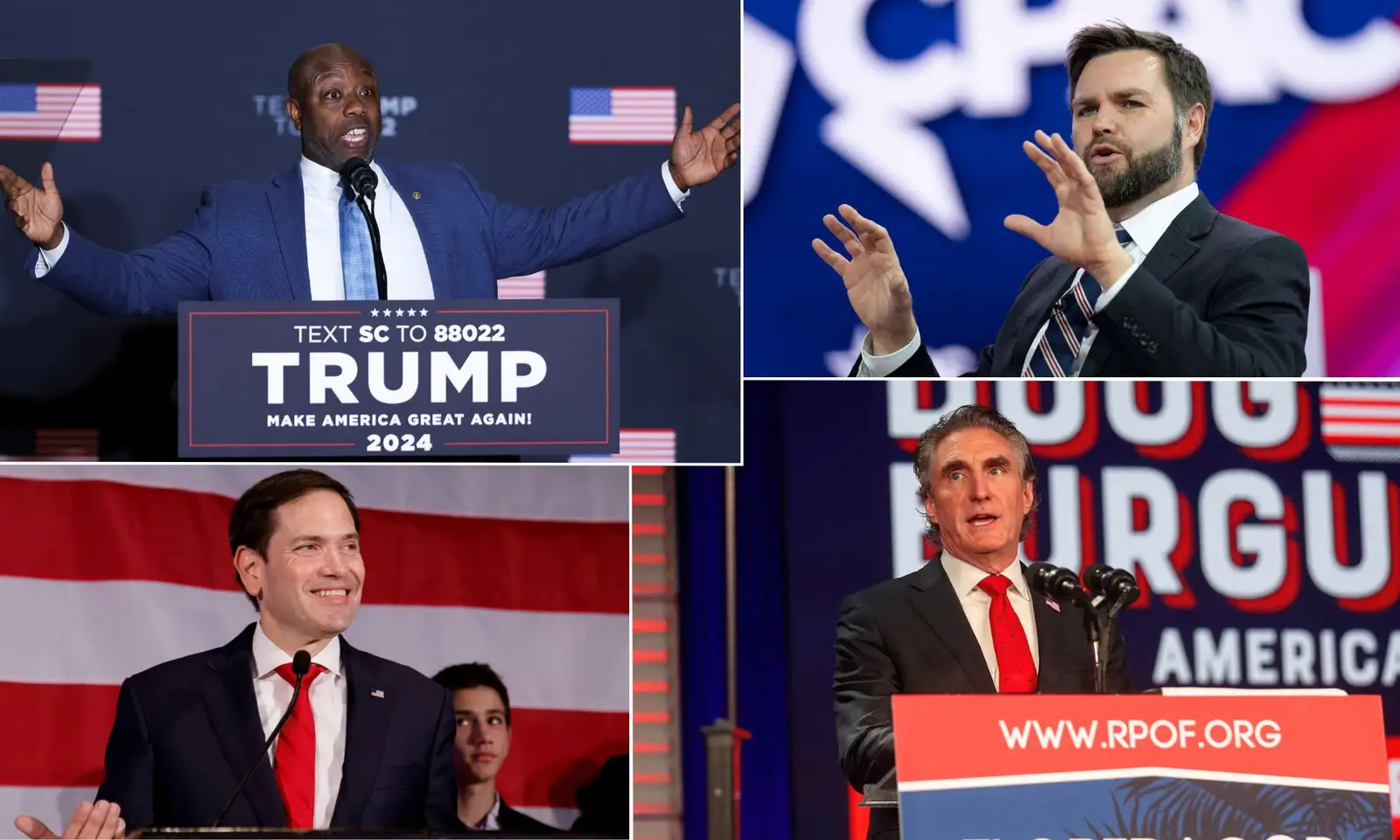
Political scientists will tell you that vice-presidential picks don’t really matter that much in terms of electoral results, even at the margins. Smart campaigns don’t pick one because they hope to swing a state into their party’s column. It’s really about the top of the ticket for most voters, and vice presidents are usually a reflection of perceived weaknesses at the top, chosen to bridge otherwise difficult demographic divides in a symbolic way. They are chosen to “round out the character” of the presidential nominee, to sell a narrative to the public based on the person that nominee selected as his emergency stand-in.
In an earlier, more regionalized era — before ideological sorting turned the Democrats into the “progressive” party and Republicans into the “conservative” one — California conservative Ronald Reagan chose well-bred Northeastern moderate George H.W. Bush to balance out an ideological ticket. Bill Clinton chose Al Gore of Tennessee to emphasize a willingness to play for ancestral Southern Democratic votes. In more recent years, as our political discourse has become wholly nationalized, vice-presidential nominees have been chosen to balance out personal weaknesses. With a reputation as an intellectual lightweight, George W. Bush sought out Dick Cheney to provide gravitas. (Meanwhile Al Gore chose Joe Lieberman to distance himself from Clinton’s sexual sleaze.) As the first black presidential nominee, Barack Obama felt compelled to add “Lunchbucket Joe” Biden to reassure white middle- and working-class voters he wasn’t Jesse Jackson. Donald Trump, with a history of sordidness so tangled it recently resulted in 34 dubious felony convictions, tabbed Mike Pence to signal to the world that at least one upstanding adult was in the room. (Pence later proved it, much to Trump’s dismay.)


Comments
On “Trump Veepstakes 2024: The Survivors”