
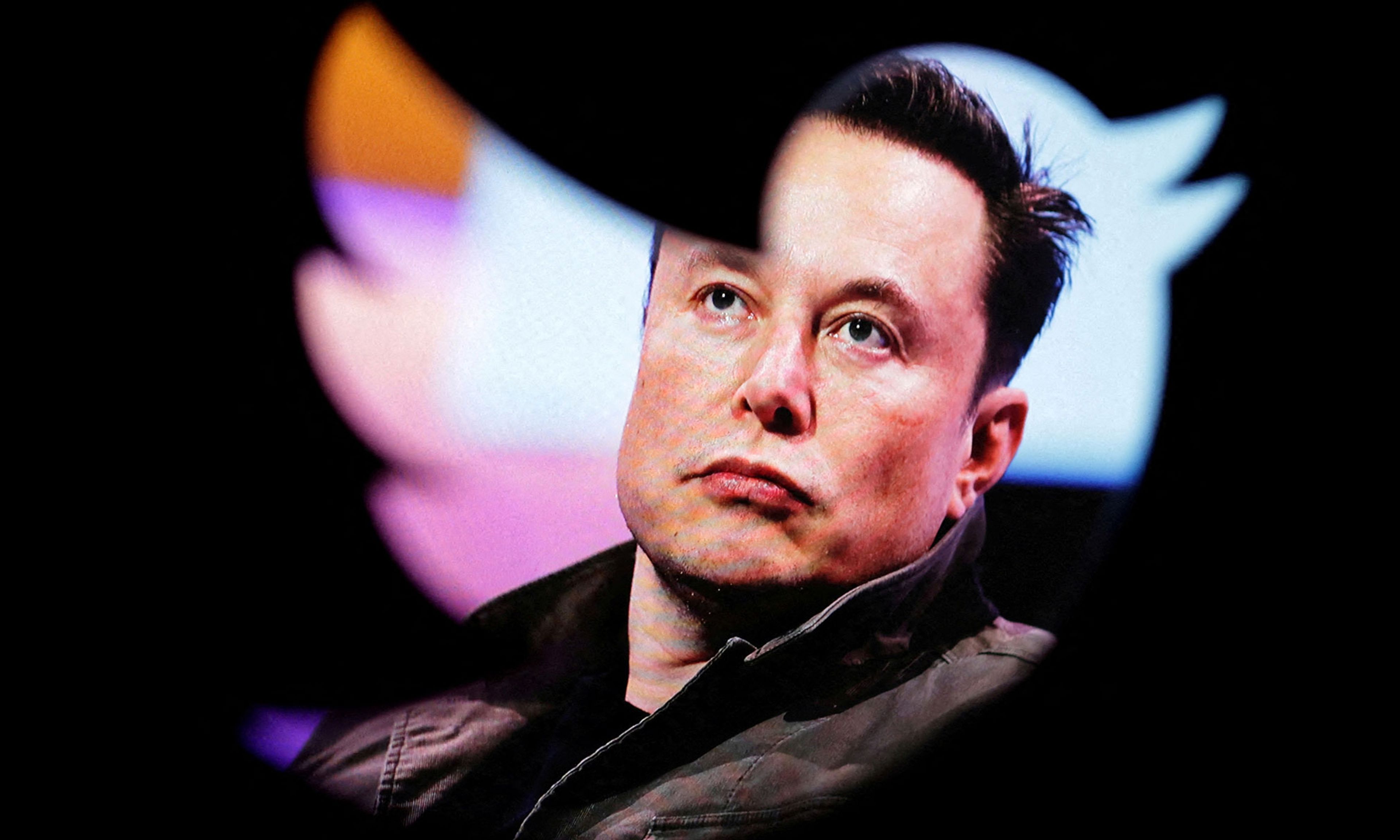
What’s going to happen to Twitter is, shall we say, hard to predict. If Elon Musk had a plan when he bid for Twitter, the fact that he had effectively to be forced to complete on the deal suggests that he was having doubts not only about the price he had offered to pay for the company, but also about what he was taking on. Possibly too, he had realized that taking over a company (particularly one where a highly mobile workforce did not want him in charge), is a very different matter to building a business from scratch (or something close to it).
Looking at Twitter last night, there was plenty of speculation — some of it too gleeful for comfort — that the site might not have longer to go. That would be a shame.
The story is moving so fast that a story published ten days ago comes close to ancient history, but here was Chris Stokel-Walker, writing in MIT’s Technology Review ten days ago:
A massive tech platform like Twitter is built upon very many interdependent parts. “The larger catastrophic failures are a little more titillating, but the biggest risk is the smaller things starting to degrade,” says Ben Krueger, a site reliability engineer who has more than two decades of experience in the tech industry. “These are very big, very complicated systems.” Krueger says one 2017 presentation from Twitter staff includes a statistic suggesting that more than half the back-end infrastructure was dedicated to storing data.
While many of Musk’s detractors may hope the platform goes through the equivalent of thermonuclear destruction, the collapse of something like Twitter happens gradually. For those who know, gradual breakdowns are a sign of concern that a larger crash could be imminent. And that’s what’s happening now. . . .
That, of course, was quite a few employees ago.
In a story for Bloomberg published on a date in slightly more recent ancient history (November 12), Paula Seligson and Lucca De Paoli wrote:
Twitter had $2.68 billion of cash and cash-equivalents as of June 30, along with another $3.4 billion of short-term investments, according to a filing. Even with Twitter’s new debt load, that cash pile alone could keep the company running for a good amount of time.
As the world’s richest man, Musk also has plenty of firepower to keep the company afloat, and he could potentially inject more cash into Twitter if things became dire. That, however, would likely require selling more shares of Tesla Inc., a threat to the electric carmaker’s stock price.
[Musk has sold about $4bn in Tela stock since the Twitter deal closed].
That said, even before the take-private, Twitter’s financial picture wasn’t great. The company hasn’t been profitable for a full calendar year since 2019. And since the takeover, Musk has said that there was a “massive drop” in revenue as some advertisers fled from the platform. He also warned that the company was losing more than $4 million a day…
Musk, tweeting yesterday:
How do you make a small fortune in social media? Start out with a large one.
Meanwhile, via The Hill (November 17):
Senate Democrats urged the Federal Trade Commission (FTC) Thursday to investigate Twitter over potential consumer protection violations after changes made to the platform in recent weeks under the helm of new CEO Elon Musk.
The senators said “alarming steps” taken under Musk’s control, including allowing users to pay for verification check marks and laying off key staff, undermined the integrity and safety of the platform and may have already violated the FTC’s consent decree for the company…
To say that Musk has not made things easy for himself would be an understatement. And so would be observing that there are a lot of things going on in this story. Perhaps one of the more important of those, I suspect, revolves around this tweet by Musk yesterday:
Twitter is like open-sourcing the news
That’s an alarming thought for some.






Comments