
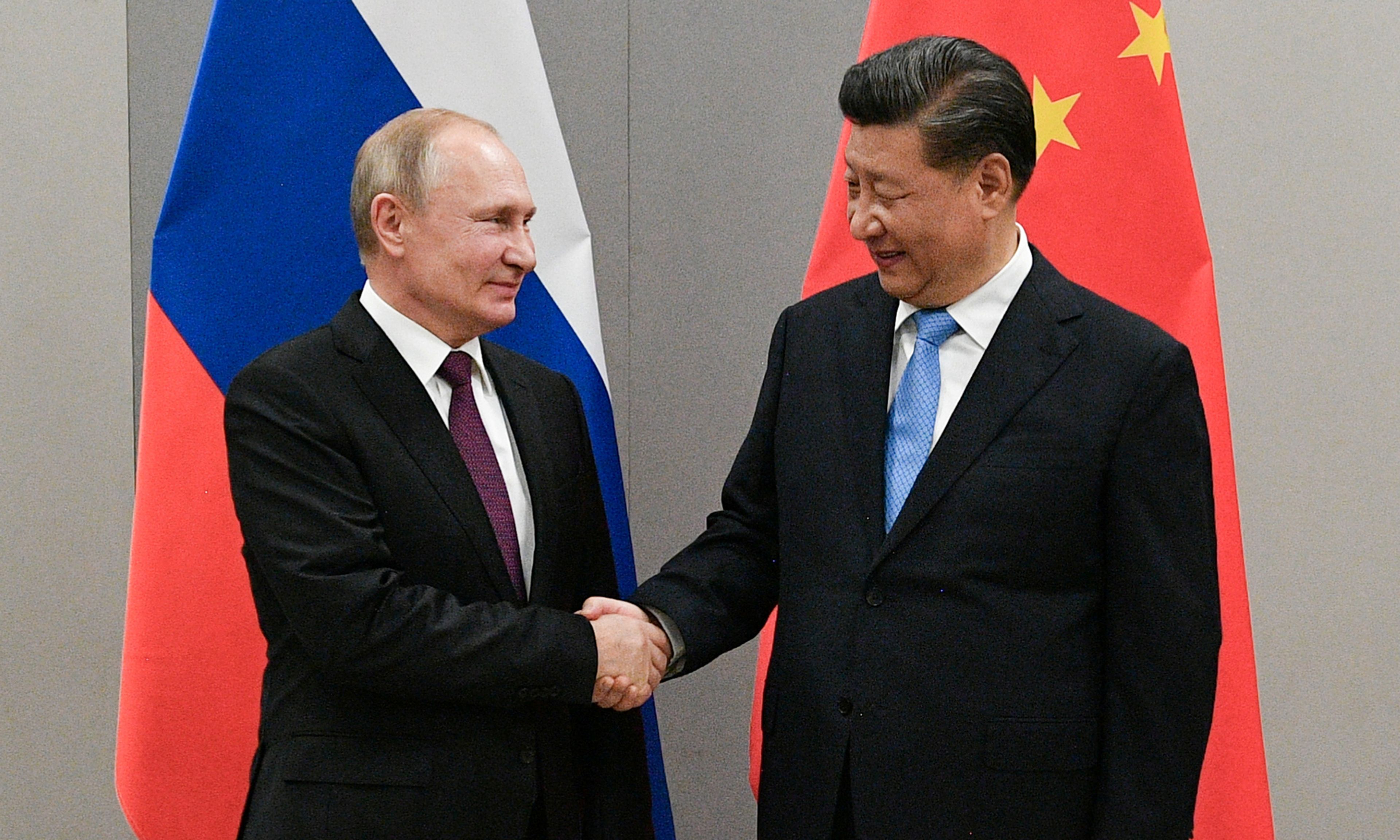
The crises involving Russia with a plodding-at-best and self-destructive invasion of Ukraine, and China with increasingly unsustainable lockdowns over Covid-19 are different in many ways but share a common thread in the question of what the general populaces are willing to tolerate.
Autocrats operate with very limited knowledge of what their people actually think, in large part because they never bother to ask. Inherent in the process of asking is the supposition that the will of the people matters if it deviates from the will of the ruler. If you ask the people what they think, and they answer honestly, they may get used to the idea that they should have some say in how the government operates. No one has any ironclad sense of what Russian or Chinese popular opinion really is, because both populations have witnessed far too many examples of serious consequences for not toeing the party line, and hesitate to say what they really think to any stranger knocking on the door, asking for their opinion.
Objectively, life in Russia and China — or at least in Shanghai — is worsening significantly and quickly. The Russian economy has taken a serious hit and is likely to suffer an economic contraction twice as bad as the Great Recession, and anywhere from 15 million to about 19 million Shanghai residents still aren’t allowed to leave their homes; some have been effectively locked in since March 28.
With that said, we probably shouldn’t expect a popular uprising against Vladimir Putin or Xi Jinping soon. The average Russian or Chinese citizen has a lot of experience of just going with the flow and making the best of a bad situation. The New Yorker’s Moscow correspondent, Joshua Yaffa, aptly summarizes the grim mentality in his 2020 book Between Two Fires: Truth, Ambition, and Compromise in Putin’s Russia:
[In 2000, Russian sociologist Yuri] Levada penned an essay on what he labeled “The Wily Man,” which identified a new species, not Homo sovieticus, but something more lasting and universal. The Russian wily man, he wrote, “not only tolerates deception, but is willing to be deceived, and even requires self-deception for the sake of his own preservation.” Levada saw him as ultimately a clever and resourceful creature. “He adapts to social reality, looking for oversights and gaps in the ruling system, looking to use the ‘rules of the game’ for his own interest, but at the same time – and no less important – he is constantly trying to circumvent those very same rules.”
For the wily man, interacting with the state is a game of half-truths and deceptions, served up as offerings to the bureaucratic machine, and told to one another as justification for squelching ambition and a sense of morality. Given weak levels of social bonds and under-developed institutions, the wily man is ultimately alone…
Ultimately, the wily man and woman harbor no illusions about the true nature of the state; it is just that they don’t see an alternative to it, and thus make a calculation to swim with the current rather than against it. “It seems that the Russian people want the protection of the state but they do not want to serve it.”
This description of a resigned, no-better-option, best-go-along-to-survive mentality among Russians probably applies to many Chinese citizens as well. Maybe the prospect of mass starvation has a significant portion of Shanghai’s citizens ready to take a risk to demand change and better policies. But there’s still the rest of China that has to sign on to this demand for change.
As discussed on yesterday’s edition of The Editors, there’s another great challenge to getting Russians to turn against Putin and their current rulers. An honest accounting of the Russian invasion of Ukraine would include the accounts of widespread rapes; executions of civilians; the killing of Ukrainian children; the deliberate targeting of fleeing civilians, civilian shelters, hospitals, and medical centers; systematic looting; the obliteration of cities; spectacularly reckless actions near nuclear power plants that spread radiation; and perhaps even the use of chemical weapons. In short, the world is asking the Russian people to recognize that their own armed forces have acted as monsters, committing war crimes on a massive scale.
Russians can tell themselves that their current suffering is worthwhile because it is for a noble cause of fighting the so-called “Nazis and drug dealers” who are running Ukraine and that terrible expansionist NATO and so on. But to realize and accept that your suffering is in the name of an insane bid for territorial expansion and that your country’s own armies are behaving like barbarous thugs? For many Russians, that would be too much to take — and thus they will cling to Putin’s reassuring narrative of noble and brave Russian forces valiantly fighting off the threat from the West. . . .






Comments