
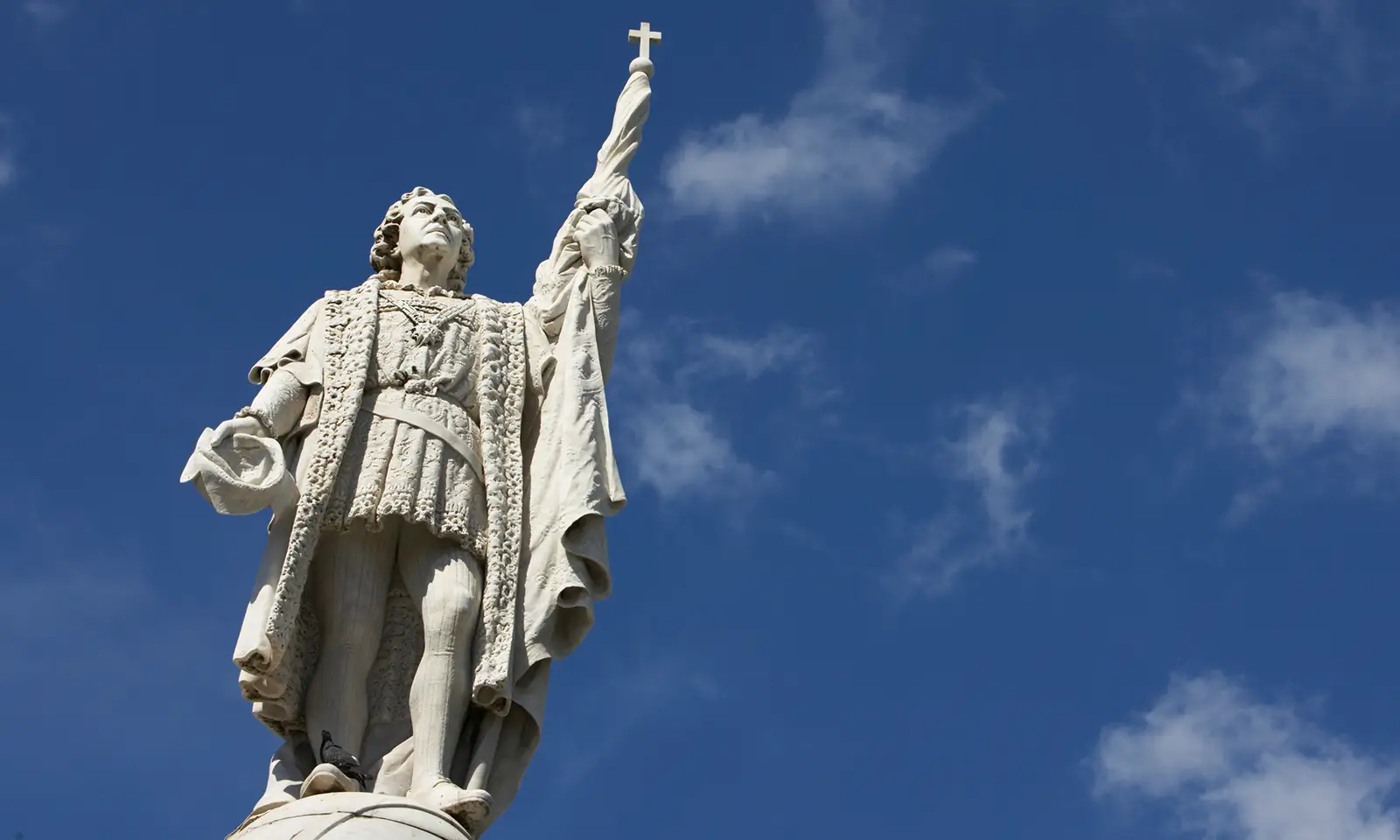
No American holiday is under siege as persistently as Columbus Day. “Indigenous People’s Day” is specifically an effort at an anti-Columbus holiday. The White House is pushing National Coming Out Day as a way of changing the subject. It is perhaps worth revisiting the two distinct reasons why we celebrate Columbus Day in the first place, and why the cultural Left hates both of them.
Some of the anti-Columbus arguments are about the man personally. He has his defenders: Garry Kasparov reminds us not to judge Columbus by the moral standards of our own time. Jarrett Stepman argues that Christopher Columbus is misunderstood, and can be defended even within the context of his own era. But in a larger sense, arguments over whether Columbus was morally good or not — by his time’s standards or ours — are beside the point. Unlike George Washington, Abraham Lincoln, or Martin Luther King Jr., Columbus was not an American. His voyages predate the American founding by nearly three centuries. Americans have never spent much time reflecting on the things Columbus believed in or stood for. He was celebrated not for an exemplary life but for a single extraordinary accomplishment. Historians still debate exactly what was known or believed about crossing the Atlantic in 1492; I looked last month at some new evidence on that point from the 1340s. But the voyage itself was, no matter how you slice it, a venture of breathtaking risk, courage, and skill — one that was far beyond the capabilities of the people Columbus met at the far shore. Our 21st-century age could use more of the questing spirit of that adventure.

Comments
On “Why We Celebrate Columbus Day”