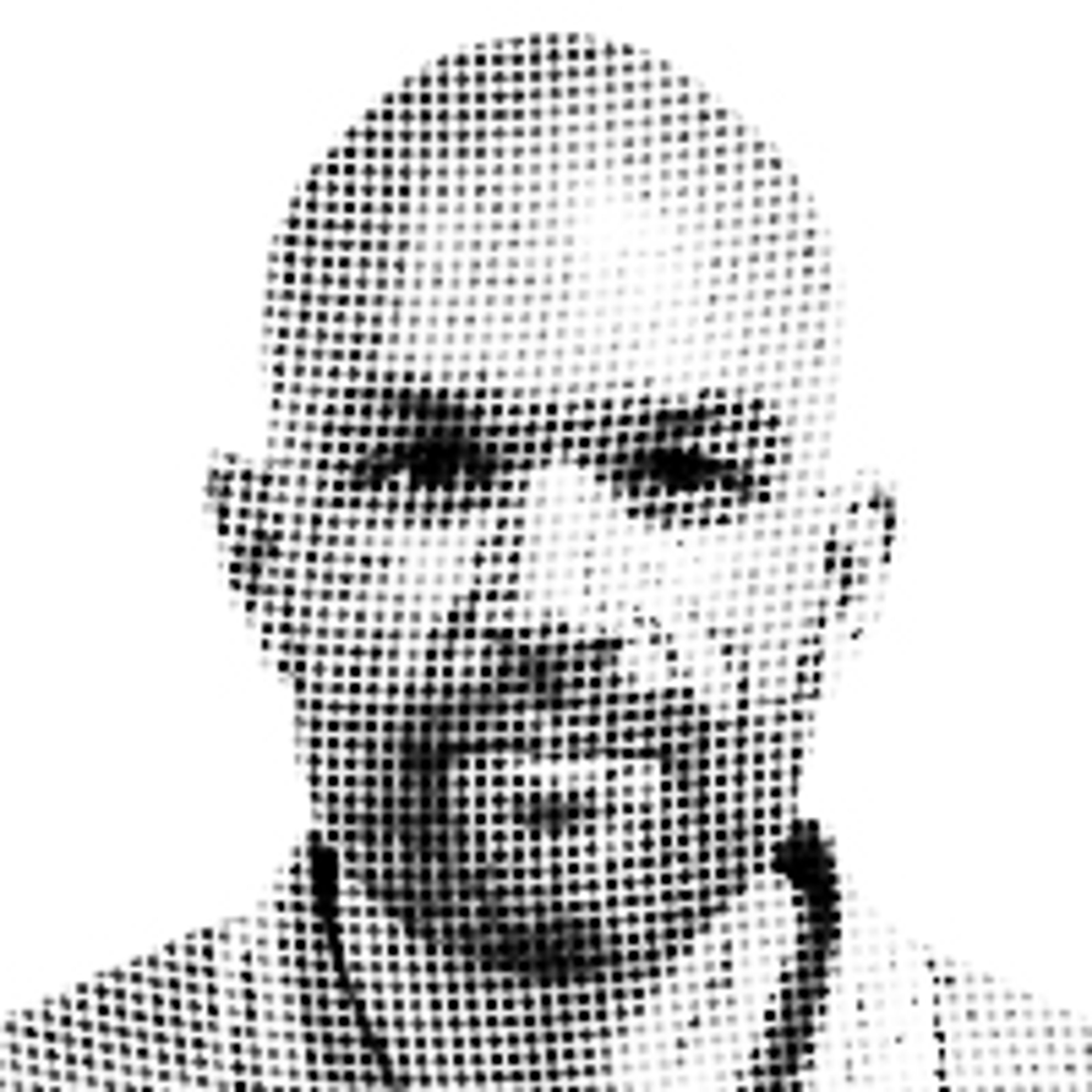
Dino LaVerghetta, a 28-year-old New Yorker, does not outwardly seem to be the least bit retro, but he might be a generation or two out of place, with one of those stories that you sometimes forget are still happening every day: He’s the child of Italian immigrants, and his father ran a pizzeria — “total Italian stereotype,” he grins — before getting into real estate. LaVerghetta married his high-school sweetheart, and, just as the children of immigrants have for generations, advanced through higher education and a profession: Today, he’s a securities lawyer at a prominent international firm. He probably wouldn’t call it a white-shoe firm, but it’s a white-shoe firm.
LaVerghetta is a throwback in another way, too: He’s an Upper East Side Republican, an increasingly rare urban species whose habitat has been decimated — the formerly Republican-dominated expanse of middle Manhattan populated by financial professionals has largely abandoned the GOP — and whose political leadership is endangered, if not quite extinct. LaVerghetta has his eyes on New York City’s 14th Congressional District, which encompasses eastern Manhattan, Roosevelt Island, and part of Queens, a seat that has been occupied by Democratic incumbent Carolyn Maloney for 16 years. From the pizzeria to Congress in one generation: It won’t surprise you to learn that LaVerghetta talks about the classic American values of free enterprise, limited government under the Constitution, and fiscal responsibility.
What might surprise you is his take on the Glass-Steagall Act. The 1999 repeal of Glass-Steagall, the Depression-era law that had prohibited the combination of regular deposit-taking banks with investment banks, insurance companies, or other kinds of financial operations, has long been cited by the Left as the root of all bankster evil. Democrats have framed it as another case of deregulation-mad Republicans acting as the running dogs of their corporate masters to the general detriment of the Republic. The real story is, of course, more complicated than that: The repeal of Glass-Steagall was signed into law by a Democrat, Pres. Bill Clinton, after every Democrat in the Senate voted for it, along with 155 Democrats in the House — three-quarters of the Democratic caucus at the time. One of the Democrats who voted for the repeal of Glass-Steagall was Carolyn Maloney, and LaVerghetta intends to remind voters of that fact, often.
“The 1999 repeal of the Glass-Steagall Act, which was supported by Carolyn Maloney, was a mistake,” he says. “It is no coincidence that the nation faced a near financial meltdown within ten years of its repeal. The financial system would be far better off if we tossed out the 2,300-page Dodd-Frank Act and simply put the 34-page Glass-Steagall Act back on the books.” As a securities lawyer, LaVerghetta knows a little something about financial regulation, and he’s under no delusion that Glass-Steagall would have prevented all of the financial turmoil that rocked the world following the subprime meltdown. It is difficult to say what Glass-Steagall would have changed at Bear Stearns or Lehman Bros., to say nothing of AIG.
What it would have done, LaVerghetta argues, is establish a pretty good firewall around the depository banks, the places where Americans park their paychecks and savings accounts. With those insulated from the shenanigans that the investment banks were up to, he believes, we could have avoided the bailouts. “The only way to avoid the need for future bailouts is to ensure that our depository-banking system is insulated from speculative investments,” he says.
The Democrat in the race is not exactly Larry Kudlow when it comes to understanding Wall Street. Her ideas on financial reform are utterly conventional ORPism, (Obama-Reid-Pelosi-ism), but the GOP is not girding its loins to do political battle in Manhattan. LaVerghetta knows he has a tough race ahead of him. “It’s a shame that the party of free enterprise has abandoned the center of the financial universe,” he says.
LaVerghetta’s main primary opponent is Ryan Brumberg, who advertises himself as the “true fiscal conservative” in the race and whose candidacy is supported by, among others, the libertarian investor Peter Thiel, who founded PayPal. Like LaVerghetta, Brumberg comes from an archetypal New York background, although one of a different sort: He’s a McKinsey management consultant.
Brumberg is popular with New York conservatives (both of them), and his program for financial reform — winding down Fannie and Freddie, a “pre-commitment for the government to never bail out the banks” — is orthodox Republican stuff. Asked what kind of guarantee mechanism would be necessary to make that “pre-commitment” against bailouts credible, he was unable to produce a convincing answer — which is understandable, because there is not one. The only way to head off future bailouts is to elect to Congress men who will not vote for bailouts. TARP passed the Senate 74–25 and the House 263–171. You do the math.
And it still is far from clear that our government was capable of implementing a superior plan, even if anybody had offered one.
Brumberg scoffs at the idea of reinstating Glass-Steagall. Judge Richard Posner, the eccentrically libertarian legal and economic critic, has endorsed reinstating it, for reasons similar to those articulated by LaVerghetta. As is often the case — on issues ranging from drug legalization to financial regulation to health-care reform — the real intellectual action is on the right, but the operational politics are moving things to the left. LaVerghetta is a Ron Paul guy arguing for the reinstatement of an FDR-era body of banking regulations so that the next time around the markets can destroy the investment banks but not grandma’s passbook account. Brumberg is a libertarianish conservative who will talk your ear off about capital-requirement rules and pre-packaged bankruptcy plans. Clueless Carolyn is not exactly bubbling with innovative thinking on the financial issue that matters most to her constituency.
Thirty blocks uptown, Charlie Rangel is probably taking a nap and thinking nothing of it, his slumber troubled, if at all, by financial matters touching Wall Street only incidentally.
– Kevin D. Williamson is deputy managing editor of National Review.





Comments