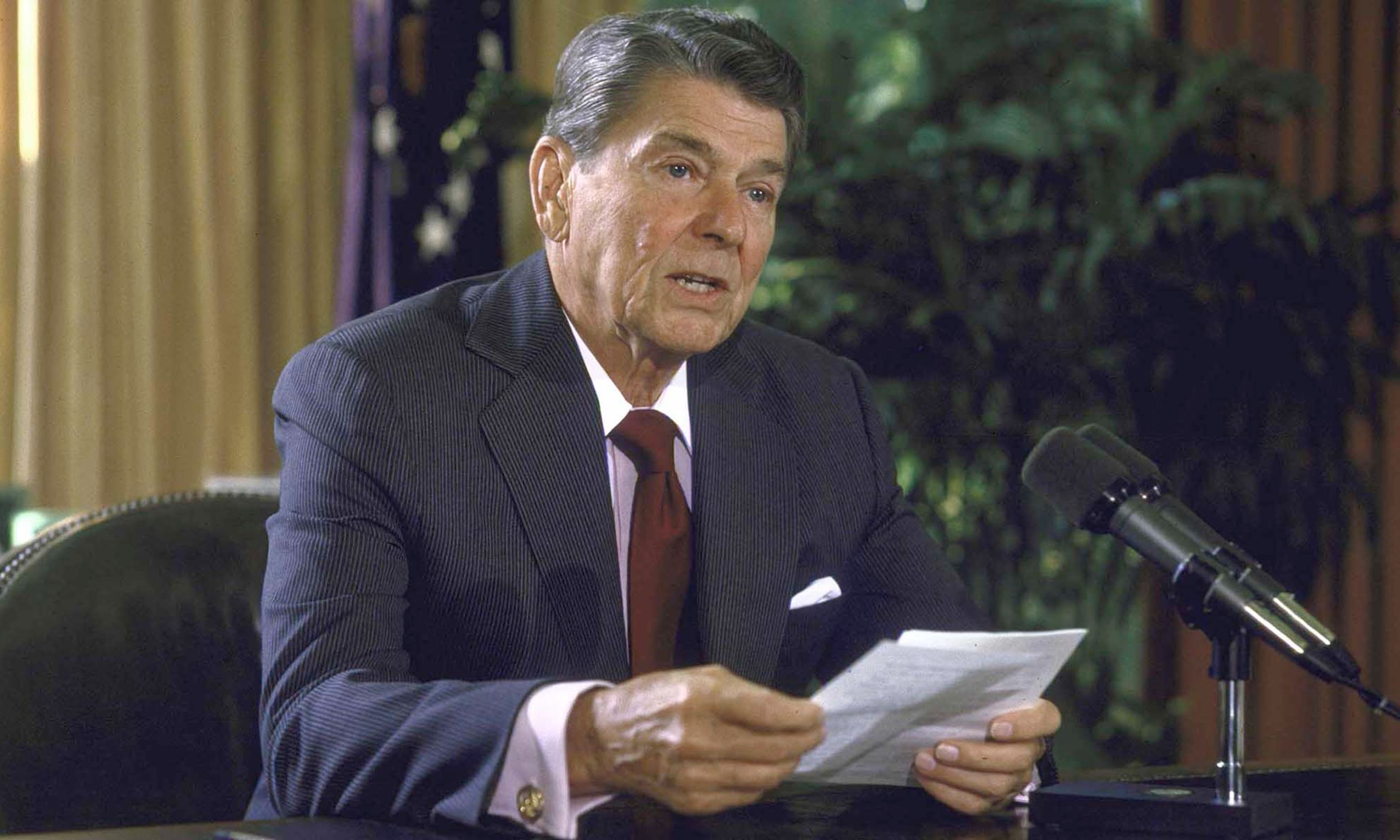
In We Win, They Lose: Republican Foreign Policy and the New Cold War (Republic, 220 pp., $29.95), Matthew Kroenig and Dan Negrea propose what they hope will be a foreign-policy blueprint for future Republican administrations. Kroenig, a Georgetown University professor, and Negrea, a former State Department official, are colleagues at the Atlantic Council, a D.C. think tank. They argue in their forthcoming book that despite what seem like deep divisions on the right, there is an emerging national-security strategy, which they call a “Trump-Reagan fusion,” around which Republicans can unite. (“Trumpism” for them does not mean isolationism and protectionism but peace through strength and “fair and reciprocal” trade.) Kroenig and Negrea’s title alludes to Reagan’s famous summation in 1977 of his intended policy toward the Soviet Union, a bold upending of détente. In America’s face-off with Communist China today, winning would mean “getting to a point where the Chinese government no longer has the will or the capacity to threaten core US interests.” It would also entail adopting a comprehensive strategy of deterrence and diplomacy for simultaneously dealing with the other members of the “New Axis of Evil” — Russia, Iran, North Korea — as well as the issues of trade, energy, and border security. In a section evaluating President Biden’s foreign-policy approach, the authors make a compelling case for how sorely we need an alternative.
A sobering, and unfiltered, view of the Catholic Church in America is provided in True Confessions: Voices of Faith from a Life in the Church (Ignatius, 284 pp., $24.95), by Francis X. Maier. A senior fellow in Catholic studies at the Ethics and Public Policy Center and a former aide to Archbishop Charles J. Chaput (who wrote the introduction for this volume), Maier conducted over 100 interviews with Catholic bishops, priests, deacons, religious sisters, and laypeople, and he presents their testimonies with minimal commentary. His purpose is to give a “snapshot” of the state of the Catholic Church at this particular moment and to diagnose its illness. Many of the accounts (nearly all those of the bishops) are anonymous, and their candor is illuminating. Maier is not a believer in false hope, and his interview subjects don’t provide much grounds for it. They are mostly in accord about a litany of problems facing the institutional church and wider culture: bitter political polarization; failures of leadership; a decline in religious affiliation and growing hostility to religion; a failure to educate the next generation; sexual and gender confusion; the soul-deadening effects of technology. Maier’s prescription for renewal is not a policy or program but for individuals to first look inward. As Archbishop Chaput writes in his introduction, with a nod to Saint Augustine:“Complaining about the darkness of the times is useless. We are the times.”











Comments