Recent nationalist uprisings in the Azerbaijan and Armenian Soviet “republics” have focused increasing attention on Caucasia, a region of the southern Soviet Union bounded by the Black and Caspian Seas and covered by the Caucasus mountains. The name, if not the place itself, is familiar through the phrase used routinely when I was a boy, though less often now, the “Caucasian race.” There is not the slightest reason to believe that the Indo-Europeans came from Caucasia, and indeed the idea of a single race issuing from there is nicely ironic: as the world has been reminded again and again in the past few months, Caucasia is among the most multiracial and multinational (with between forty and sixty spoken languages), and certainly one of the most divided and quarrelsome, regions in the world.
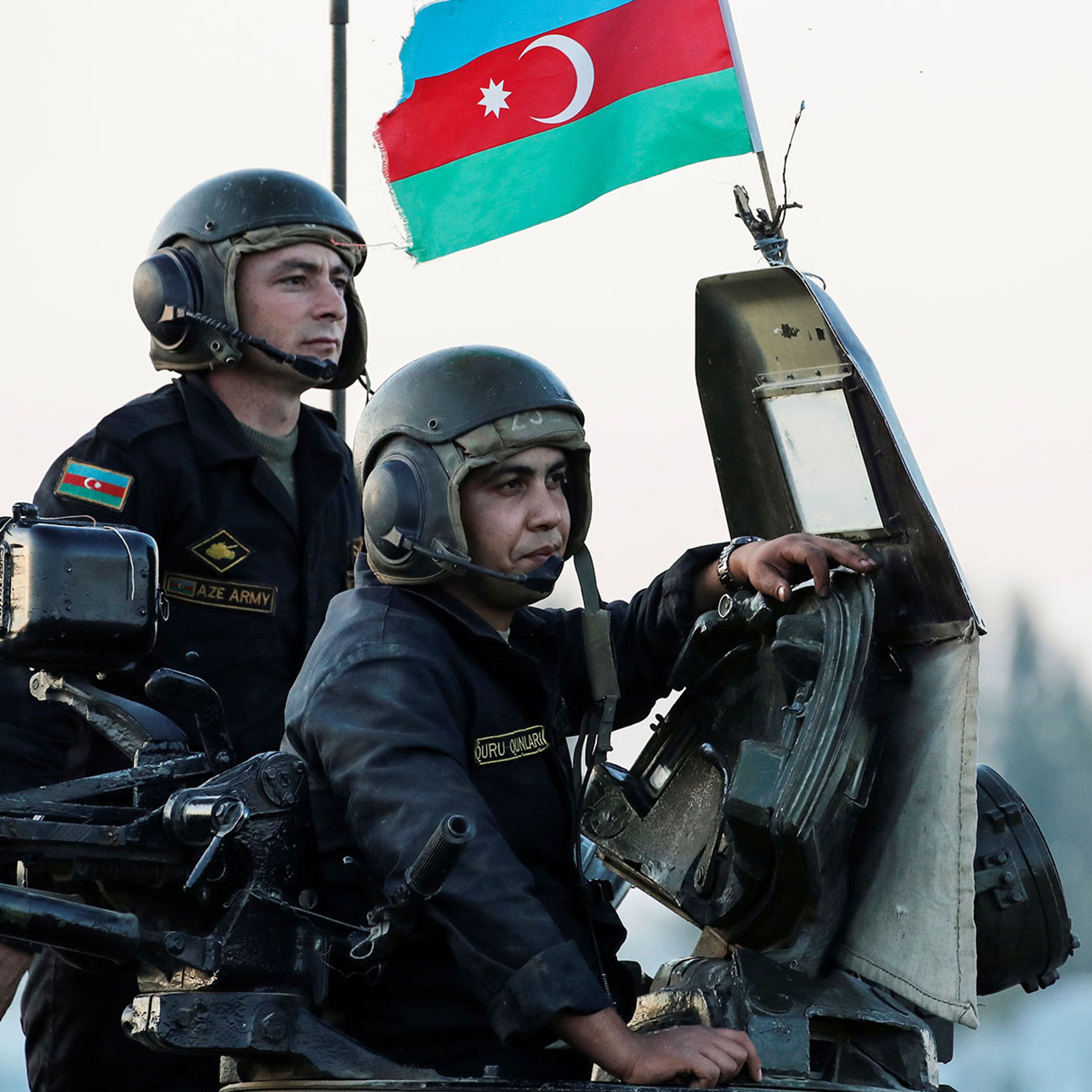
In the western Caucasus, on the shores of the Black Sea, lies Soviet Georgia, whose people constitute an ethnic question mark, no ethnologist so far having explained their origins. The Georgian religion is no mystery, however: the Georgians are Eastern Orthodox and have their own Patriarch. To the south live the Armenians, also Eastern-oriented Christians; their faith has been described as heretical, although some in the West claim that this is owing to a misinterpretation of their wording in regard to the nature of Christ. East of Georgia is Azerbaijan, whose Turkish-Tartar population is mostly Sunni Moslem.



Comments