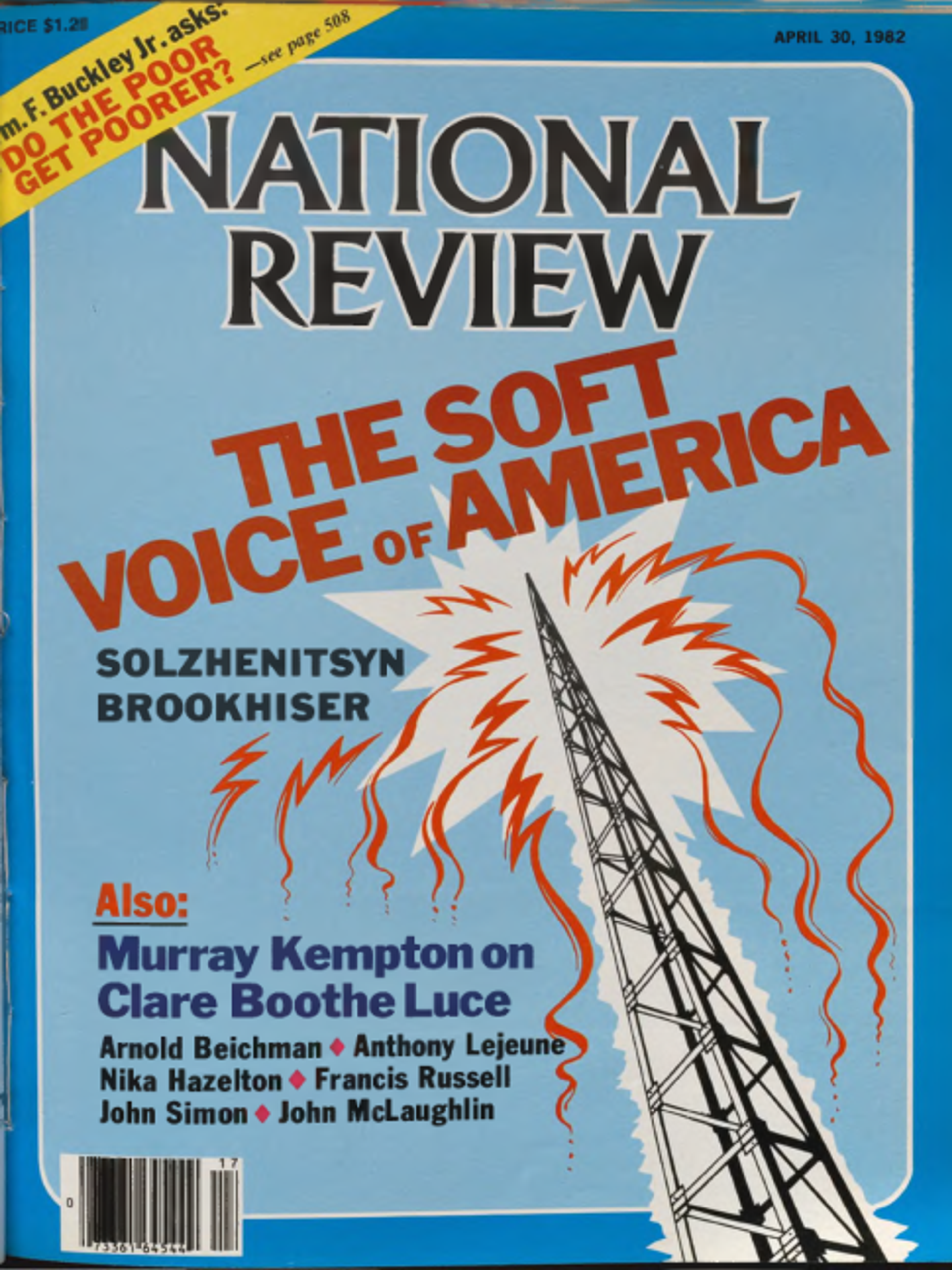
Thirty years ago, in 1953, when I had just been freed from the labor camp, I bought a radio receiver with the first money I earned. It was during my exile in Kazakhstan, and it was considered a suspicious move: why should someone in exile buy a radio? But I listened intently, through the horrendous jamming, and tried to catch some bits of information from the Western nations’ Russian-language broadcasts. I got to be so expert that even if I could only catch half a sentence, I could complete it from just those few words. For twenty years I listened constantly to Russian-language broadcasts from the West. I made use of the information, rejoiced in the successes, and was deeply distressed by the mistakes.
It is difficult to overestimate the importance these broadcasts could have if they were well directed. Of course, people in the Soviet Union still listen to them, but many become disillusioned, as I did. I fear that those who determine the general tone of America’s Russian-language broadcasts did not understand at the beginning, and do not understand today, the main aim and purpose of these broadcasts. The objective should be to establish mutual trust, warm feelings, and contact with the oppressed people, and thus to tear them away, to help them tear themselves away, from their Communist oppressors. If this had been done over the last thirty years, how different things might be today! I can say without exaggeration that maybe we would not be thinking that there is danger of another world war.






Comments