In 1962 Carolyn Leigh and Cy Coleman wrote this song: “Pardon me, miss, but I’ve never done this with a real live girl. . . . Nothing can beat getting swept off your feet by a real live girl.” The lyric always puzzled me, as I could only interpret it as the testimony of a recovering necrophiliac.
I found another example of calm acceptance of the macabre in Rodgers and Hart’s “With a Song in My Heart,” where we find, in the break, “When the music swells I’m touching your hand. It tells me you’re standing near . . .” Unless the hand had been separated from the body, where else could the addressee be standing? Is this the serenade of an axe murderer, or “just one of those things” (Cole Porter)?
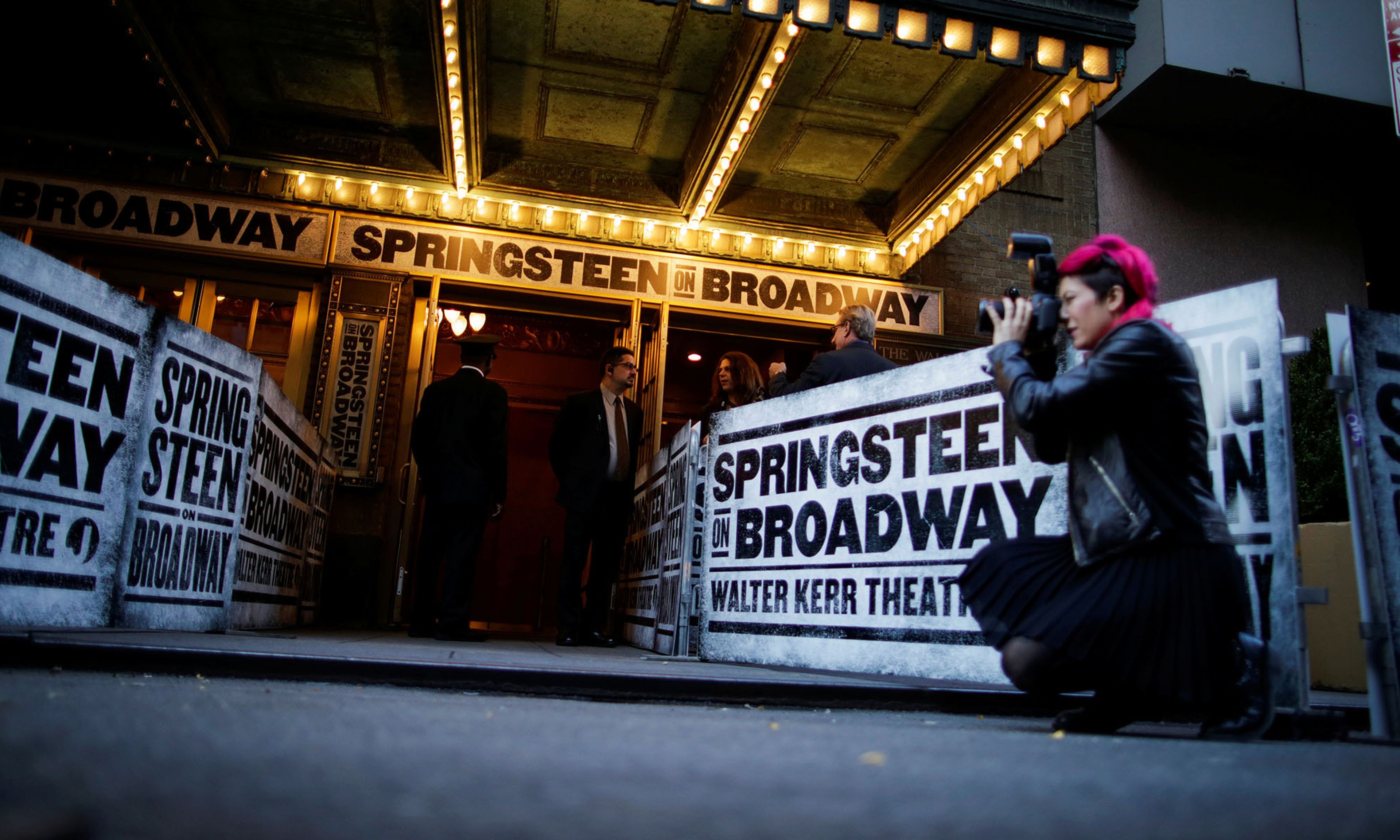
All the above are from Broadway musicals, that American coagulation of folk opera and treacle. But jeez, they put the tushies in the seats.
Now we are engaged in a great civil war, testing whether this nation or any nation so conceived and so dedicated can long endure (A. Lincoln).
But we are not met upon a battlefield of that war. The battlefield, for the culture, is, of course, New York City, the residents of which are hunkered down and meeting no one.
But it was suggested to me that, even though no one in his right mind would now travel to New York (or, in New York, to Midtown) to see some treacle at the risk of life and limb (the plague will pass but the threat of riots, unchecked, will continue), even so, plays could be streamed to the populace. This is as far from the real thing as phone sex is from physical intimacy.
I approve of phone sex on economic grounds. And I think Milton Friedman would have, too. For consider: Whatever the cost per minute, it must be cheaper than years of Freudian analysis — a similar experience of sitting in the dark and talking dirty.
The tail has come to wag the dog, and technology, even prior to the current unrest, has cheated a generation of the thrill of live performance. Sporting events and concerts all sport jumbotrons, our addiction to which (who can look away?) renders attendance at the venue moot.
Yes, all right, but still.
There existed, in Manhattan, until a year ago, a live national theater.
No play could be disseminated to the hinterlands until it had played Broadway and won the approval of the New York Times (a former newspaper). Thither we all therefore went, and equally thither those seeking both entertainment (the boast of treacle) and the adventure of wagering money and time against the possibility of actual talent, insight, or humor.
I not only have worked onstage with the Greats of my own day, but was blessed to’ve seen those of previous generations. I name Alec Guinness, Peter O’Toole, Ingrid Bergman, Henry Fonda, José Ferrer, Richard Burton, Ethel Waters, James Earl Jones, John Gielgud, Wendy Hiller.
I recall Peter O’Toole in Man and Superman. He came on and, for the first 30 seconds, I thought him some sort of oddity; and then I was transported, for the oddity did exist; it was and is called talent. It flows over the footlights in a blessed immediate communion between the artist and the audience. But it don’t flow over no stinking footlights on no screens.
Edith Evans played Irina Arkadina in The Seagull on the West End in 1936. Irina Arkadina’s son Konstantin Gavrilovich stages his amateur play before her, his actress-mother. He finishes, and Chekhov indicates: A Pause.
Miss Evans paused, it is reported, for four minutes before she spoke, holding the audience immobile, waiting to see her reaction. One can’t do that in a film. (Although the French it seems won’t leave off trying.)
No, the theater, I’ve always found, is magic. The audience reacts as one. In the presence of artistic talent they react to the intent of the artists, in its absence, to the desire to go home.
The task of the playwright has nothing to do with that of the novelist or essayist. To hold the audience’s attention he must inculcate in them a burning desire to know What Happens Next (see Edith Evans); and must do so without their becoming aware of his actions. In this he is like the magician, whose most useful tool, distraction, can function only if the audience think their attention is under their control. The mind balks at the suggestion: “Look there . . .” but it can be directed by an understanding of its operations. It will always turn to the most interesting, shocking, or forbidden thing: If, for example, a dog used in a previous effect wanders (supposedly by accident) onstage, and is caught by a stagehand’s hand, the magician, across the stage, has had enough time, unobserved, to disappear most anything.
Hemingway tells us, in The Dangerous Summer, that his matador friends describe the progress of the bullfight as “instructing the bull.” Every move, that is, exists to tire, weaken, anger, and confuse the bull into maneuvering into that state and position where he may be dispatched.
So it is with us playwrights. Every line, proposition, act, and scene must exist to lead the audience, increasingly, to wonder at the possible resolution of the hero’s dilemma; leaving them, finally, with but a single unacceptable but inescapable possibility. Which inescapable conclusion (at which they have arrived, they think, through their own intellect) is revealed, at the denouement, to be incorrect.
The correct conclusion, in the perfect play, must not only be clear and acceptable to the Hero, but (and only for that purpose) to those he represents, the audience. They must, then, in reviewing each clue, conclude that the correct answer was before them all the time, and that they have, thus, been treated fairly. The playwright, that is, cannot introduce evidence that was not previously known (“Because, you see, I am your Long Lost Mother,” et cetera).
Film is manipulative. All films, theatrical or documentary, are confections of their director and editor. That is the nature of film: The plot is conveyed, and, thus, the audience’s interest created and sustained, through a succession of images.
Film does not and cannot “capture the performance.” It is the performance. Of the skill and intention of its constructors. The magnificence of the theatrical interchange is that it cannot be captured. You had to be there.
Perhaps we may have that chance again.










Comments