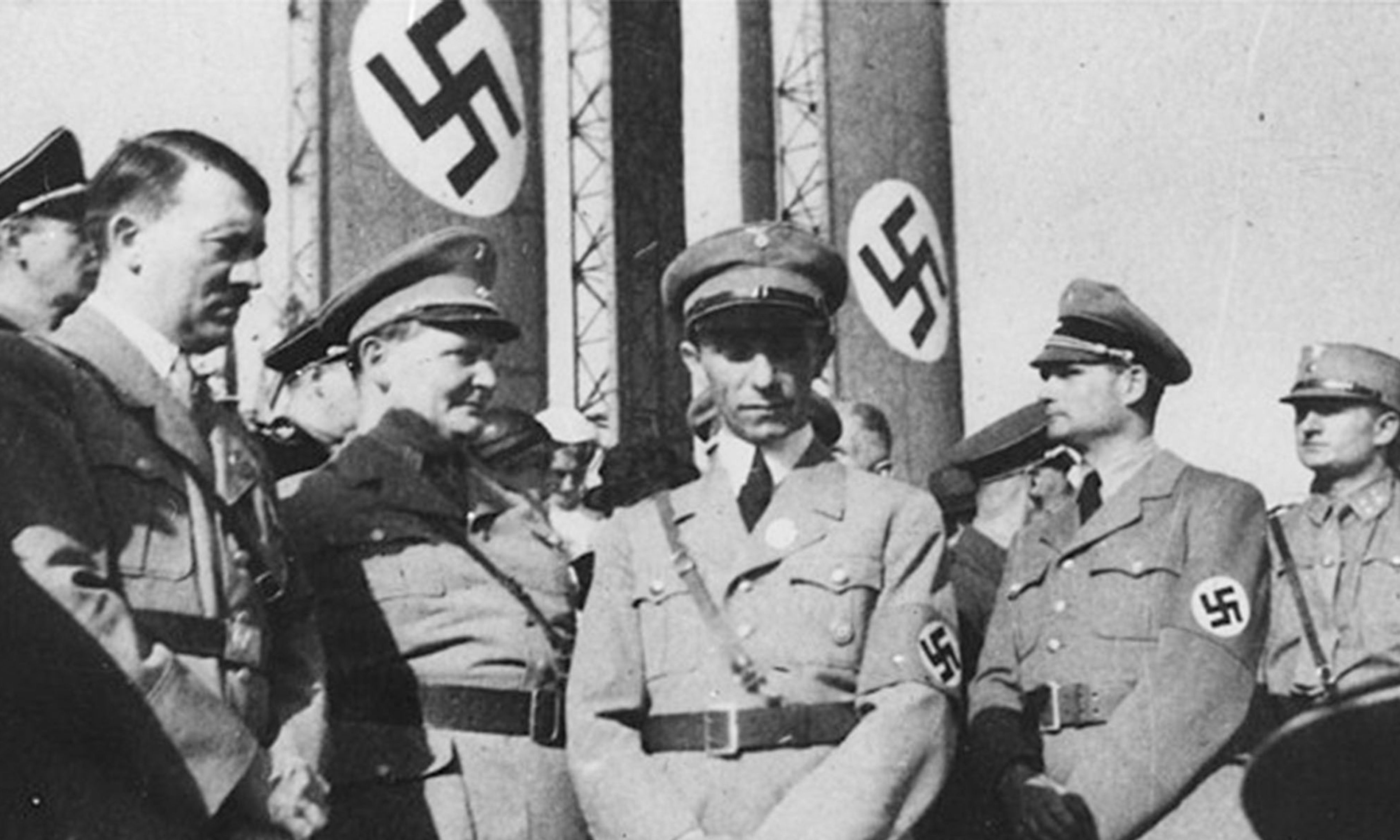
When the established order collapses, those who live among the ruins often take comfort from the hope that someone will turn up to tell them what comes next. With a dysfunctional and humiliated Germany struggling to come to terms with a military defeat that it still did not understand, there was nothing very remarkable about the views of the young, down-at-heel Ph.D. who, in early 1922, complained in an article for his hometown newspaper that “salvation cannot come from Berlin,” the shamed and shameful symbol of old Reich and new Weimar. But all was not lost: “Sometimes it looks as though a new sun is about to rise in the south.”
Joseph Goebbels was referring to Munich, then a bastion of the nationalist far right, a lair of fantasists, the furious, the lost, and the dangerously sane, including the nascent Nazi party, a movement that included all those and more poison still. And it was there that this believer in search of a creed, a lapsed Catholic who lost Christ but not his sense of the divine, was to discover what he was looking for. “Germany,” he wrote in July 1924, “yearns for the One.” In Hitler, Goebbels found him.











Comments