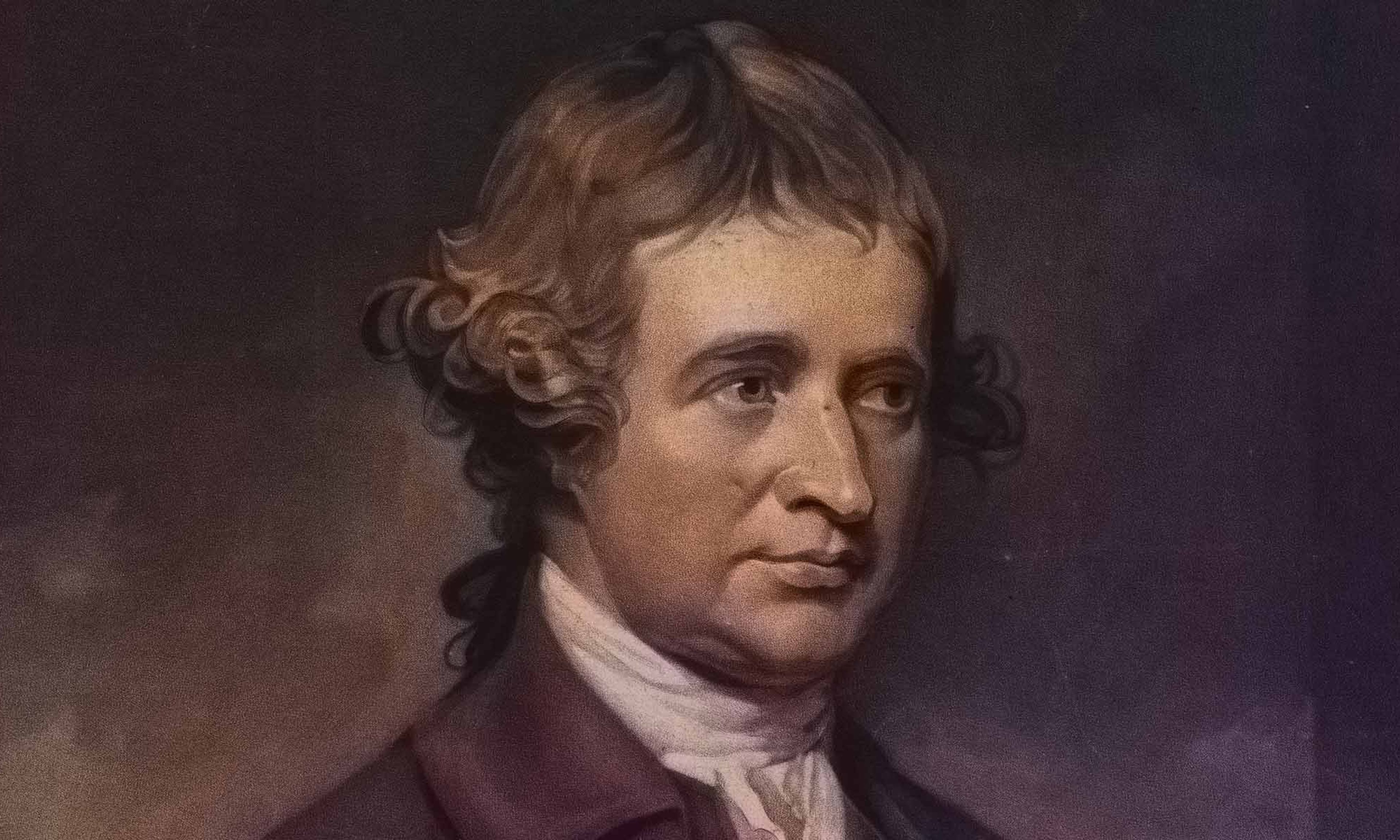
To understand renovations being made to a building, it is good to understand the kind of order that the renovator hopes to establish. Edmund Burke writes to a French correspondent in 1789: “Permit me then . . . to tell you what the freedom is that I love.” The freedom is liberal policy; and his love of it is why he is so opposed to the goings-on in France: They will not support “practical liberty.” By understanding Burke’s sensibilities in policy reform, we have a better sense of what he aims for, long term, when considering renovations to the polity.
“Conservative liberalism” is a suitable name for Burke’s outlook. In that expression, “liberalism” is the noun. It is primary. It communicates something about the house people are to make their homes in. The adjective, “conservative,” curbs the enthusiasm of liberalism but enhances its wisdom. Conservatism makes liberal principles more practical, pertinent, and robust. It grounds the arc of liberal civilization; it spans continents; it can endure.
Calling Burke a liberal isn’t unique to us. Russell Kirk said that Burke “steadfastly opposed all policies calculated to reduce private liberties,” and he repeatedly called Burke a liberal. Samuel Huntington wrote that “insofar as Burke had views on the desirable organization of society, he was a liberal, a Whig, and a free trader.” Yuval Levin uses the name “conservative liberalism” and suggests that Burke represents it. Gregory Collins mounts a case for Burke as an economic liberal and concludes that, while Burke “did not promote abstract natural rights theory animated by orthodox laissez faire doctrine,” he nonetheless offered an “endorsement of market freedom.”
In the 1770s, Adam Smith and others christened the attaching of a political meaning to the word “liberal.” Burke was among them. In the 1777 “Letter to the Sheriffs of Bristol,” Burke spoke of “the liberal government of this free nation.” In a 1778 letter he writes that “the prosperity which arises from an enlarged and liberal system improves all its objects.” In 1778, Burke speaks of the “liberality in the commercial system.” In Reflections on the Revolution in France, he speaks of “a liberal descent” by which, “always acting as if in the presence of canonized forefathers, the spirit of freedom, leading in itself to misrule and excess, is tempered with an awful gravity” — a remark that Gertrude Himmelfarb aptly presents as liberal in the Smithian sense. Burke declaims against the revolutionary assembly in France: “Their liberty is not liberal”; “it is a vile illiberal school, this new French academy of the sans culottes.” His posthumous Thoughts and Details on Scarcity is plainly and strongly favorable to the presumption of liberty and hence free markets.
When thinking of liberty in policy, it’s helpful to consider what we’ll call the “liberty principle”: In a choice between two reforms (one of which may be no reform at all), the one that rates higher in liberty should be adopted. But, like Adam Smith, Burke did not maintain the liberty principle as an axiom, as doctrinaire libertarians might. Burke gives liberty a presumption, which like any presumption can be overcome. Speaking of himself, Burke said his reflections “come from one, almost the whole of whose public exertion has been a struggle for the liberty of others,” “from one who wishes to preserve consistency; but who would preserve consistency by varying his means to secure the unity of his end.”
Liberty enjoys a presumption, but so does something else: the status quo. The two presumptions are in tension when considering a policy reform that would augment liberty. In that case, they must moderate each other. The matter of how great a presumption to give to the status quo requires another contextualization of “conservative”; conservative in policy reform relates to but should be distinguished from conservative in polity reformation. Burke was conservative in polity reformation — fundamental changes to the constitution of the state and of the citizenry — but he was not particularly conservative in policy reform.
In many other cases, the two presumptions in favor of liberty and of the status quo — stand shoulder to shoulder: When a faction proposes a reform that would reduce liberty, the two presumptions align against it, placing a double burden of proof on those who would further governmentalize social affairs.
Burke in his last years saw polity radicalism run amok in France and surge as “armed doctrine . . . in every country.” In attacking polity radicalism which makes men “little better than the flies of summer” — he expounded polity conservatism. A selection of his comments is provided in our new book, Edmund Burke and the Perennial Battle, 1789–1797.
There are general arguments for polity conservatism: (1) Established ways and customs have been through a process of selection and survival and adaptation, reflecting goodness, however imperfectly. “Our patience will achieve more than our force.” (2) To some extent, goodness lies in familiarity. To some extent, customs are good because people are accustomed to them. (3) Knowledge is slight and highly conditioned by experience and practice. The consequences, even the true nature, of a proposed polity innovation are scarcely known. Rampant delusions bring hazards of collective foolishness and opportunistic abuse. (4) Happiness depends on tranquility, which depends on confidence. Confidence in living depends on rules, certainty, and stability. Every reformation arouses and inspires a next reformation, reducing certainty, stability, confidence, and the quality of life. (5) Bad reformations are not easily corrected: Their badness enjoys plausible deniability, and they breed interest groups that stoutly defend them.
Burke lamented of his age “that every thing is to be discussed; as if the constitution of our country were to be always a subject rather of altercation than enjoyment.”
In spite of all these reasons to keep things the same, Burke was ready to take up the burden of proof and espouse reforms. In the regular course of things, the changes are conceived as adaptations and improvements, not transformations. “I would make the reparation as nearly as possible in the style of the building.”
The reforms Burke supported during his career were many. He wrote a plan for gradual emancipation of slaves in British colonies. He believed that the East India Company had violated the public trust and he supported reforms to it. He supported Catholic emancipation, and he favored allowing the American colonies to leave the U.K. Each of these proposals was guided, in his view, by deep reverence for the British polity, the preservation of which demanded policy reforms.
Burke understood that tradition and just reform depend on each other and form an essential tension. “A disposition to preserve, and an ability to improve, taken together, would be my standard of a statesman.”
Polity conservatism has a stark contrast in polity radicalism. “He that sets his house on fire because his fingers are frostbitten, can never be a fit instructor in the method of providing our habitations with a cheerful and salutary warmth.”
But another contrast might be called polity loutishness. Some do not think enough about the dependence of liberalism on politics. Some tend toward denial or are duped and made a tool, from any of a number of motives, including vanity, careerism, concentration on the ephemeral, attachment to a too-simple assemblage of principles, and unwillingness to face up to human susceptibility to wickedness.
Burke rebukes polity louts as well. One such rebuke is his famous line that “there is no safety for honest men, but by believing all possible evil of evil men, and by acting with promptitude, decision, and steadiness on that belief.” Another is when Burke bemoans those who find their “scheme of politics not adapted to the state of the world in which they live” and therefore “abandon for a very trivial interest what they find of very trivial value.”
Adam Smith recommended “allowing every man to pursue his own interest his own way, upon the liberal plan of equality, liberty, and justice.” Burke supported Smith’s recommendation. He knew that, even in the best of times, the creed would face virulent opposition. In the 1790s, Burke saw “a sect aiming at universal empire, and beginning with the conquest of France.” He wrote, “The faction is not local or territorial. It is a general evil. Where it least appears in action, it is still full of life. In its sleep it recruits its strength, and prepares its exertion. Its spirit lies deep in the corruptions of our common nature.”
Factions working toward greater governmentalization of social affairs are a permanent feature of our world. The battle against them is perennial. Burke’s conservative liberalism is as relevant today as it was in the 1790s: “It is an obvious truth, that no constitution can defend itself. It must be defended by the wisdom and fortitude of men. These are what no constitution can give. They are the gifts of God; and he alone knows, whether we shall possess such gifts at the time we stand in need of them.”
— Mr. Klein is a professor of economics and holds the JIN Chair at the Mercatus Center at George Mason University. Mr. Pino is the Thomas L. Rhodes Journalism Fellow at National Review Institute. They are the editors of the newly published book Edmund Burke and the Perennial Battle, 1789–1797.












Comments