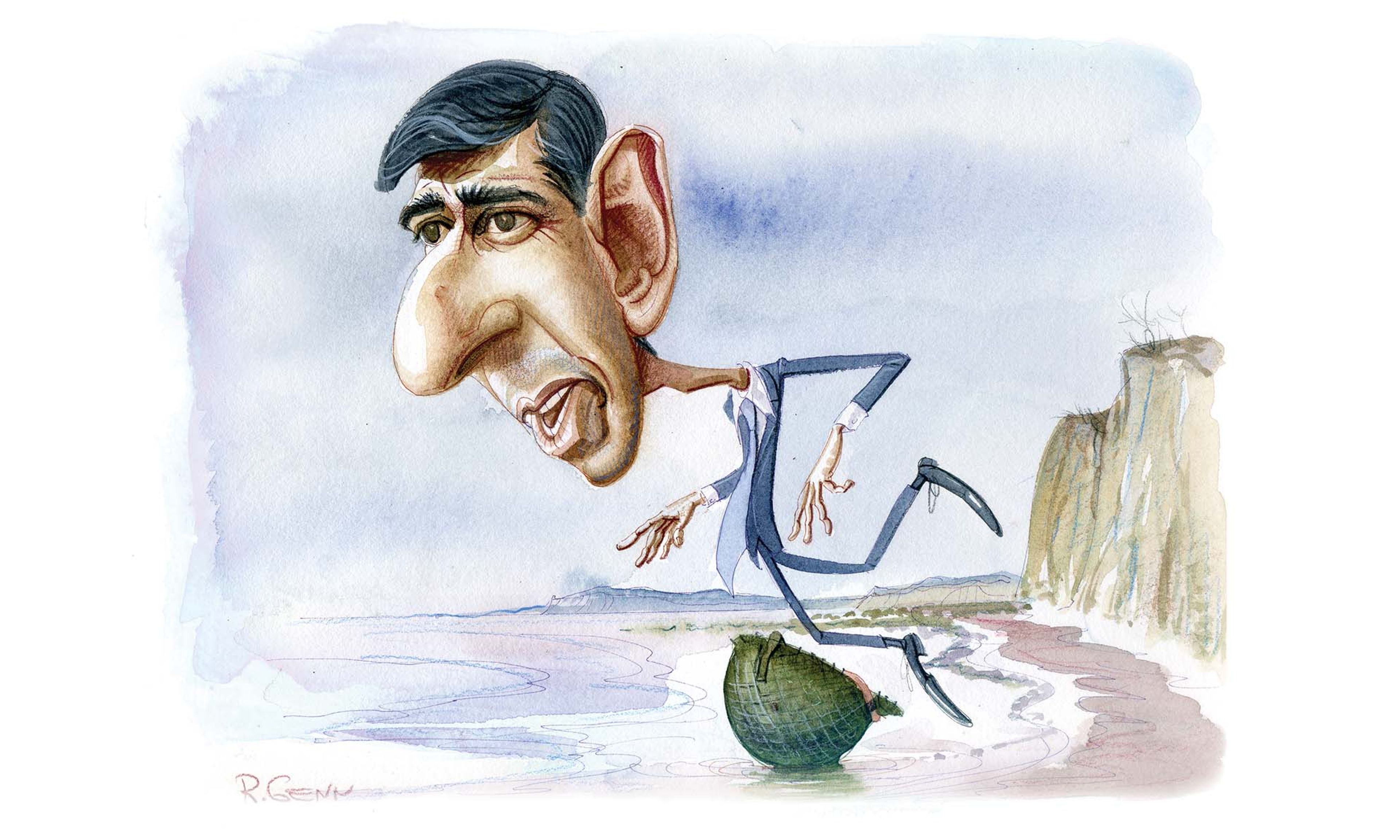
When Rishi Sunak was elected Conservative leader and thus prime minister in a parliament with a healthy Tory majority only 21 months ago — it feels like a lifetime ago — the “One Nation” Tory MPs (in colloquial language, “the Wets”) who had voted for him, as well as commentators across the mainstream media, celebrated his elevation. It was, they averred, the return of “the adults in the room” after the Hellzapoppin’ antics of the Boris and Liz Truss regimes. The onlookers’ relief was treated as evidence that these adults must be equipped singly and collectively with “a safe pair of hands.” But in these early stages of the U.K. election campaign, Sunak has demonstrated an ability to smash crockery that outmatches anything Donald Trump could achieve.
His latest fumble was an almost nuclear one. He informed the French government that he would not be attending the Normandy commemoration of the D-Day landings alongside Presidents Macron and Biden and Chancellor Scholz, apparently because that would take him away too long from the election campaign. The French who had organized a superb tribute to the bravery and sacrifice of the D-Day veterans objected; a “compromise” was reached under which Sunak attended but left early to do a television interview. Foreign Secretary Lord Cameron stayed on for the formal photograph.
When this news broke in London, shock, awe, and in particular mystification descended on the Tory Party. Tim Montgomerie, the most generous-spirited of Conservative commentators, was almost incoherent with indignation on a TV panel, calling Sunak’s decision “extraordinary,” “indefensible,” “not dignified,” and “political malpractice of the highest order.” He was expressing the general opinion in the party — what could the prime minister have been thinking? June 6 is one of the most significant dates in the calendar of modern British patriotism — no one ever needs to ask what it means. Its commemoration in 2024 is almost certainly the last milestone anniversary that any veterans will be able to attend in person to receive the thanks of the Allied nations. President Macron marked this fittingly by granting the survivors what he called “the highest honor of the French state” and pinning the medal on each of them personally in a profoundly moving ceremony. That Sunak should at least have been present was the unanimous view.
The only possible response to such widespread and deeply felt outrage was a straightforward apology. Sunak duly delivered an unqualified one the following day. That may help to calm down immediate passions, but it also raises doubts about the PM’s political antennae. Were they merely switched off that day, or are they permanently malfunctioning?
Politically speaking, being present at the D-Day commemoration would have been far shrewder campaigning than the most brilliant TV interview. It would have been prime ministerial, national rather than political, and would probably have elevated Sunak, at least for a day or two, above the general ruck of squabbling pols.
Labour leader Sir Keir Starmer, a cautious and unglamorous lawyer, recognized that. His general approach has been well described as a “Ming-vase strategy,” i.e., preserving his opinion-poll lead by taking no risks whatever. But he seized the opportunity of the commemoration, stayed for the full event, and even managed to catch an interview with the Ukrainian president as a bonus. As the week ended, his Ming vase was looking safely intact — and even polished.
From Sunak’s viewpoint, however, Starmer is not nearly so ominous a threat as Nigel Farage, who in the middle of the first week emerged to resume the leadership of the Reform Party, previously known as the Brexit Party, which under his leadership won the most seats of any national political party in the 2019 European Parliament election, driving the Tories down to a mere 9 percent. But Reform’s showing is no reason to downplay Labour’s prospects in general: Starmer’s disciplined new model party is on course to win a landslide victory with — according to the latest polling from Redfield and Wilton — a 23 percent lead over the Tories and a 42 percent share of the total vote. Admittedly, Starmer does face real if modest obstacles in what looks like his steady progress to 10 Downing Street. His refusal to condemn Israel over Gaza will push some Muslim votes to other parties such as the Greens, the Liberal Democrats, and the neo-communist Workers Party led by the gifted firebrand and former Labour MP George Galloway. From another direction, the Tories will be seeking to explore allegations that, despite appearances, Starmer was a loyal member of the International Marxist Group — a sophisticated leftist faction seeking to transform Labour into a genuinely “progressive” party — well into his thirties.
As these items suggest, Starmer’s Labour Party is riven by serious ideological divisions under a carapace of disciplined moderation sustained by a desperate hope for office after 24 years in opposition. Those divisions will be on display in miniature in the London constituency of Islington North, where the left-wing former Labour leader Jeremy Corbyn, still popular there despite being expelled from the party, will run again as an independent supported by a galaxy of left-wing celebrities. Corbyn has the chance of a serious upset here because the Labour leadership has parachuted in an official Labour candidate, an executive of a leading private health organization, who is likely to irritate even moderate Labour sympathizers.
Even so, a Corbyn win would be seen primarily as the triumph of Labour nostalgia as the party moves into more-subtle and more-camouflaged versions of Left-progressivism. Nor need Starmer fear overmuch the loss of votes to other parties — they will probably be more than offset by Labour’s gain of 30 or more seats in Scotland as a result of the decline of the scandal-hit Scottish National Party. Britain’s Muslims account for 6.5 percent of the population, and 80 percent of them vote Labour. In the last election, Labour won all 30 of the seats where Muslims accounted for more than 30 percent of the electorate. Despite both Gaza and Galloway, the Labour Party is likely to keep the great majority of those constituencies as well as gain the 30 new Scottish ones. All in all, Labour’s near-insurmountable lead in a recent poll from YouGov would give it a parliamentary majority of about 194 over all other parties and a total of 422 Labour MPs. That lead is so large that almost any rational prediction must offer Starmer something like a landslide.
If so, why did I argue above that Sunak should, indeed does, fear Farage more than Starmer? The reason is that while Starmer can inflict a large defeat on the Tories, Farage might have the power to inflict a terminal defeat on them — or at least a defeat that keeps them out of power for a generation. That Redfield and Wilton poll, for instance, showed Reform rising to within two points of the Tories, winning 17 percent to Sunak’s 19 percent. If that trend continues, Reform will not only soon overtake the Tories but also enter the electoral territory in which gains in votes cast begin to be matched by seats won. In the first-past-the-post, single-member-constituency electoral system, parties can win 23–25 percent of the vote without winning a single parliamentary seat. Once they reach the territory of 26–28 percent, seats start falling into the insurgent party’s column, and at 29–31 percent, there’s a cascade.
How likely is that? Given all the uncertainties involved, it’s not very likely. But it’s not very unlikely either, and it’s certainly possible. Consider in this context the awkward fact that the latest poll I quoted above was conducted before Sunak decided to cut short his visit for the Normandy commemorations. That decision is likely to affront older voters, who remember D-Day either from experience or from their parents’ memories, more deeply than others. But older voters vote Tory more strongly than any other age group, and the differences between the groups’ voting intentions are far from marginal. Among voters aged 18–24, 25–49, 50–64, and 65+ in May 2024, those intending to vote Tory accounted for 7 percent, 13 percent, 23 percent, and 42 percent, respectively. A fall in Tory support among the 65+ group of voters would be disproportionately damaging — no, catastrophic — to the Tory Party.
Still worse from Sunak’s standpoint, one of the political figures whom the two older age groups most respect is Nigel Farage. He won that respect by his leadership not only in the struggle to implement Brexit but also in his campaign to expose the NatWest banking group’s policy of “de-banking” those of whom it disapproved politically for violating establishment prejudices. He then burnished his antiestablishment credentials with an appearance on the reality-TV show I’m a Celebrity — Get Me Out of Here. He ended up as one of the last three “survivors” in the game but, more important, came across to the viewers as a decent sort of chap willing to lose his dignity for a good cause. Finally, Farage’s intellectual hinterland includes a serious interest in military history and great battles — he was present, for instance, in Turkey when the last six Australian and New Zealand Army Corps survivors from World War I arrived for the commemoration of Gallipoli, where they were astonished at their reception by thousands of cheering Turks. These things matter to him.
His comment on Sunak’s early return from Normandy, while formally restrained, was therefore damning: “It’s at the edge of living memory. . . . If he’s not prepared to go to the international commemoration with the heads of so many different countries, overlooking a beach on which our American allies lost thousands of men, that says a lot about him. He is completely disconnected from the center of this country, and he’s proved to me that he basically is not a patriotic leader of the Conservative Party.” A late-breaking poll by YouGov has just shown that 65 percent of U.K. adults share Farage’s view, finding it either “somewhat unacceptable” or “completely unacceptable” for Sunak to have left the commemoration when he did.
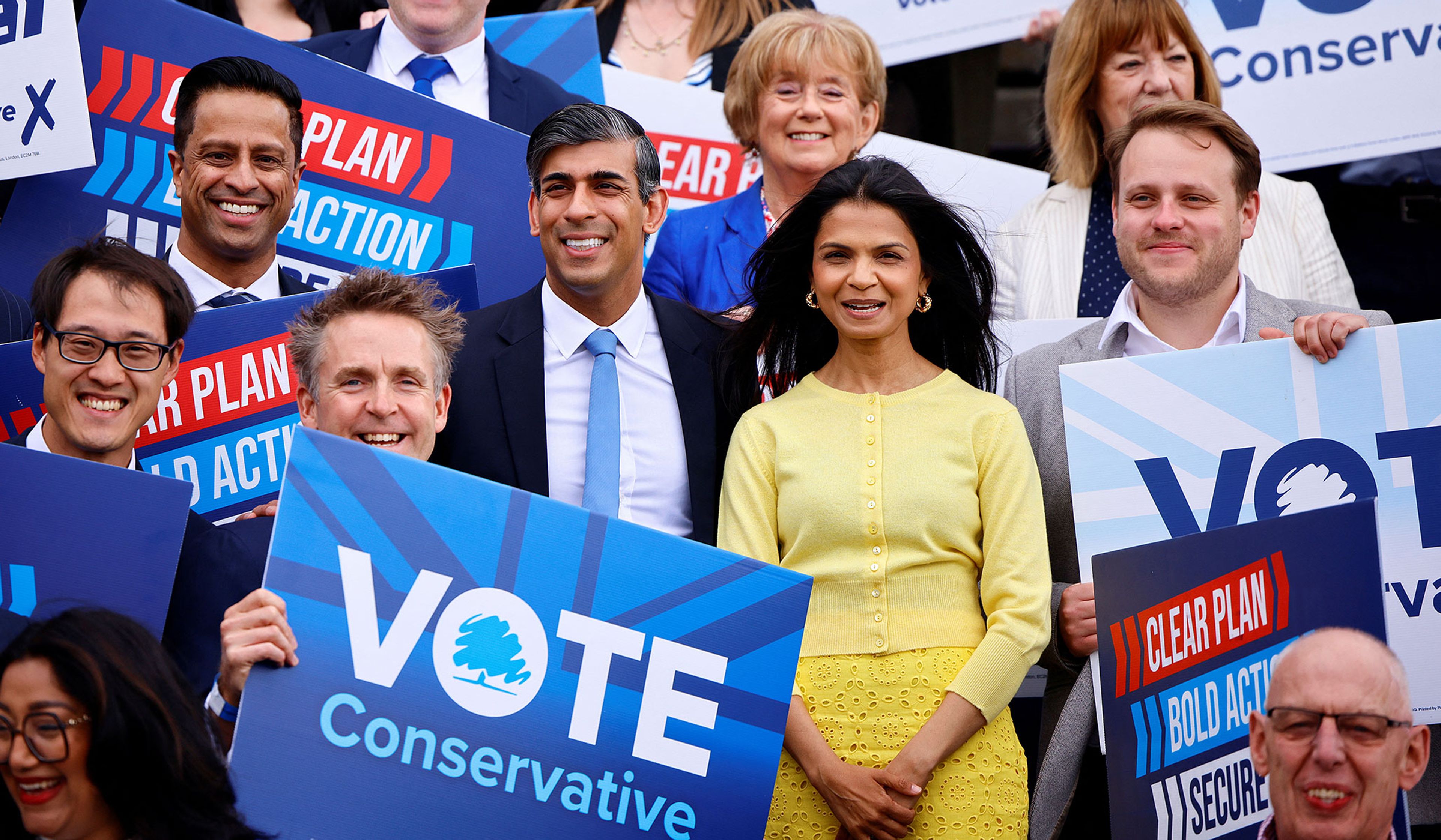
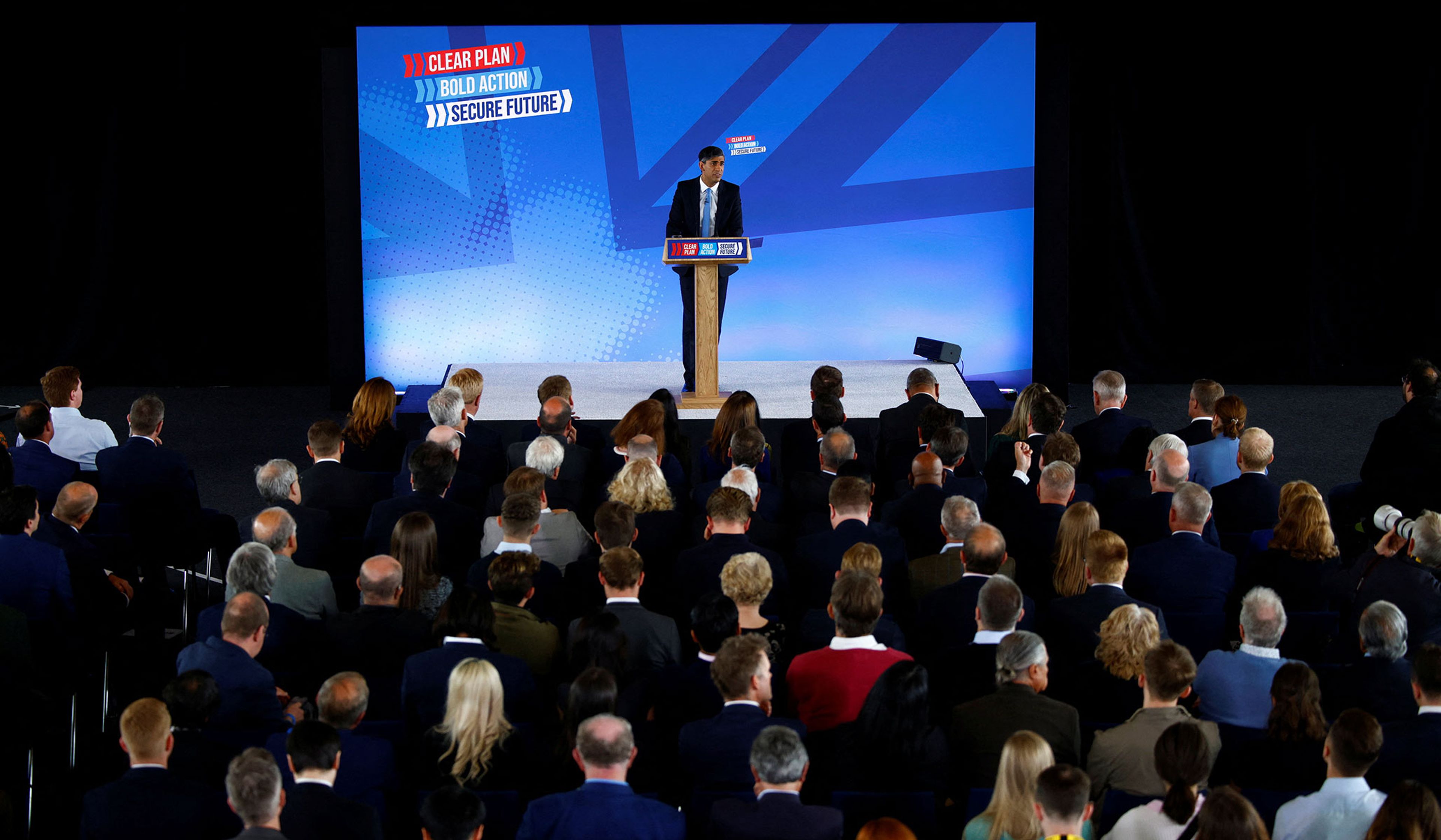
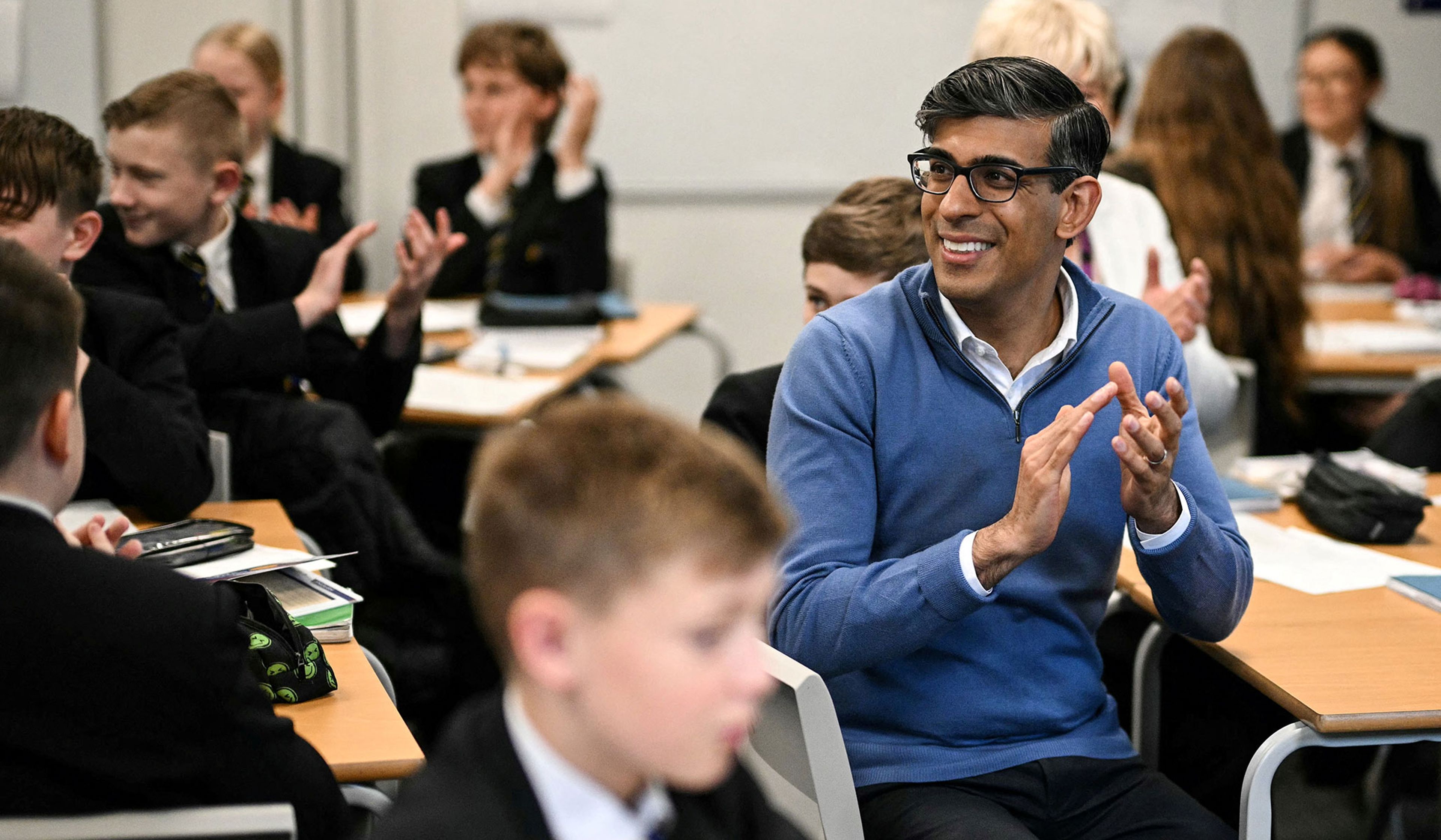
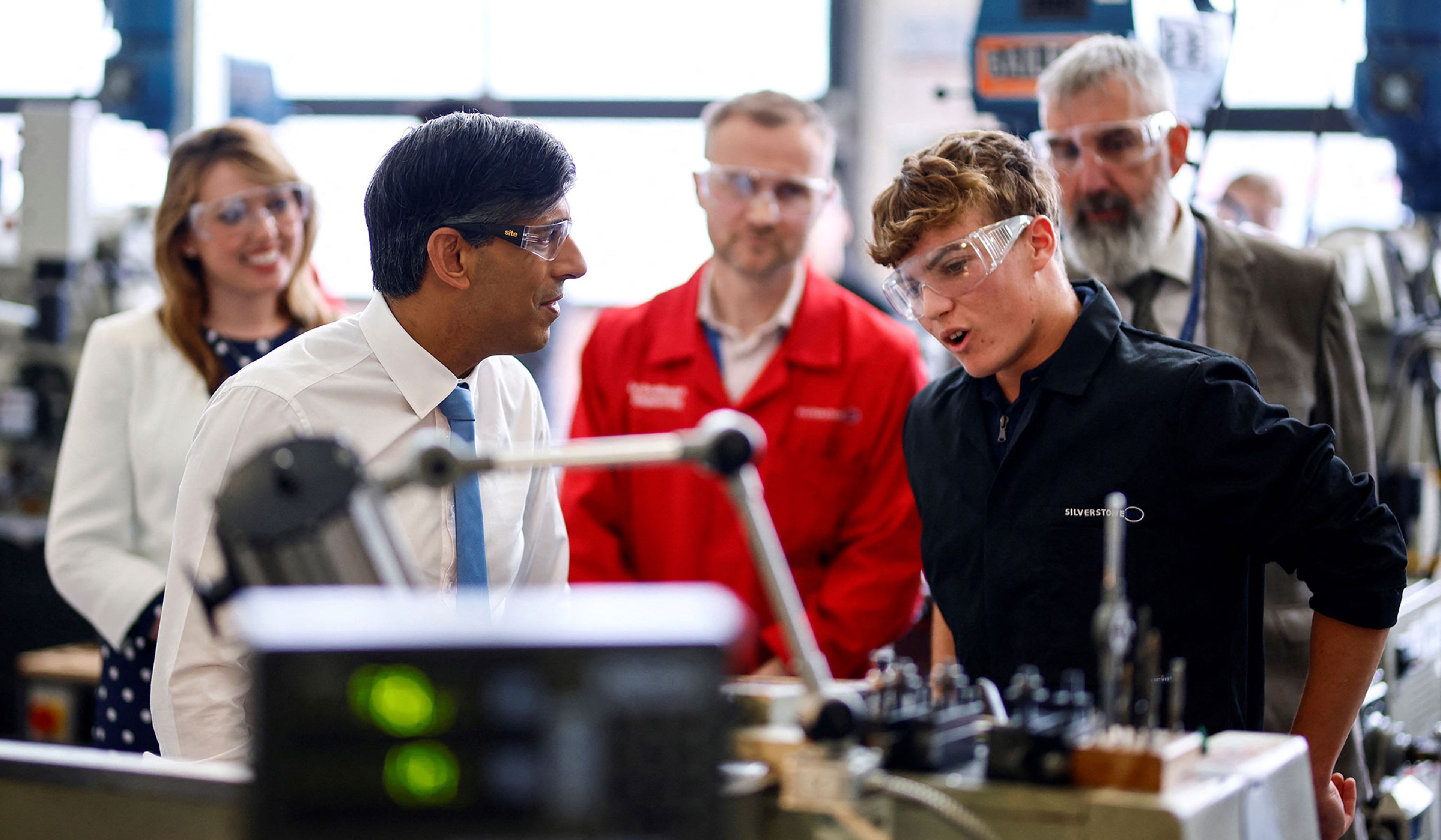
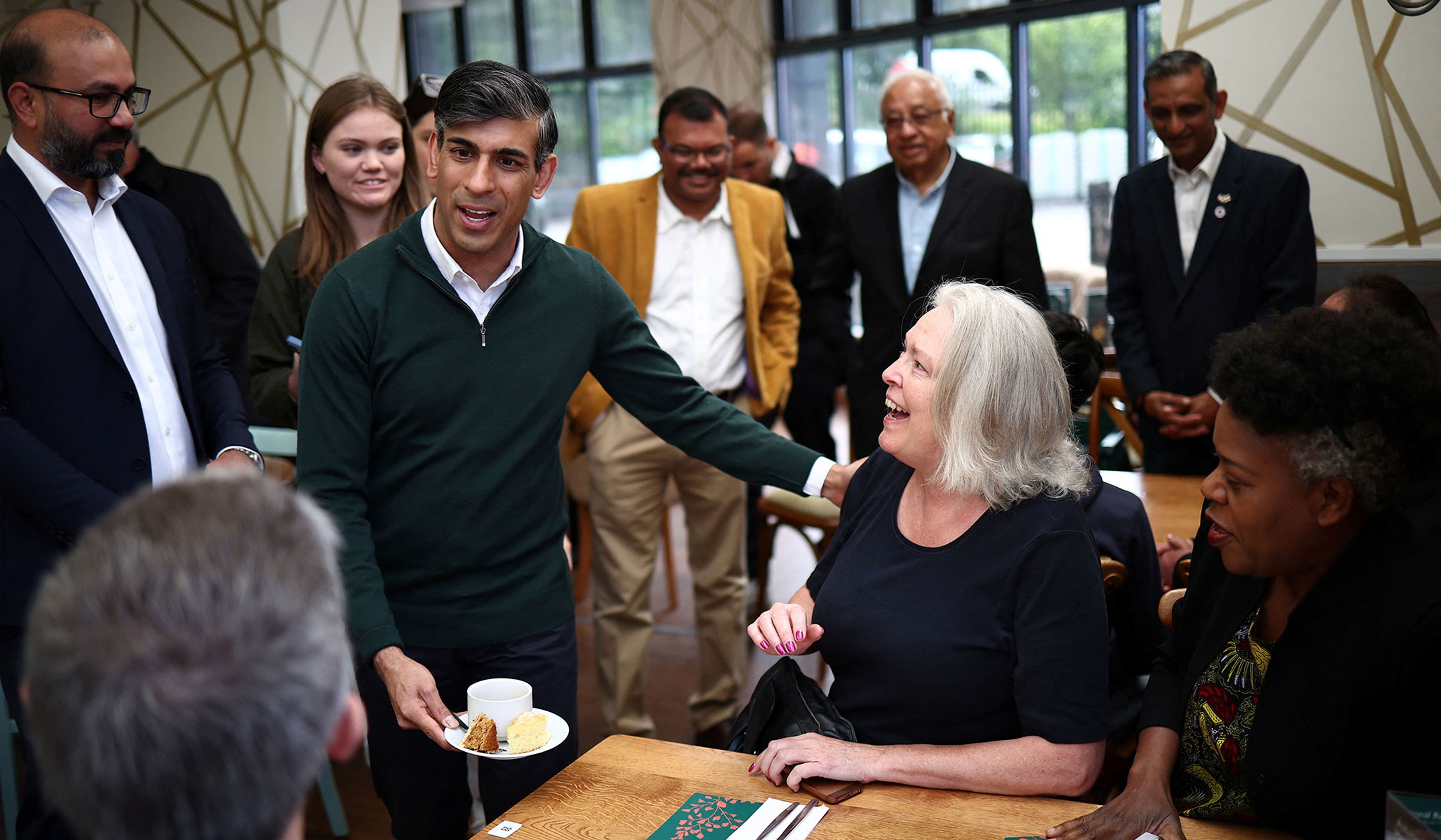
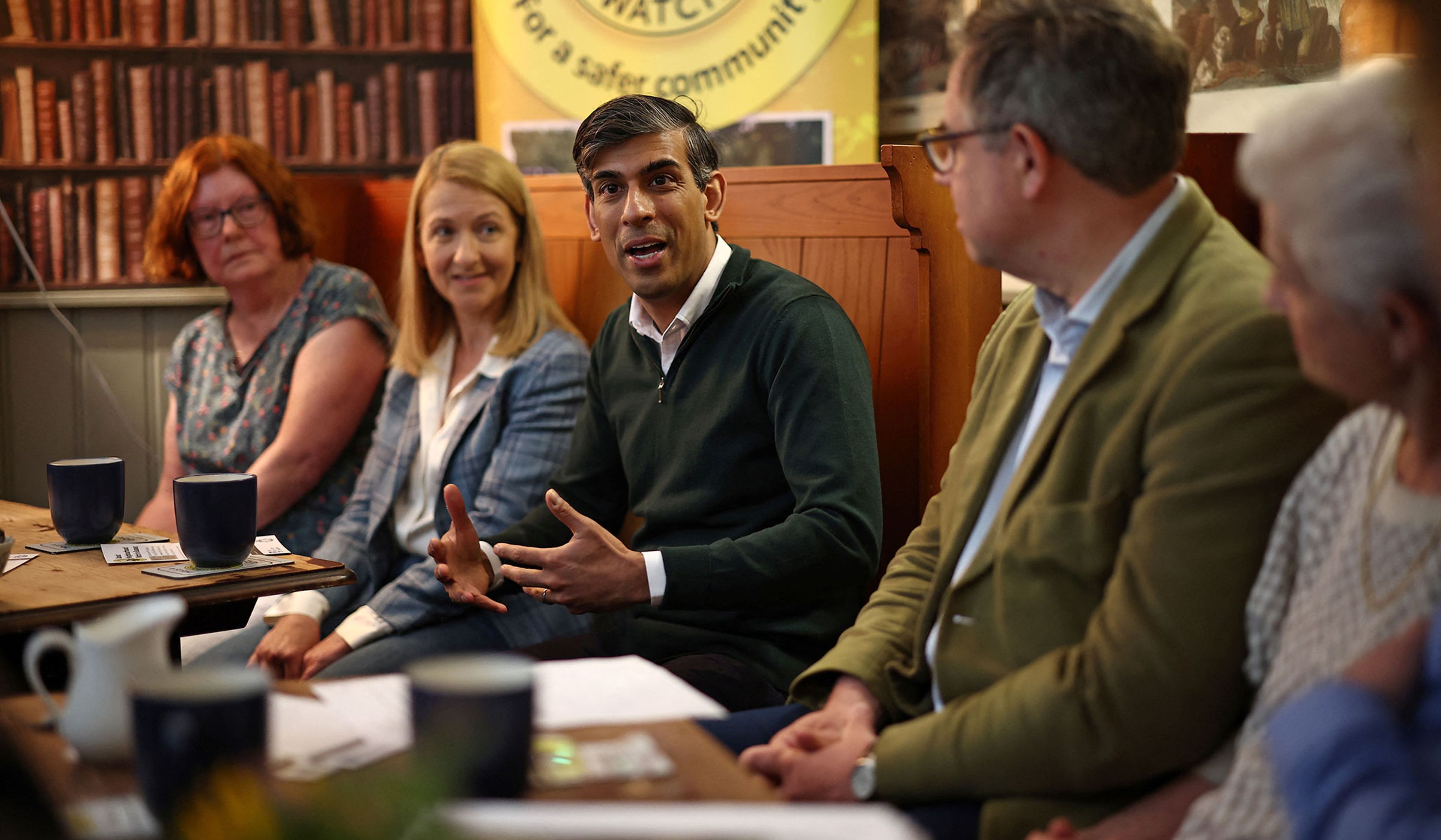
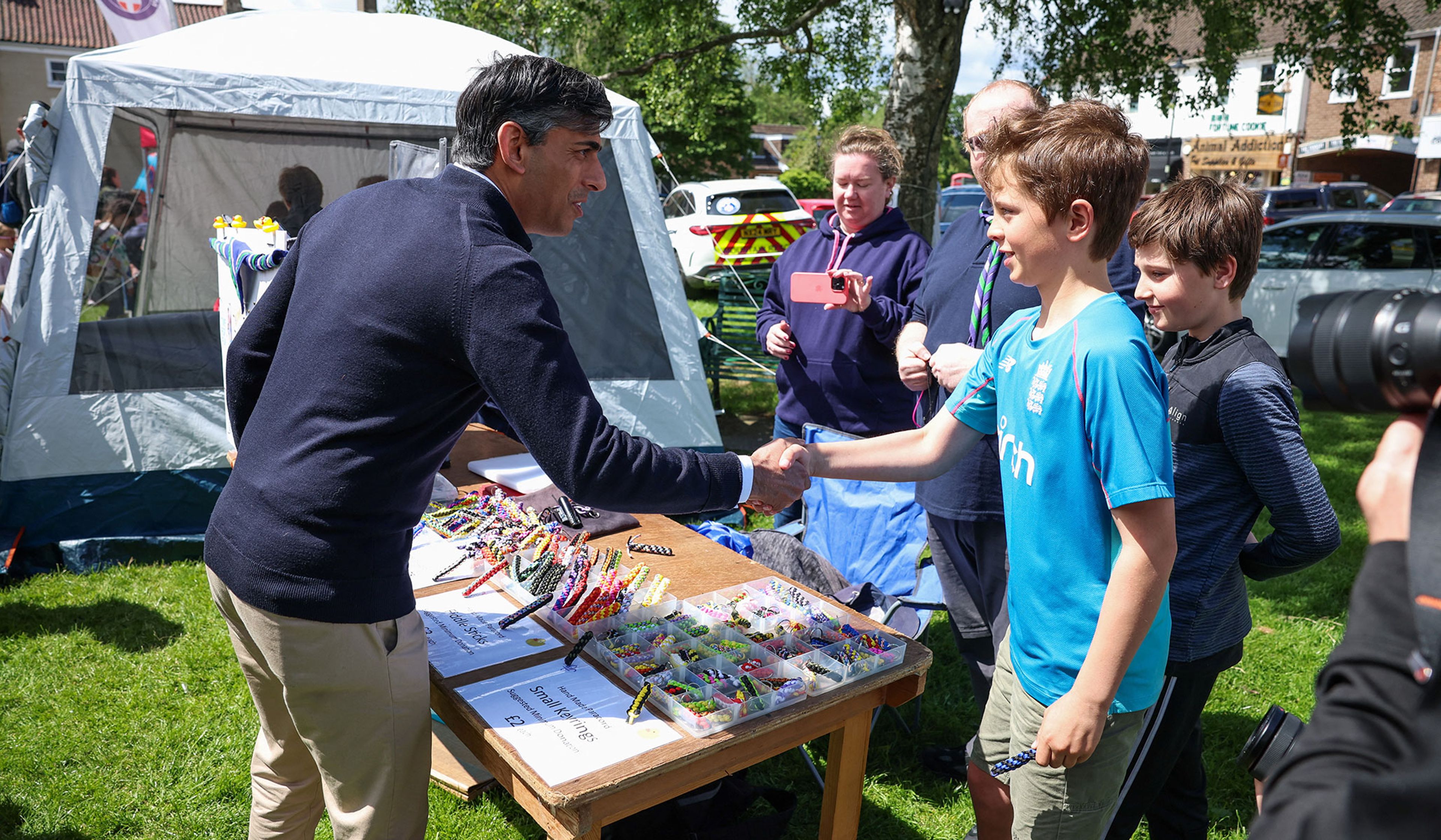
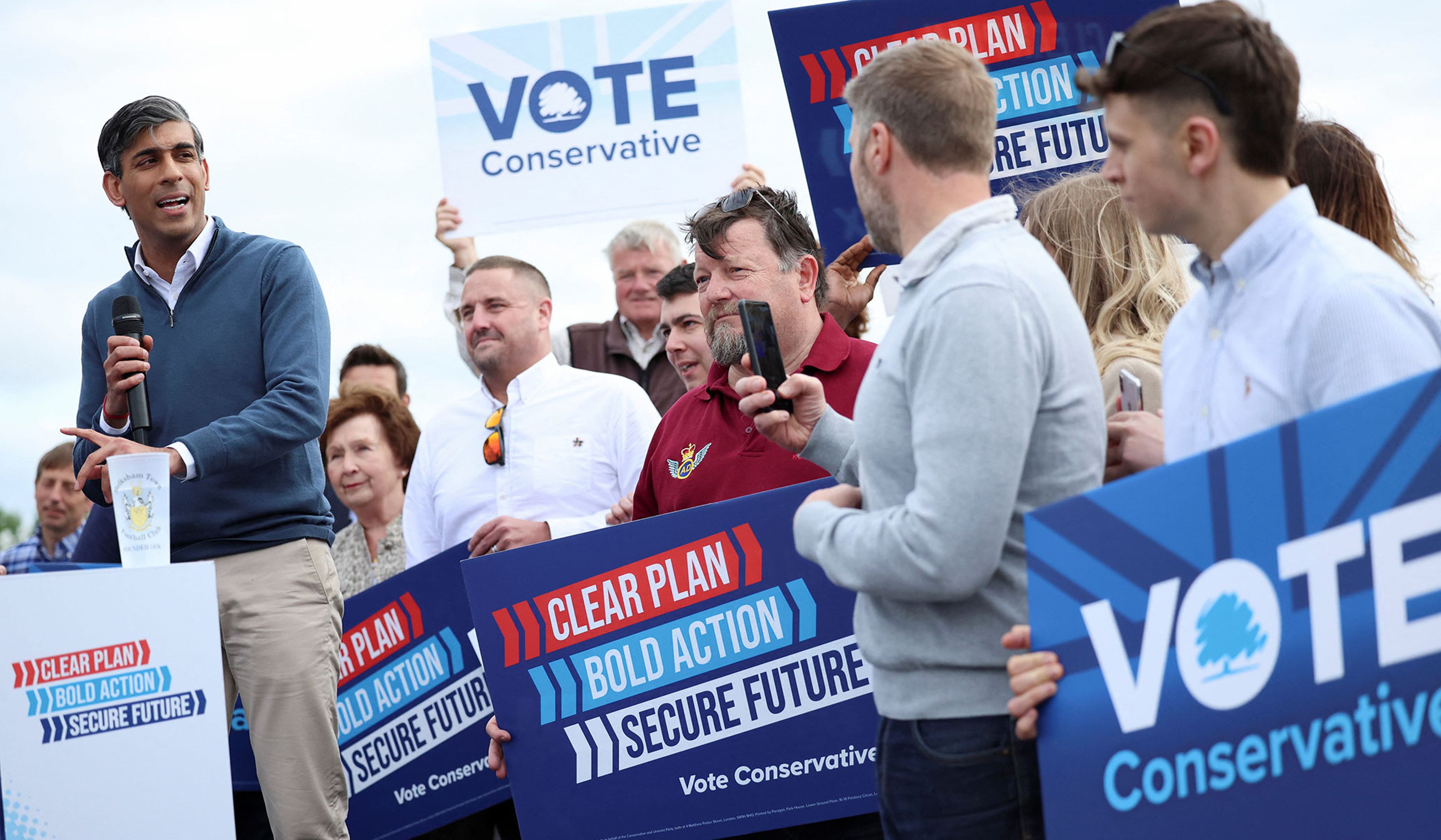
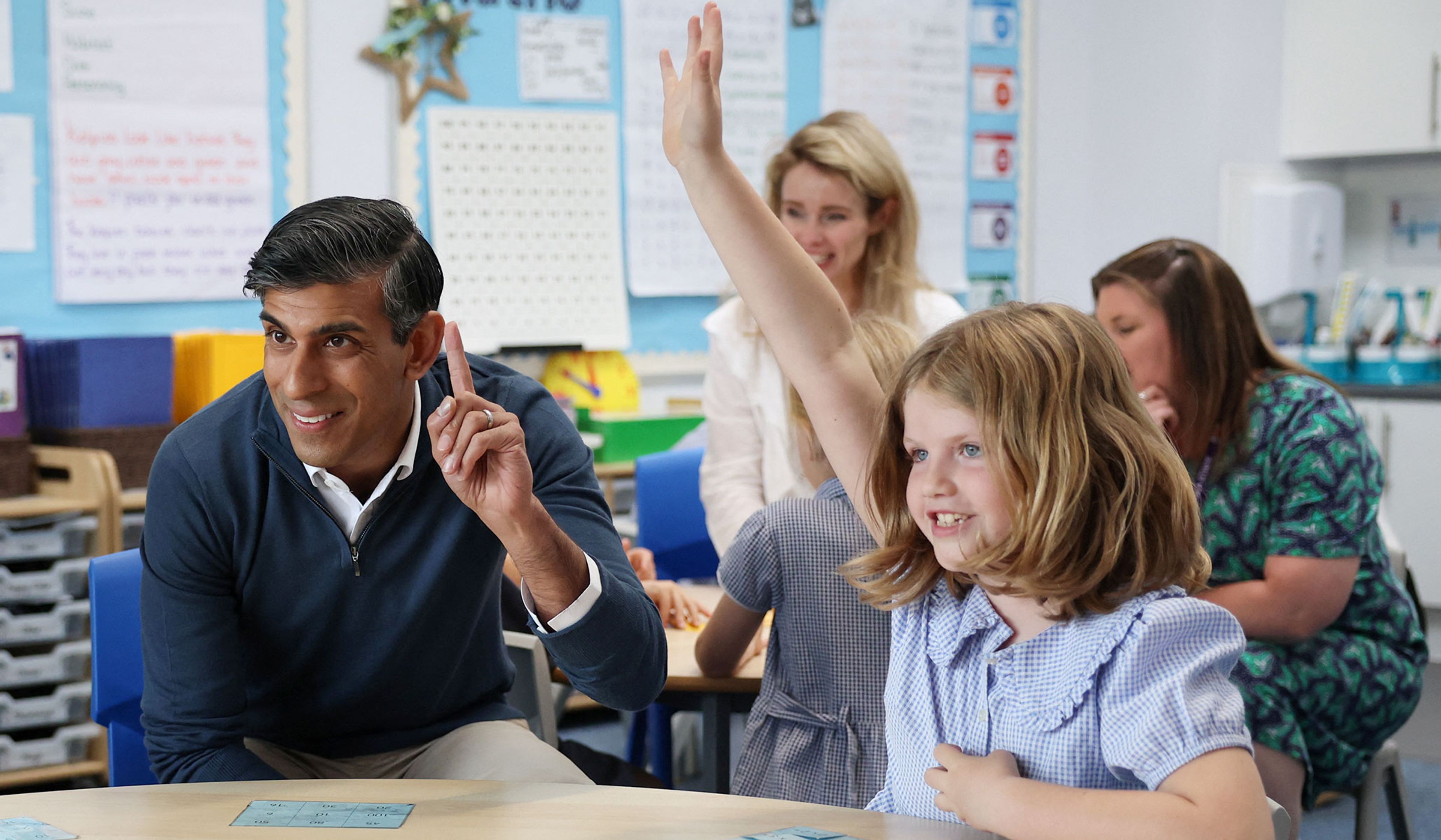
British prime minister and Conservative Party leader Rishi Sunak and his wife Akshata Murty pose with supporters upon arrival to launch the Conservatives’ general-election manifesto in Silverstone, England, on June 11, 2024.
Benjamin Cremel / Pool via Reuters
That takes us ominously back to the question of Sunak’s political judgment. The D-Day debacle wiped away the modest success he had enjoyed earlier that week when he was judged by television viewers to have defeated Starmer in their first debate. Only by 51–49 percent, to be sure, but the political commentators were somewhat more enthusiastic about Sunak’s aggressive performance than Starmer’s. That gain is now spent and forgotten.
Memories have instead turned back to his surprise decision to call an election five to seven months before it was legally necessary. It seems to have been a decision that ran contrary to most of the advice he had received, and it now looks like another political error. He is being blamed by Tory MPs for the likelihood that they will be joining the jobless queue several months earlier than they had planned. Moreover, because of the speed with which parliamentary business had to be wound up to ensure an early election, several significant pieces of Tory legislation fell by the wayside before receiving the Royal Assent. They won’t come into effect unless approved by the incoming Labour government. Not many will mourn the adult-smoking ban that was Sunak’s pet reform. But the Tories finally decided that the bill in defense of free speech at universities was not too risky to implement, and it will now depend on the consent of a Labour Party infected by creeping wokeness.
It is not as if the Tories were in a position to throw away one of their very few achievements that actually appeal to people of a conservative disposition. If the Conservative Party were still the Anglican Church in political power, as was once its reputation, its members would be praying devoutly to God to be forgiven “for those things we have done that we ought not to have done” (the highest level of taxation in a generation, “net zero,” the Covid lockdown, massive overspending and borrowing, and inflation) and also “for those things we ought to have done that we have not done” (National Health Service reform, full exploitation of the opportunities of Brexit, an effective response to the woke subversion of U.K. institutions such as the British Museum, and above all the reduction of immigration). And those responsible for this catalogue of secular sins — namely, the Wets mentioned above — are seeking to avoid their just reward by parachuting Wet loyalists into what are today the nearest things to safe Tory seats so as to retain control of the party when Starmer is in Downing Street.
Overall, at the end of the campaign’s first full week, the Tory theme song could well have been the British version of the old American vaudeville routine of Mr. Gallagher and Mr. Shean from the 1920s.
Shean: Oh! Mister Gallagher! Oh! Mister Gallagher!
Gallagher: What’s on your mind this morning, Mister Shean?
Shean: Ev’rybody’s making fun Of the way our country’s run In a mess like this Great Britain’s never been
Gallagher: Oh, Mister Shean! Oh, Mister Shean! Such a Nat’nal debt before we’ve never seen,
Shean: And the living is so high, that it’s cheaper now to die.
Shean and Gallagher (together): Positively, Mister Gallagher. Absolutely, Mister Shean.
If that’s too gloomy a note on which to end, the week did showcase one hopeful change even if most commentators couldn’t see through its disguise. Clever analysts and intellectual pundits — I’m not being ironic — rooting among the deeper dystopian failings of British politics thought they detected the erosion and decay of democracy. They noted perceptively that the election campaign seemed likely to produce a Labour government with a massive majority that nobody really wanted. Britain seemed to be moving toward a system in which more and more elections would decide fewer and fewer issues of real importance. And there was nothing we could do about it.
That was the moral atmosphere of melancholy and mild despair in which the week began. But the voters don’t seem to have agreed to feel so helpless. And, not for the first time, democracy itself proved capable of disrupting the fixed certainties of conventional politics. Nigel Farage was the agent of this unexpected turbulence — unexpected because, until Sunak’s early election opened up opportunities for his brand of populist conservatism, he had intended to sit this one out.
And suddenly the election is no longer boring. Debates seem to be about real things. Forbidden issues move to stage center. Nothing is inevitable if the voters don’t want it.










Comments