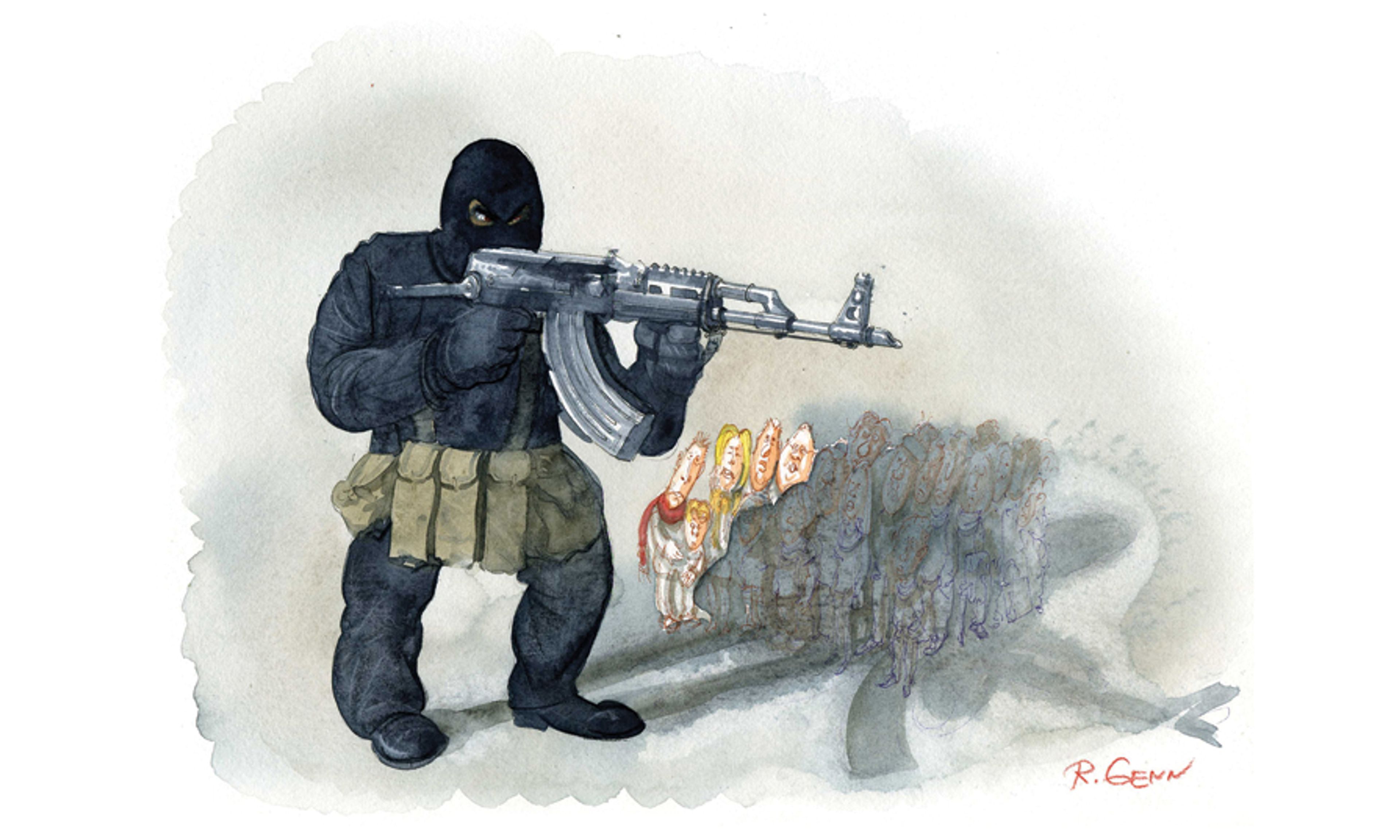
The historian Thucydides felt that democracies were characteristically volatile and yet complacent when existential dangers loomed on the horizon. But once faced with impending doom — such as the near collapse of Athens after the disaster of the Sicilian Expedition — they usually proved the most capable of marshaling the entire population for war. Accordingly, the recent ISIS terrorist strike in Paris — a result of lax security and failure to monitor borders — even at the eleventh hour should wake up the French to the existential danger they face.
America’s wars of the 20th century seem to confirm that ancient wisdom. A complacent, naïve, and isolationist United States came late to both world wars. Nonetheless, once engaged, the United States almost immediately amassed huge armies ex nihilo and produced unprecedented quantities of arms to ensure Allied victories in both conflicts. No other power fought in so many theaters of battle to such effect and with such consideration for reducing its own casualties.










Comments