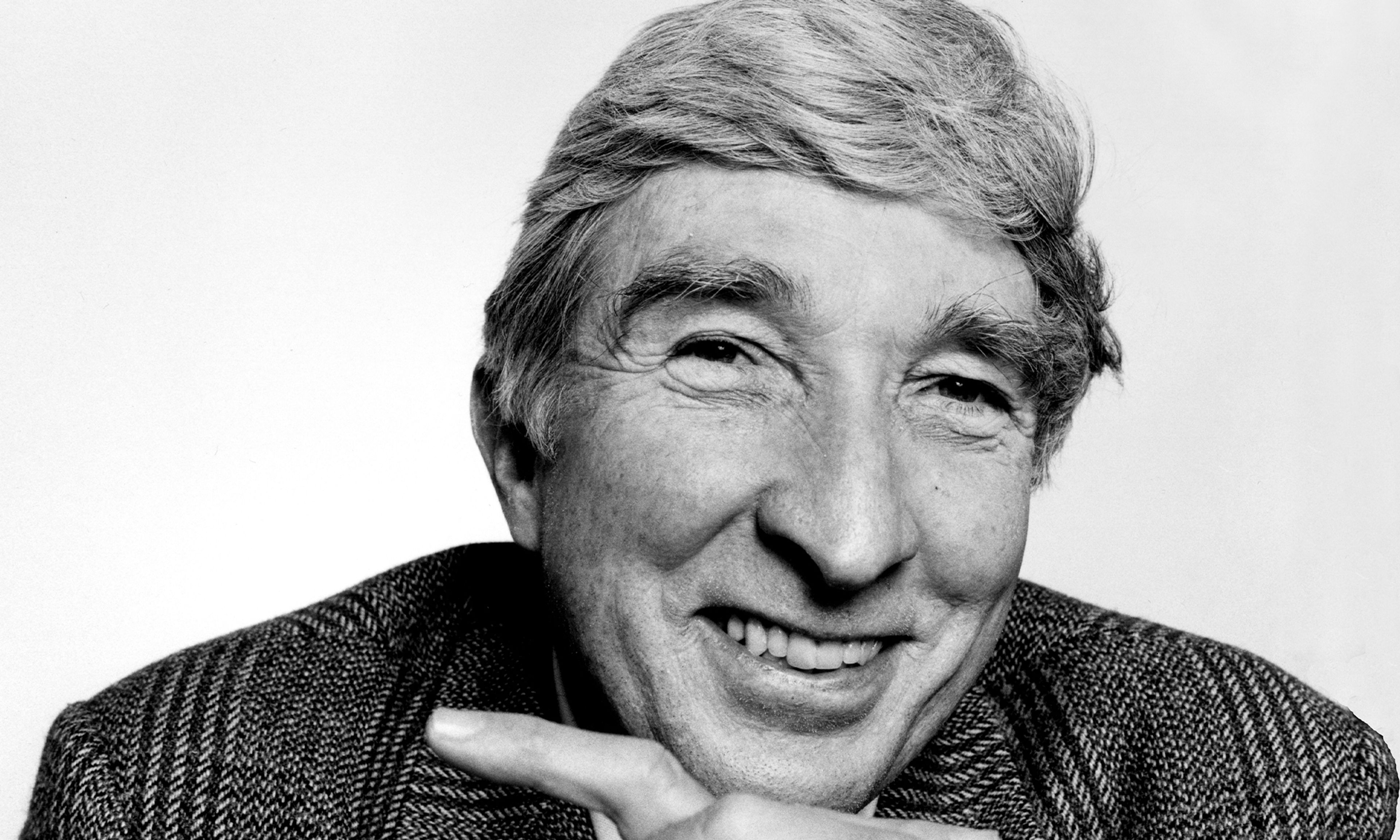
Vast forests have been laid waste and oceans of ink spilled publishing John Updike. As William H. Pritchard noted, it was Updike’s “fearsome articulateness, at all moments, on all subjects, in all forms” that awed his admirers and often confounded his critics. For many, he was the smiling, Mustang-driving bard of 1960s and ’70s suburban adultery, especially given his then-scandalous 1968 novel Couples. The book made him a millionaire. Set in the prosperous Massachusetts suburb of Tarbox (he was not always subtle), his craftsmen, professionals, commuters, local businessmen, and their seductive wives seemed to have more sex, described in engorged detail, than the fabled bonobo chimpanzees. His delight in describing extravagantly what had usually been clothed in euphemism became his trademark.
Updike grew up Lutheran and was a lifelong churchgoer. He even taught Sunday school at a Congregational church in Ipswich, Mass., where he and his first wife, Mary Pennington, raised their four children, after his brief stint as a staff writer for the New Yorker. He seems to have taken seriously Martin Luther’s exhortation to “be a sinner and sin boldly, but believe and rejoice in Christ even more boldly.” The conundrums of faith play out in many of his novels, perhaps most explicitly in A Month of Sundays (1975), Roger’s Version (1986), and In the Beauty of the Lilies (1996). His paternal grandfather was a Presbyterian minister and his wife’s father a prominent Unitarian minister whose rationalizing theology Updike found wanting. Updike wrote admiringly of Karl Barth, the great Protestant theologian, who said of liberal Christianity, “One cannot speak of God simply by speaking of man in a loud voice.” Updike’s critics often complained that his religious preoccupations revealed a kind of intellectual or political complacency. A child of the Depression and World War II, when Franklin Roosevelt seemed to be president for life, Updike was a Democrat but criticized what he regarded as the unpatriotic excesses of the left in the 1960s and ’70s.











Comments