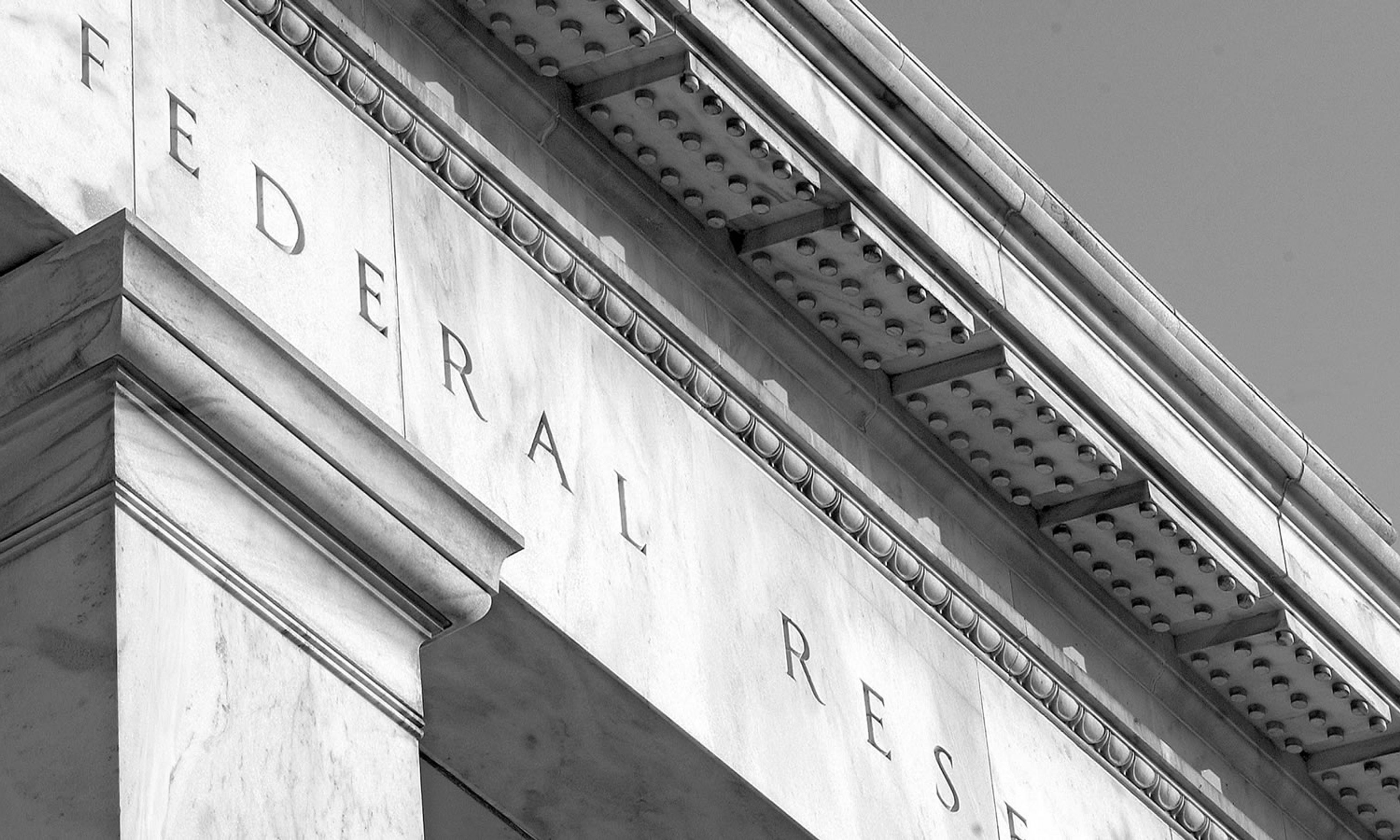
It must be extremely tough to be a central banker these days. I’m not saying that with tongue in cheek; serving in a decision-making role at the Federal Reserve in 2021 has to involve a very high level of burdens relative to the mild satisfaction it may occasionally offer. What’s worse is that Congress keeps piling new duties onto the Fed’s already busy agenda — and now the burgeoning identity-politics movements have added several more balls to the juggling act.
If there were nothing else to the job, the Fed’s dual mandate would be troublesome enough by itself. In 1977, Congress amended the Federal Reserve Act by directing the Fed to “maintain long run growth of the monetary and credit aggregates commensurate with the economy’s long run potential to increase production, so as to promote effectively the goals of maximum employment [and] stable prices.” Using monetary policy to achieve both of these significant societal goals at once is no easy task. For example, promoting full employment may undermine price stability; this has happened many times in practice since 1977.
But beyond the lofty goals of the dual mandate, which are at least theoretically reasonable, the Fed’s duties have expanded greatly over the last 25 years. From mediating a resolution of the Long-Term Capital Management hedge-fund fiasco in 1998, to providing excess liquidity to the banking system in anticipation of Y2K problems, to managing interest rates so as to support housing prices and the stock market after the dot-com crash and 9/11 in the early 2000s, the Fed’s pre-financial-crisis actions showed an expanded interpretation of its job description, to say the least.
Still, the financial crisis of 2008 was the solidifying period in which the nation’s central bank became much more than just a lender of last resort, with a dual mandate to facilitate employment and keep prices stable. It dealt with the crisis aggressively: backing the assets of Bear Stearns and enabling JPMorgan’s purchase of that troubled Wall Street giant; creating a dozen new facilities and vehicles to provide support and liquidity to various aspects of capital markets (commercial paper, money-market funds, foreign-currency swaps, corporate credit, and many more); and playing an outsized role in facilitating a backstop to troubled Wall Street banks above and beyond normal operations. In all these ways, the financial crisis gave a new and improved status to the Fed.
Yet even these actions would pale in comparison with the creativity that went into backstopping various forms of risk-taking after the 2008 crisis. For example, the Fed used facilities such as TALF (Term Asset-Backed Securities Loan Facility) to effectively intervene in the market for bundling and selling residential mortgages, commercial mortgages, student loans, auto loans, credit-card loans, SBA (Small Business Administration) loans, and more. The $200 billion the Fed spent in this way in 2009–10 represented one of the most creative and aggressive expansions of Fed powers in history, yet it would not be fair to refer to it as a “power grab” (as some critics have done). It really represented a burden, because the implicit message was that the Fed needed not only to contain inflation but also to somehow make sure that people were still borrowing money to buy cars. This was not a job for the faint of heart.
The main policy tools the Fed used after the crisis are well known: zero-interest-rate policy (ZIRP) and quantitative easing (QE). A plausible argument can be made that both of these tools help to serve the initial dual mandate of the Fed; yet time and time again the potential for negative impacts on the stock market, credit markets, and even the well-being of emerging-market economies has been used to rationalize a delay in adjustment of interest-rate policy. The “management” (some would say “coddling”) of risk assets has become just as important a job of the Fed’s as its added duty to maintain financial-market operations and money flows — alongside, of course, those old-school objectives of price stability and maximum employment.
So if I am skeptical of the latest and most problematic addition to the Fed’s portfolio, it is not because I am blaming the Fed, but because I understand the already extensive burdens it carries. I would like to think that managing financial markets through a global pandemic and somehow (eventually, perhaps) unwinding some of the tools used to effect such management would be a full-time job in itself. And yet we seem to be on the brink of the largest addition to the Fed’s job description in history, and it is this one, more than any other, that evokes sympathy for the thankless job these academic bankers have. I refer to the Fed’s newfound burden of joining the woke parade by reversing climate change, promoting racial equity, and carrying out the various social-justice demands of the progressive Left.
I won’t debate what should or should not be the ideology of various companies in America, particularly American banks. What I do know is that the vast and complicated burden of ensuring the stability and soundness of our largest financial institutions lies with the Fed, and the work required to understand those institutions’ derivatives books, their counterparties, their notional swap exposures, their tier-one capital ratios, the stress test of their loan books, the propriety of their leverage, and all sorts of other hypercomplex and involved financial discernments already requires all hands on deck. But now the newly woke Fed is asserting authority over financial institutions’ exposure to climate change.
How can the new green Fed do this, you ask? Well, what does any group of 1,000 MIT and Harvard Ph.D. economists do? They build models, of course. Did these models forecast in 2006 that people making $50,000 a year might not have been able to afford four condos in Las Vegas? No, that slipped through the cracks. But perhaps judging exactly what temperature levels will be in 2050 will be simpler, and determining how that knowledge will affect millions of transactions down the economic ladder can be easily accomplished.
The language describing the Fed’s new task as “integrating climate-change risks into the regulatory framework” is problematic for a number of reasons, most notably its lack of specificity. The slippery slope made possible by the absence of a limiting principle effectively gives the Fed godlike powers over something in which it has absolutely no expertise or experience, and over which it lacks even theoretical jurisdiction.
Things would be bad enough if it stopped at the environment, but it doesn’t. The “racial wealth gap” is said to be another top priority for the Fed. And the agitation for this change comes not just from far-left groups such as the Action Center for Race and the Economy or the Fed Up Campaign but from the Fed’s central bankers themselves, arguing the need for the Fed to aggressively assert a role in “addressing ongoing systemic inequities” for minorities and low-income communities. A lot has been said and published about such policies as the Community Reinvestment Act of 1977 and other regulations meant to promote home ownership outside of market forces. Some critics may even dare to suggest that 2008 provided a harsh judgment on the efficacy of many of those policies. But no matter how one feels about such debates, placing responsibility for achieving social aims with the Fed is begging for market distortions and the unintended consequences that are simply inevitable when monetary policy becomes a tool for a project in which it was never intended to be used.
If there is any good news to be had, it is that, like most things in today’s woke culture war, all this will surely end up as more grandstanding and virtue-signaling than anything else. With a few exceptions, those who know the Fed’s real limits the best are surely those within the Fed, who understand the power of interest-rate cuts but can’t possibly take seriously the idea that monetary policy can change sea temperatures or move the hearts of Americans toward racial justice. But we are not living in a time of constrained visions of anything, let alone central banking. And if Americans allow Twitter luminaries and 22-year-olds in newsrooms to administer the cause of environmental righteousness and social justice, should we really be surprised that we are now turning for solutions to the body we have turned to for almost everything else in recent years?








Comments