
The best defense of the American capitalist system is grounded in history. Go back to 1946 and invest one dollar in the Dow Jones Industrial Average, and, with dividends reinvested, that dollar climbed to $2,682.59 at the end of May of this year. Recall all the anti-capitalist moralizing after the collapse of the dot-com “bubble.” If you sold your Amazon and Apple stock back then, when Nobel laureate Robert Shiller was comparing markets to horror movies, then surely you regret it. But even without special insights, that same $1 invested in the Dow on January 1, 1999, before the crash, has climbed to $5.90 today. Increasingly over time, Americans have shared in this wealth creation, especially through their retirement plans.
But capitalism is not just for the rich. Capital increases productivity, and wages inevitably follow. Real median weekly earnings for wage and salary workers have skyrocketed over the past century despite a depression and a world war. Even if one goes back only to the day Ronald Reagan took over a stagnating economy, real wages are up by about 30 percent.
This growth has occurred even though policy-makers have often had America’s businesses in their crosshairs. How did companies prosper despite the constant assault from the left? It’s not that they just ducked and minded their own business. With all of the attention that woke capitalism is receiving, it might seem that the introduction of politics into the boardroom is a new and novel development. Yet economic research over the past decades has documented that corporate political activism has been an important part of the American free-market ecosystem for almost as long as it has existed.
Why? Imagine that you are the CEO of a successful company. You might prefer to stay out of politics but have trouble doing so. Maybe local government officials are about to defund the police, making your properties unsafe. Or maybe environmental regulators are going to impose stiff new rules that will make your operation costly and uncompetitive. Or maybe the party in control of your state is about to raise your corporate taxes so much that competitive firms from other states will put you out of business. When such policies emerge, it can become necessary for a firm’s survival that it take action, investing in lobbying and supporting politicians who oppose harmful socialist policies.
A recent study by Michael Cooper, of the University of Utah, and co-authors found exactly the pattern that this reasoning would suggest: Companies that contribute to politicians receive from their contributions very high abnormal returns — that is, they significantly outperform the market. This suggests that firms do not toss money around willy-nilly, but rather that historically they have used contributions to support policies that maximize corporate profits and shareholder value.
These contributions are a lightning rod because they have had serious political consequences. Increasingly, supporting free enterprise has meant giving money to the Republican Party, which generally has supported lower taxes and deregulation. The numbers are striking. In 2019, Harvard University’s Alma Cohen and her co-authors at the National Bureau of Economic Research (NBER) created a new database, which combined political-contribution data, taken from the Federal Election Commission (FEC), with publicly available data on U.S. corporations. The authors were then able to provide exhaustive documentation of the political activity of American CEOs and the companies that they run. They found that between 2000 and 2017, fully 89 percent of the S&P 500 companies were politically active, 82 percent of mid-cap firms were politically active, and 72 percent of smaller companies were active. It is not surprising that larger corporations invest in traditional political activity that lobbies for government policies favorable to their interests. But even small companies have participated in politics. During that period, the median CEO dedicated about 75 percent of his firm’s total contributions to Republicans. Fully 57 percent of the CEOs in the sample were identifiable as active Republicans, while only 19 percent were active Democrats.
To be sure, some corporate expenditures were spent to use the hammer of government to harm one’s competitors, but on the whole the importance of corporate donations for market-friendly politicians has been profound. Perhaps the best indicator of this is the extent to which the Left demonizes corporate political contributions. Bernie Sanders appears to be unable to make a public appearance without demanding that we “get corporate money out of politics.”
Bernie is winning.
Perhaps the most interesting finding in the NBER study is a different political gap. While individual political contributions are well documented by the FEC, because of the Citizens United case, corporate contributions do not have to be. The authors found that companies run by identifiable Republicans tend not to be transparent about their political contributions, while those run by Democrats are as transparent as can be. A likely explanation for that pattern is that companies fear retribution from Democrats but not from Republicans. Indeed, it is the fear of such bullying that has resulted in the increasing influence of liberal advocates in the boardroom to affect corporate policies that harm both return on investment and the small investor. An “appeasement” appears to be at work, or perhaps an extortion.
Many corporate leaders have struck a Faustian bargain with the socialists, sharing their support for policies that undermine their own success while withholding support for traditional friends of capitalism. The biggest threat to our system is not that activism has begun, it’s that activism has been thrown into reverse.
Our country has been in an uneasy equilibrium. Democrats funded by organized labor have pursued policies that are harmful to corporations and the everyday investor, while corporately funded Republicans have sought to reverse them. This history is extremely important for understanding today’s movement to require that corporations display their social consciousness and to deny capital to those that do not. A “woke” firm, after all, could never support a politician who, for example, opposes the Green New Deal or other overreactions to perceived human-influenced climate change. If Democratic activists are successful at cutting off corporate contributions to Republicans, opposition to anti-corporate socialist policies may well become nonexistent.
Despite this, we are still bullish on America. Allow us to speculate about the future of American capitalism and to speak to the issue of the CEOs who recognize the important political contributions that American corporations have made throughout our history. If such CEOs continue to exist, there will be two types of firms in the public arena. Those that courageously seek to maximize profits and participate in politics to guide policies in a favorable direction will provide healthy returns to shareholders as long as capitalism lasts. Those that waste shareholder money on social causes that are unrelated to their core business will provide lower returns. Over time, investors who favor firms that are woke will have to decide whether lower returns are just compensation for the warm feelings they acquire from allegedly investing “responsibly.” Some may, but firms that do not waste money should grow in market share over time and eventually compete the woke firms out of business.
A recent Aflac survey on “corporate social responsibility” found that more Americans (49 percent) believe that it is very important for a company to “make the world a better place” than to “make money for its shareholders” (37 percent). That is a false choice framed by socialist thinking. Making money for shareholders makes the world a better place.
The key to the free-market victory is this: Cancel culture wins only if it cancels everybody.
If it does not, then firms that continue to follow practices that have delivered so much prosperity to so many in the past will be the best investments. American corporations that place profits over politics have a proven record of providing the greatest economic benefit to society and the greatest individual financial reward. As citizens, we hope that corporate leaders appreciate the important political role they have historically played in defending free enterprise. We believe they will, but if they don’t, then retirees will see their investment evaporate, and the workers of America will be united, but in poverty.
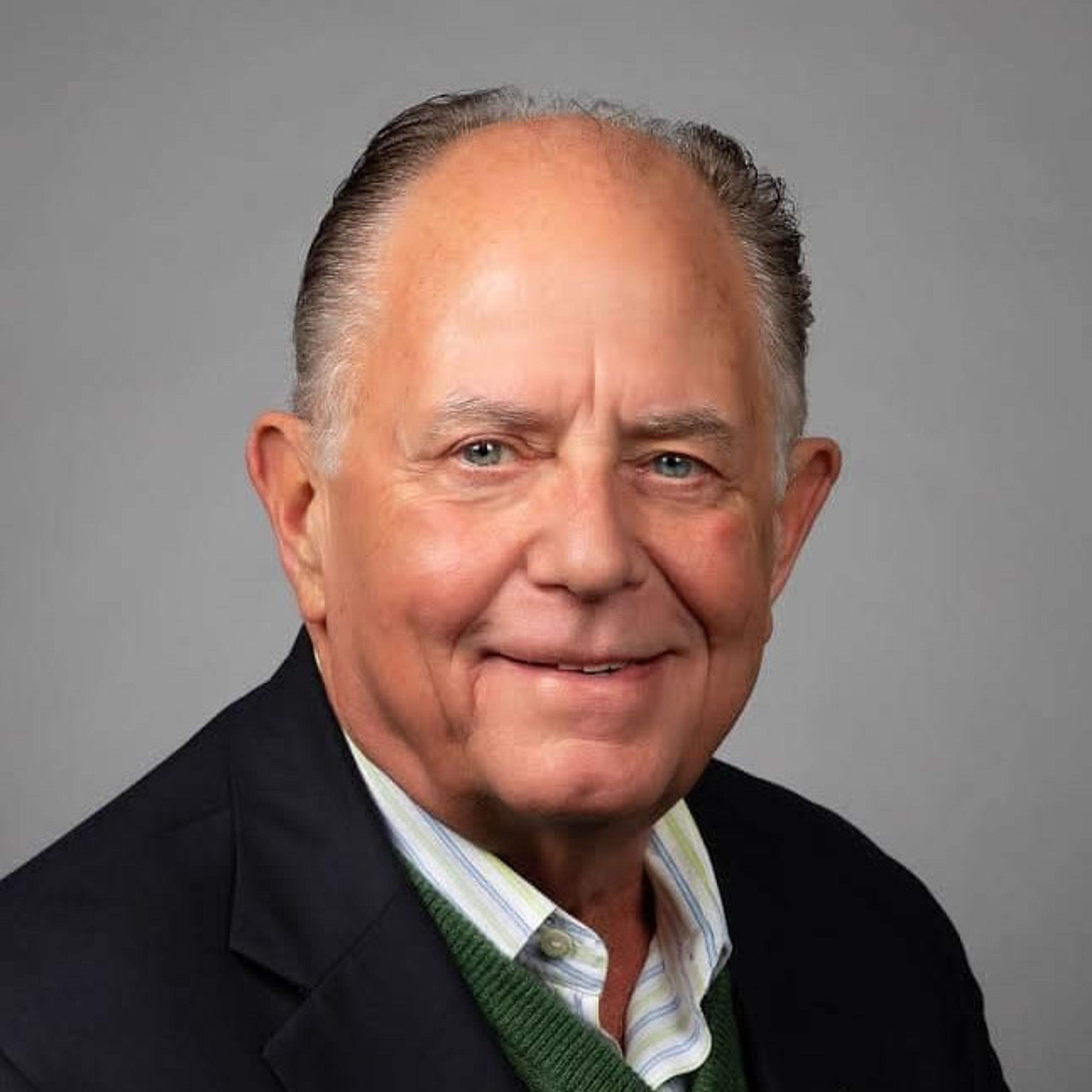
— Mr. Black is a co-founder and the director of 2ndVote Advisers; previously, he founded Aegis Sciences Corporation, where he served as chairman and CEO. Mr. Hassett is the vice president of the Lindsey Group and a Distinguished Visiting Fellow at the Hoover Institution, and he serves on the Academic Advisory Board of 2ndVote Advisers.












Comments