Last summer the critic Noah Millman wrote an essay on his personal Substack about Five Easy Pieces, the Jack Nicholson movie, now more than 50 years old, that embodied the 1970s tendency toward a cinema of deep reality — real in its portrayal of the then-contemporary world, real in its psychological acuity, real in its refusal of simple narrative arcs and easy resolutions.
That kind of cinema, Millman suggested, was never Hollywood’s main business outside of the “aberration” of ’70s auteurdom; even by the 1980s, most movies made for grown-ups had tilted back toward portraying worlds that were “glossy, unrealistically well-off, more generally constructed to feel like a fantasy.”
But for all their gloss and fantasy, movies in the past usually sold an idealized version of real lives, real relationships, real families. Whereas lately even that kind of attachment to reality has weakened dramatically, as special effects and genre entertainment and virtuality swallow everything, and even talented filmmakers (Millman critiques Jordan Peele in his horror/sci-fi movie Nope) struggle to do what, say, Steven Spielberg used to do casually, offhandedly — inject the paranormal or supernatural into a recognizably normal family or community, a slice of American life that isn’t just a nostalgia trip or loving re-creation, but that looks like our world now, today.
Millman’s essay included some examples of movies, all necessarily small, that stand against this trend; Chloé Zhao’s Nomadland, which won Best Picture in the first year of Covid against weak competition, is the only one to achieve any kind of prominence. Zhao, of course, was immediately handed the reins of a second-tier Marvel movie, The Eternals, with lackluster results — which set me thinking about whether there are examples of directors who have made an entire career working in the vineyards of realism.
One case study would be Nicole Holofcener, who has directed seven movies in the last two decades, all defiantly small-scale, most of them with female leads, many of them with plots that aren’t quite plots in the usual Hollywood sense, that don’t necessarily go where you’re expecting and sometimes don’t seem to go anywhere at all. Holofcener’s closest brush with bigger things was her work as a writer on The Last Duel, Ridley Scott’s excellent Rashomon-in-medieval-France drama — a fascinating departure from her usual neurotic Northeastern settings and characters, or maybe just evidence that a skill with realism translates across the centuries and that someone should give her the money to make a domestic drama set among English serfs in 1320 and see what happens.
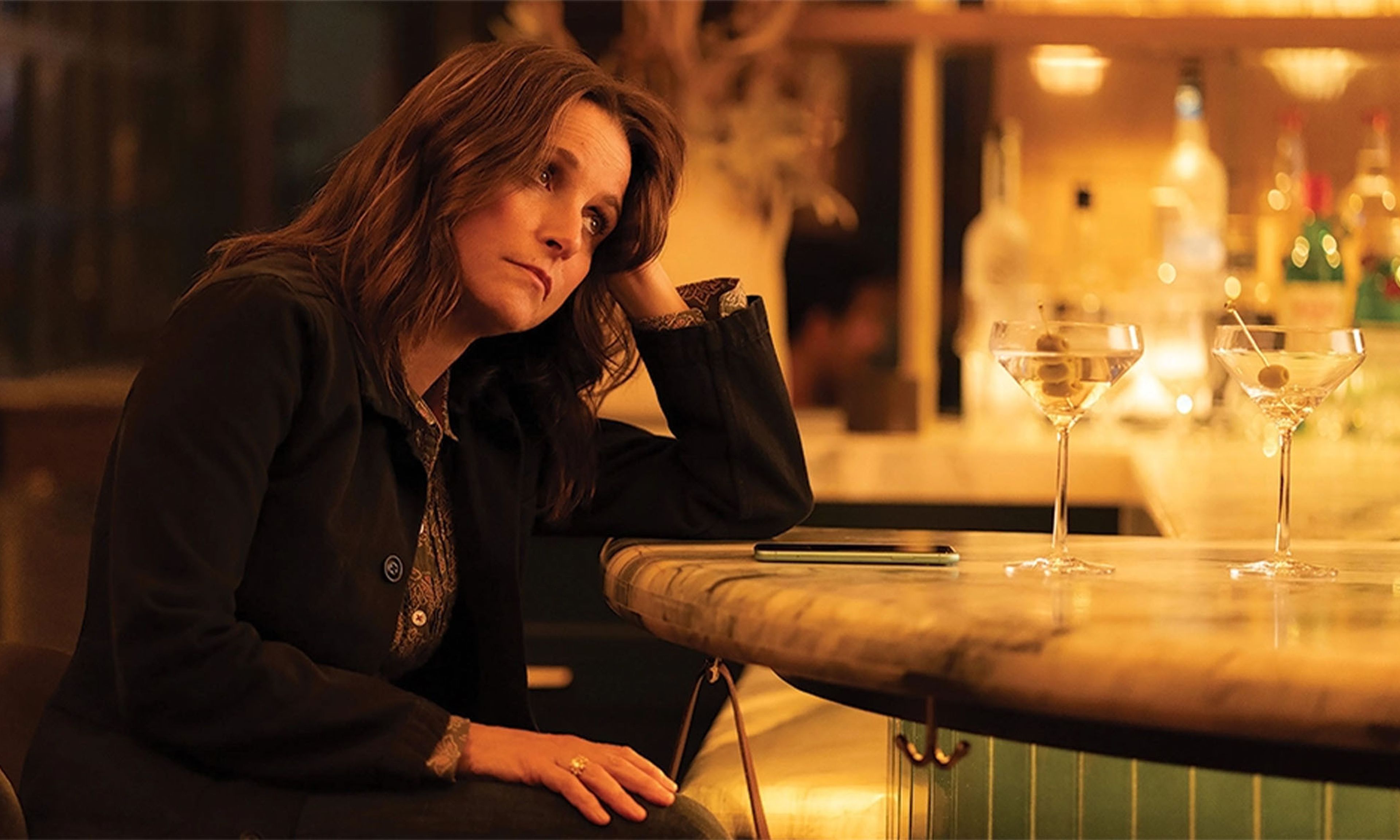
That idea apparently not having occurred to any Hollywood moneymen, Holofcener is back to her usual territory with You Hurt My Feelings, a kindly dramedy about Beth, a New York writer (Julia Louis-Dreyfus) struggling with her first novel, after a mildly successful memoir raised her prospects, while the people around her wrestle with similar doubts about their own careers.
Beth’s husband, Don (Tobias Menzies), is a therapist who seems a bit adrift, mixing up details about his patients, watching a couple (played by real-life marrieds David Cross and Amber Tamblyn) bicker endlessly without resolution. Her son (Owen Teague) is working at a pot shop and struggling to hang on to his more career-minded girlfriend while he tries to write a play. Beth’s sister (Michaela Watkins) is an interior decorator for the spoiled and taste-challenged rich, and her sister’s husband (Arian Moayed, familiar from his sleek role on HBO’s Succession, fraying effectively here) is a struggling middle-aged actor who has a career crisis when he gets fired from a play.
Into this world of mild discontent comes a sharper blade of division: Beth accidentally overhears the usually uxorious Don griping to his brother-in-law about how much he dislikes the new novel (which he’s been constantly praising to her face), sending her into a spiral of artistic self-doubt and marital discord.
In a different movie you would expect this spiral to yield an outright crisis — an affair, maybe, that would have a domino effect on the other characters’ relationships and vocations. But Holofcener is interested in the less dramatic aspects of reality — the kind of crisis that resolves itself without disaster, the tendency of middle-aged people to respond to discontents with small adaptations instead of larger changes, the ways in which doubt about one’s life patterns coexists with their resilience.
The result is a movie that (with Louis-Dreyfus’s presence) feels occasionally like a kinder version of a Seinfeld episode, all small slights and low stakes in upper-middle-class New York.
Its realism isn’t a great revelation; it will not change your life. But it’s still good to be reminded that this kind of cinema is possible, that the big screen and the human scale can still exist together for 90 minutes in the dark.












Comments