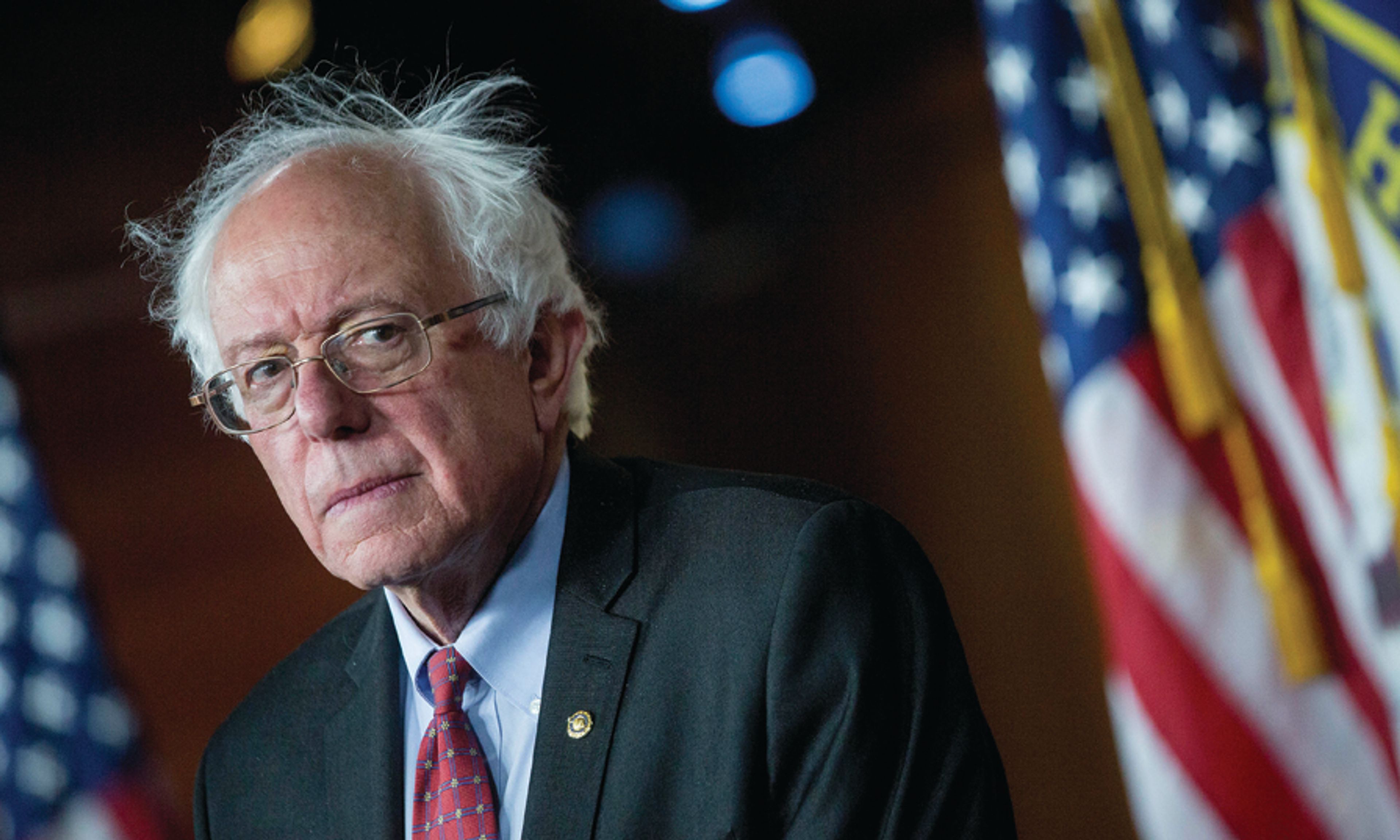
Marshalltown, Iowa — ‘All foreign-made vehicles park in designated area in rear of building.” So reads the sign in front of United Auto Workers Local 893 in Marshalltown, Iowa, though nobody is bothered much about the CNN satellite truck out front, a Daimler-AG Freightliner proudly declaring itself “Powered by Mercedes-Benz,” nor about the guys doggedly and earnestly unpacking yard signs and $15 T-shirts and rolls of giveaway stickers from a newish Subaru, all that swag bearing the face and/or logo of Senator Bernie Sanders, the confessing socialist from Brooklyn representing Vermont in the Senate who is, in his half-assed and almost endearingly low-rent way, challenging Hillary Rodham Clinton for the Democratic presidential nomination. The bumper stickers on the mainly foreign-made cars of his followers tell the story: One of those “Peace” (not the more popular “Coexist”) slogans made of various world religious symbols, “Clean Water Is for Life!” and “The Warren Wing of the Democratic Party,” sundry half-literate denunciations of “Corporate Oligarchy” . . . “Not Just Gay — Ecstatic!”
The union hall, like the strangely church-like auditorium at Drake University the night before, was chosen with calculation. Bernie — he’s “Bernie,” not Senator Sanders or Mr. Sanders or that weirdo socialist from Soviet Beninjerristan, just lovable, cuddly “Bernie,” like a grumpy Muppet who spent too much time around the Workers World party back in the day — our Bernie may not be the slickest practitioner of the black arts of electioneering, but he’s got some smart people on his small team, and they are smart enough to book him in rooms with capacities that are about 85 percent of the modest crowds they are expecting, thereby creating the illusion of overflow audiences. They do all the usual tedious stuff, such as planting volunteers in the audience to shout on cue, “Yes, yes!” and the occasional Deanesque “Yeaaaaaaah!” It’s all very familiar. Sanders, as stiff a member as Congress has to offer, repeatedly refers to the audience as “brothers and sisters,” and the union bosses greet one another as “brother,” and you get the feeling that after a beer or three one of these characters is going to slip up and let out a “comrade.”










Comments