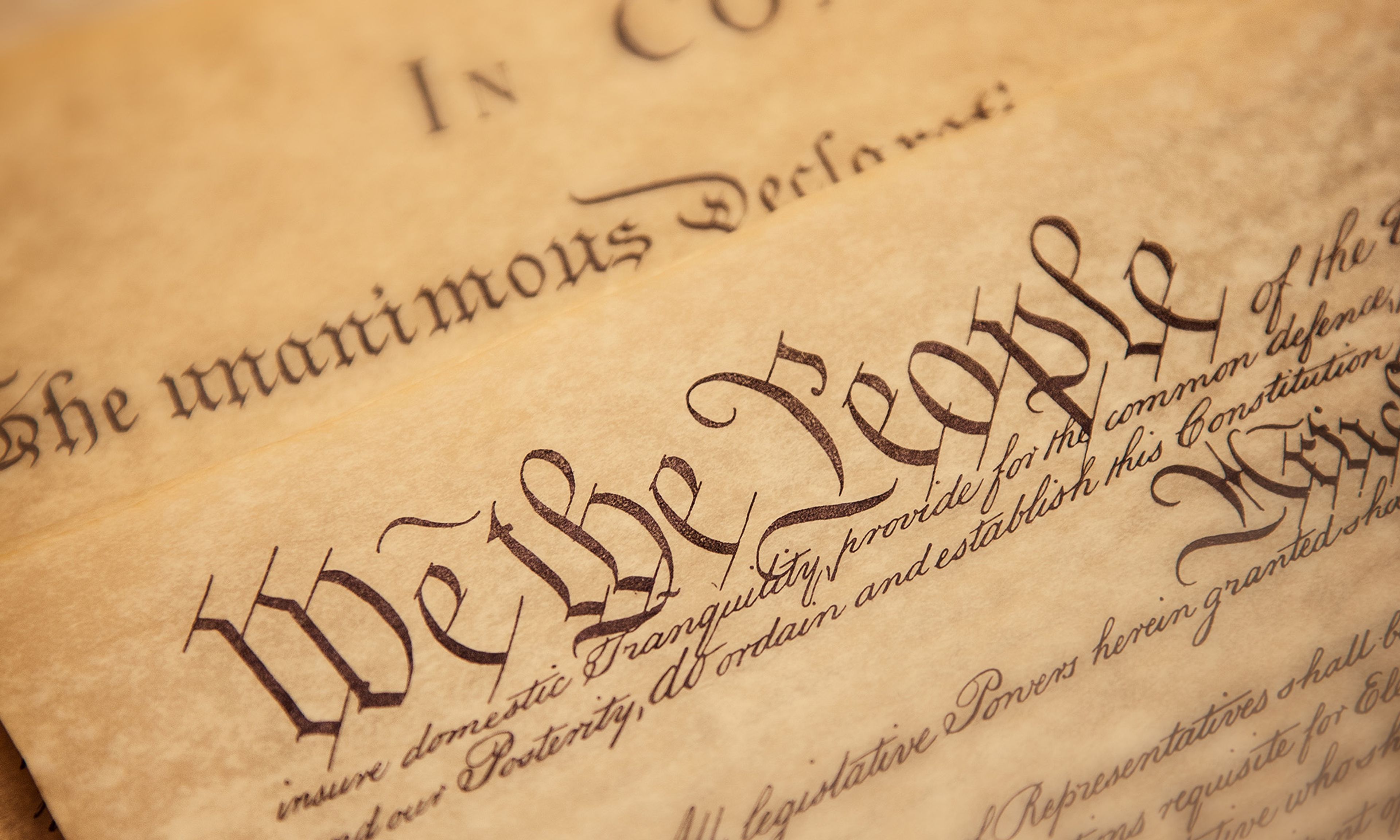
Even among legal scholars, there is some confusion about the terms textualism and originalism — both denoting methods of legal interpretation. We hear about them more and more in the news. After all, judicial appointees in recent years are mostly textualists, and many of them originalists. Let’s sort out what people mean, or ought to mean, when using these terms.
Textualism is the broader term: It denotes the idea that the words of a legal instrument (whether a constitution or a contract) are of paramount concern and that what they fairly convey in their context is what the text means. Hence textualists scrutinize legal provisions closely, analyzing their grammar and their words with rigor. They often cite dictionaries to explicate meanings. They deploy lots of “canons of construction,” such as (1) the presumption against ineffectiveness (interpretations are favored if they further a document’s purpose rather than obstruct it); (2) the punctuation canon (the document drafters’ punctuation should be considered and even, generally speaking, heeded); (3) the presumption of consistent usage (a given expression is presumed to have the same meaning throughout the document); (4) the surplusage canon (every word should be given meaning if possible, and none ignored); (5) the unintelligibility canon (an unintelligible clause is simply inoperative); and (6) the predicate-act canon (authorization of an act also authorizes a necessary predicate act — so, if you’re allowed to cut down trees on specific land, you’re necessarily allowed to go onto the land).











Comments