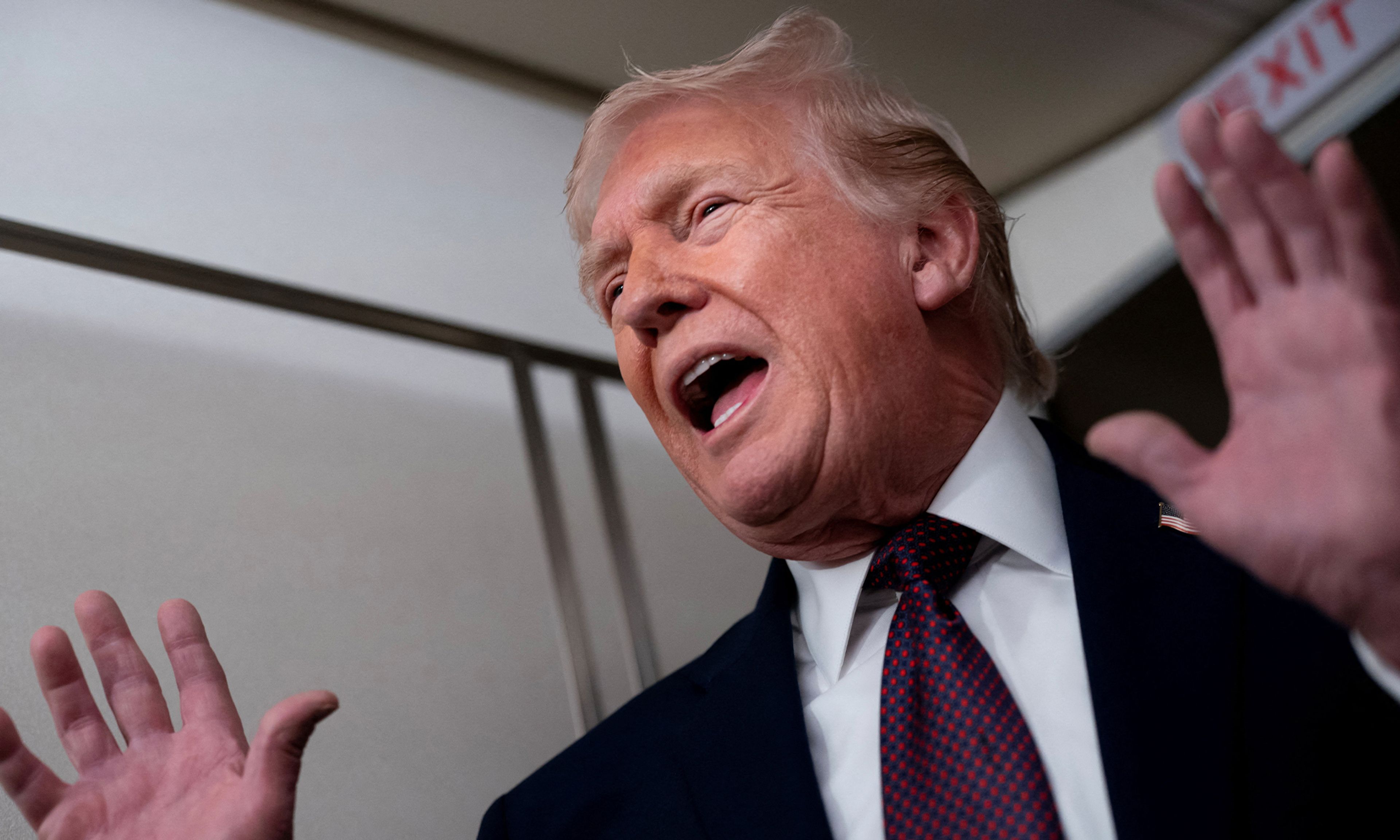
There was a time, not so long ago, when the president of the United States could be counted on to embarrass the republic only through inept decisions or lofty platitudes. Now, presidential disgrace is also linguistic, rhetorical, even psychological. With Donald Trump, the vulgar torrent became the message. The method was bluster, the attitude an amoral indifference to truth, the idiom a kind of gutter demotic that dragged every exchange down to the level of the pro-wrestling ring or the casino floor. For a people once taught to regard the presidency as a moral tribune, this wasn’t just a comedown. It was a national intoxication in which intoxication itself became the new sobriety.
The first and most obvious mark of this coarse dispensation lies in its diction. Political language once at least gestured toward civility of tone. Though its meanings could be evasive, its grammar was usually correct. Trump’s breakthrough was to treat coarseness not as a liability but as a credential of authenticity. The profanity, the name-calling, the brawling with “losers” and “morons,” the yells about “animals” and “vermin” became ritual displays of his supposed proximity to the national id. What would have been a gaffe for any other politician he turned into a virtue by claiming persecution from the “politically correct.” The man who bragged of his genius for “the best words” could rarely manage a paragraph without syntactic collapse. Yet this triumphant incoherence passed as sincerity, the errors and misspellings paraded as badges of manly candor against effete literati who couldn’t “connect with real people.”










Comments