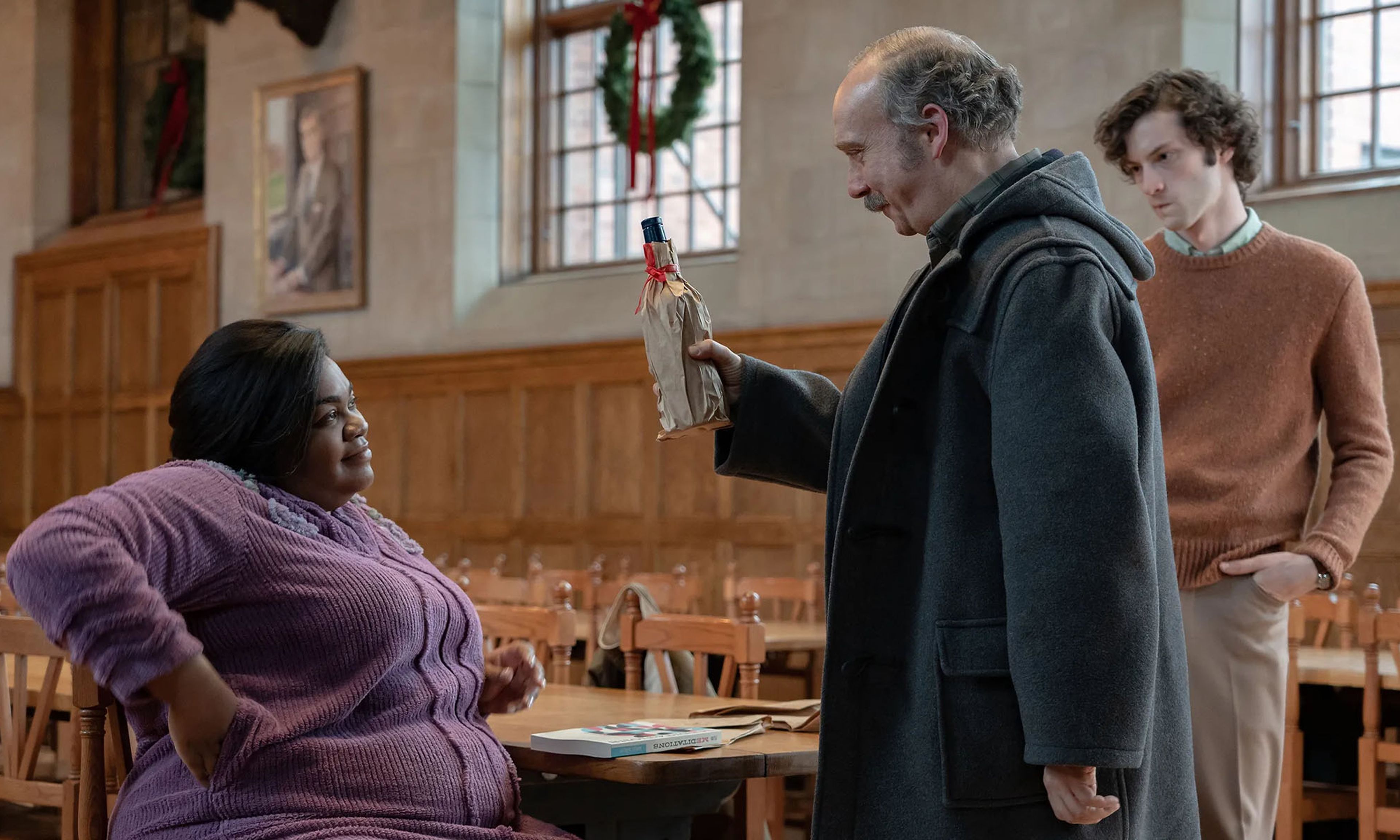
Is Paul Giamatti the ugliest man to become a major movie star? His turn in The Holdovers, a small pleasure dropped amid the various historical epics and biopics of this year’s awards season, is probably an unfair place to start that conversation, because it’s a part for which Giamatti has uglied himself up. His character suffers from strabismus, better known as walleye, a drifting of the gaze in one eye but not the other — an effect achieved in the movie through some sort of unobtrusive eye prosthetic, less controversial than the nose extension Bradley Cooper donned to play Leonard Bernstein in Maestro but more effective as a subtle unsettlement.
As if that weren’t enough, Giamatti’s character also suffers from trimethylaminuria, a metabolic condition that makes the body give off a fishy odor that worsens as the day wears on. There is no smell-o-vision to convey this to the audience, but to the extent possible the actor manages to make it palpable nonetheless: He moves and speaks and conducts himself like a man who has a negative halo, a personal wasteland that he carries with him through the world.
The character is a teacher of the classics, Paul Hunham, who instructs the sons of privilege at a fictional academy, the Barton School, in the year of our Lord 1970. A proud miserabilist, he mixes a snob’s affections for the school and its traditions with a class warrior’s resentment of its actual students, and so we meet him explaining to the headmaster why he simply had to fail a senator’s son, thus denying him his ideal college placement, and then flunking a classroom full of grumbling preppies on the day before the Christmas holidays begin.
Those holidays give the movie its title and its plot. Hunham is maneuvered by a colleague into occupying the unhappy role of babysitter for those students unlucky enough to be stuck on campus for the season. (And why not, since he lives on campus and passes a seemingly friendless existence anyway?) The motley crew includes five boys, but a deus ex machina involving a rich dad and a ski trip soon reduces the list of holdovers to just one: Angus (Dominic Sessa), a smart, angular, and extremely difficult kid who thought he was headed to a tropical vacation only to have his mother and stepfather ditch him for the sake of their own relaxation. So Angus is stuck with Mr. Hunham, with additional company supplied only by the school’s African-American cook, Mary Lamb (Da’Vine Joy Randolph), who is mourning her own son, a recent Barton graduate who was admitted to Swarthmore, couldn’t afford tuition, and instead died in Vietnam.
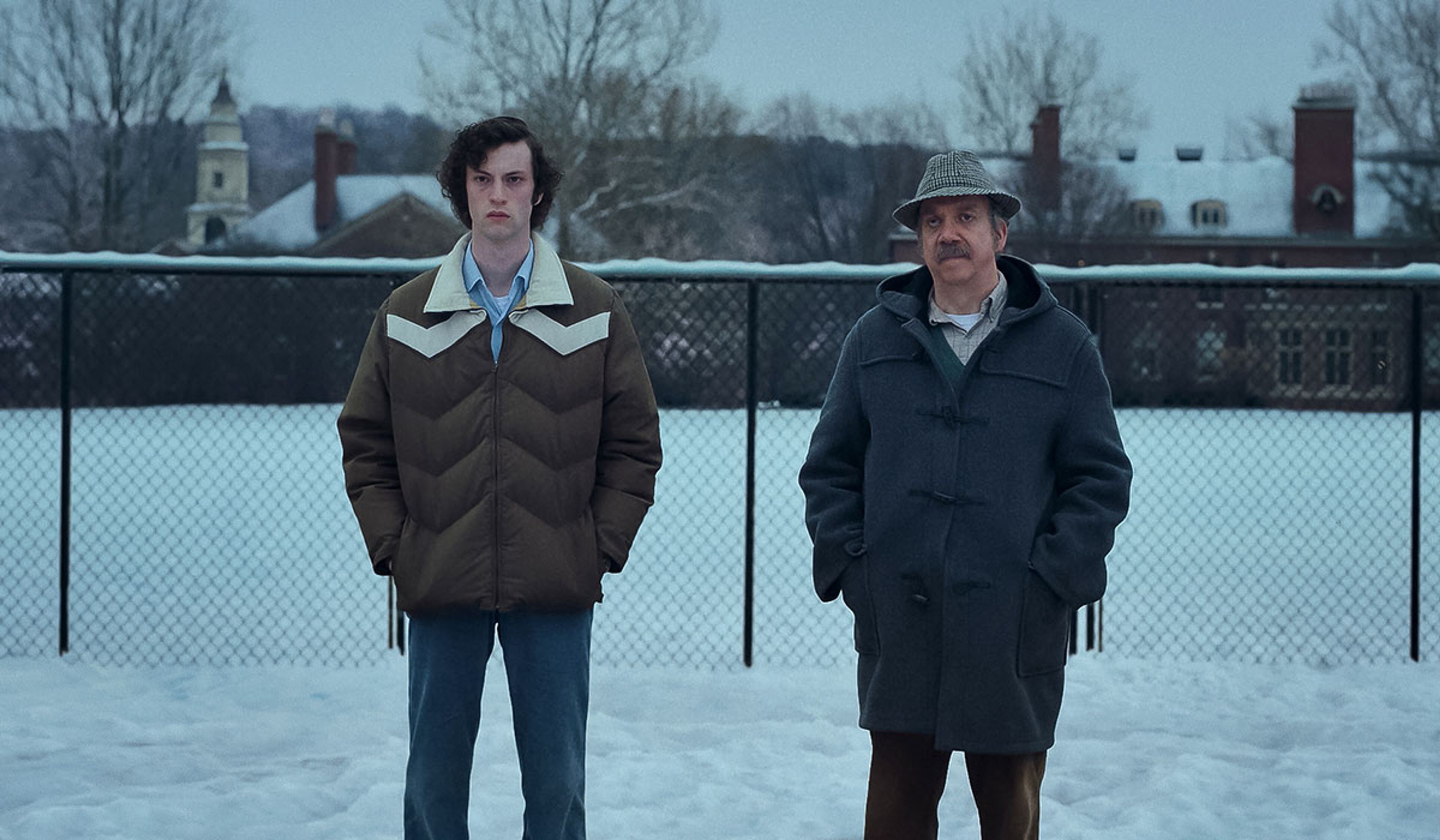
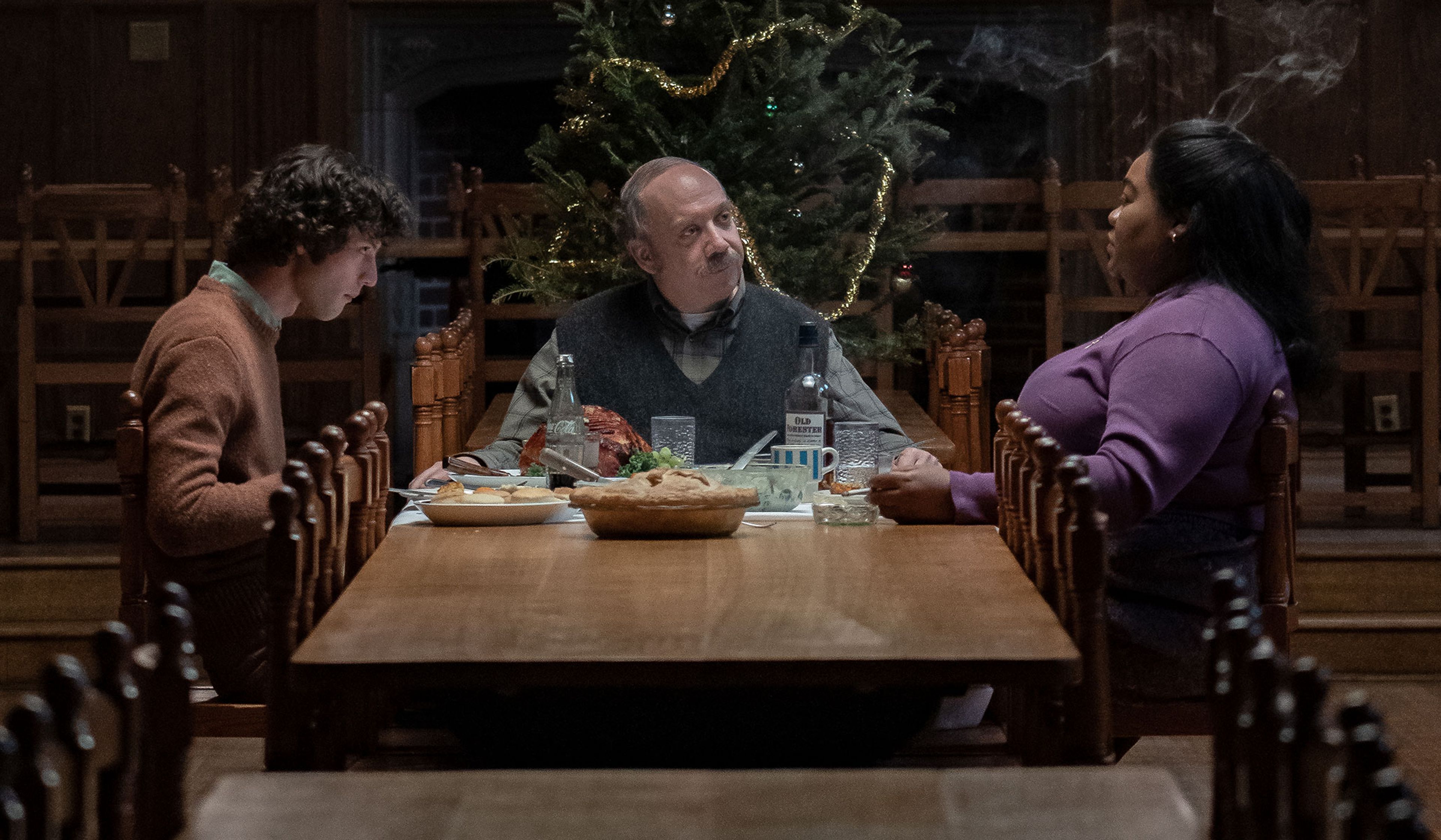
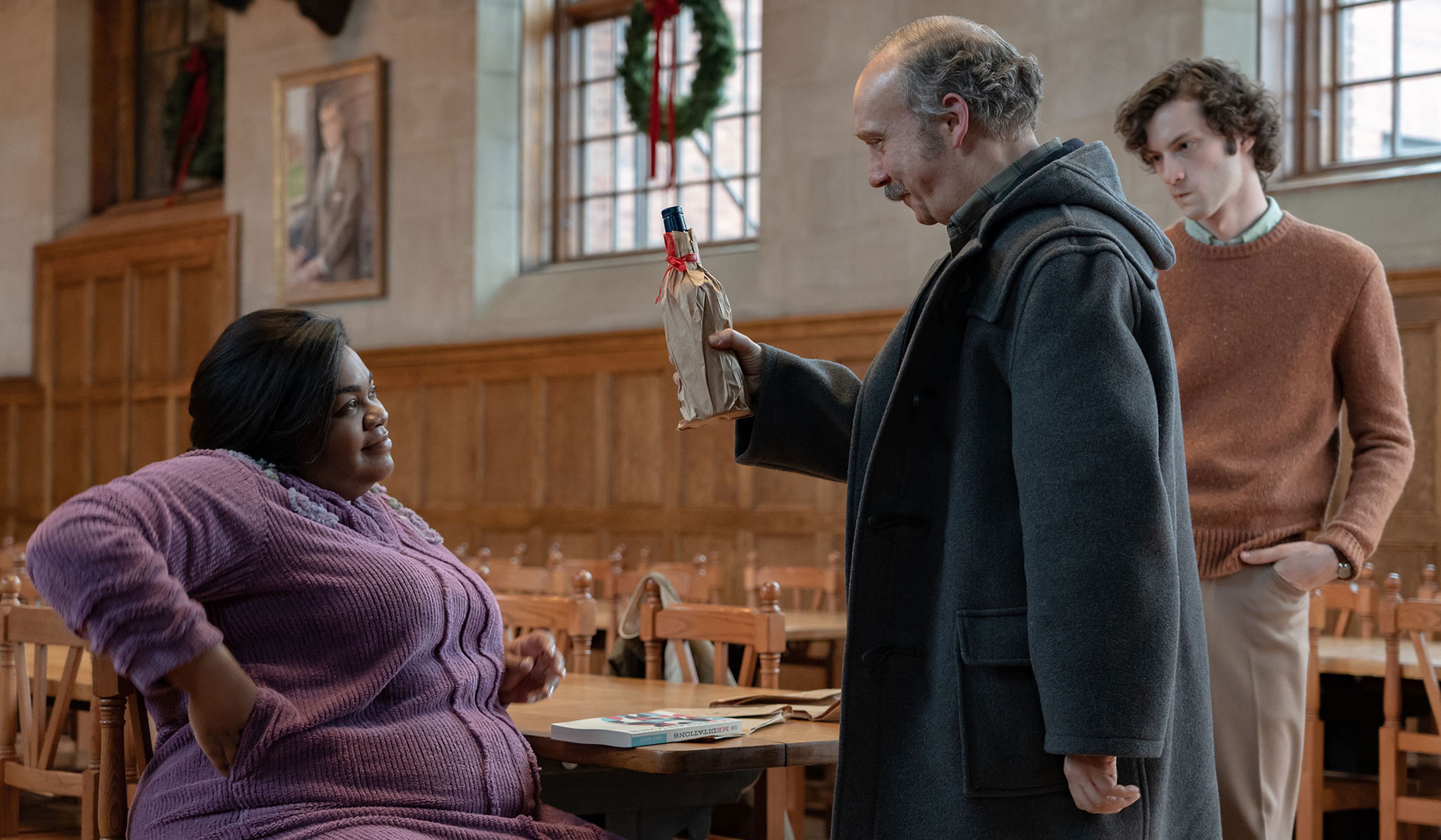
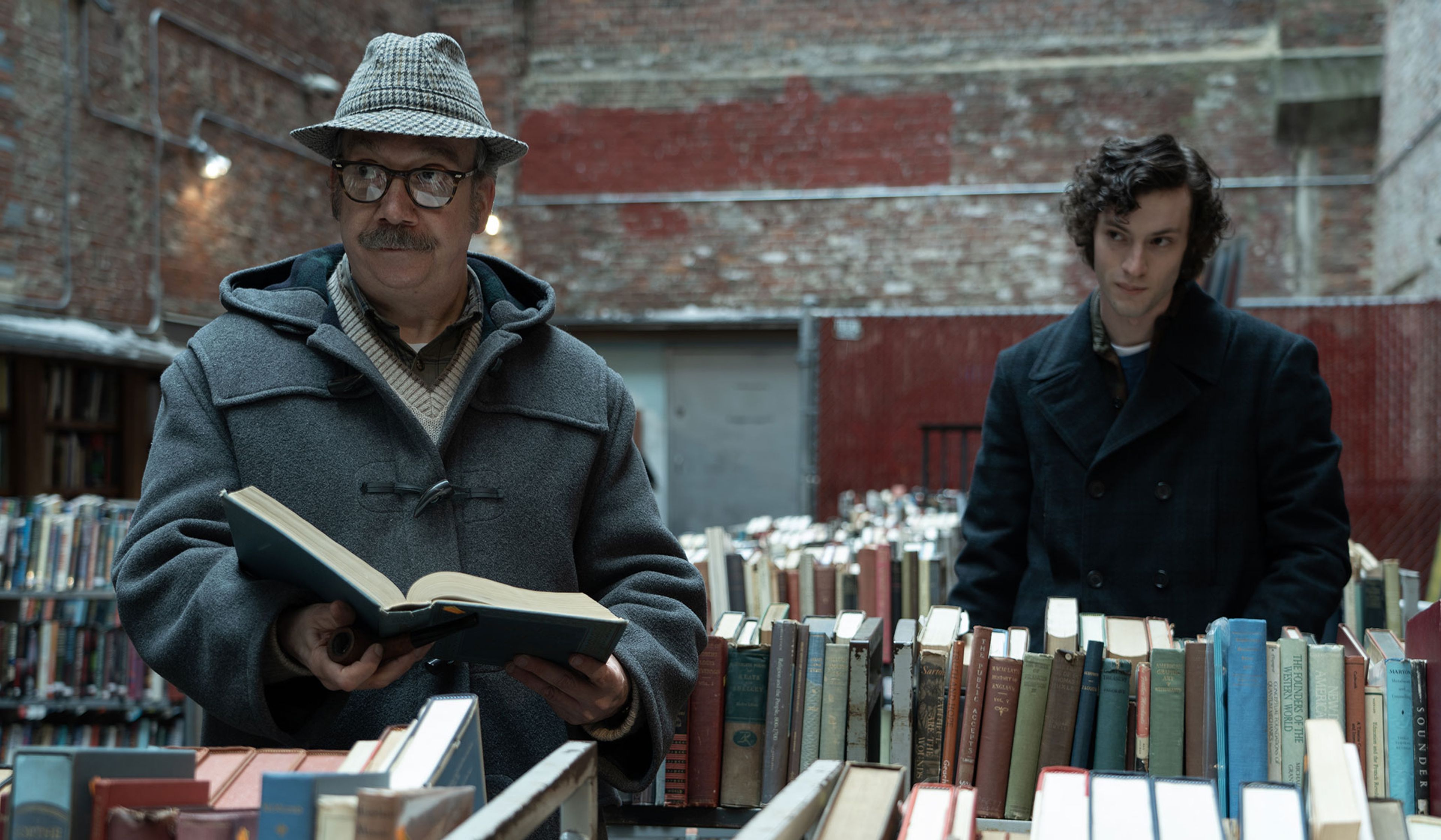
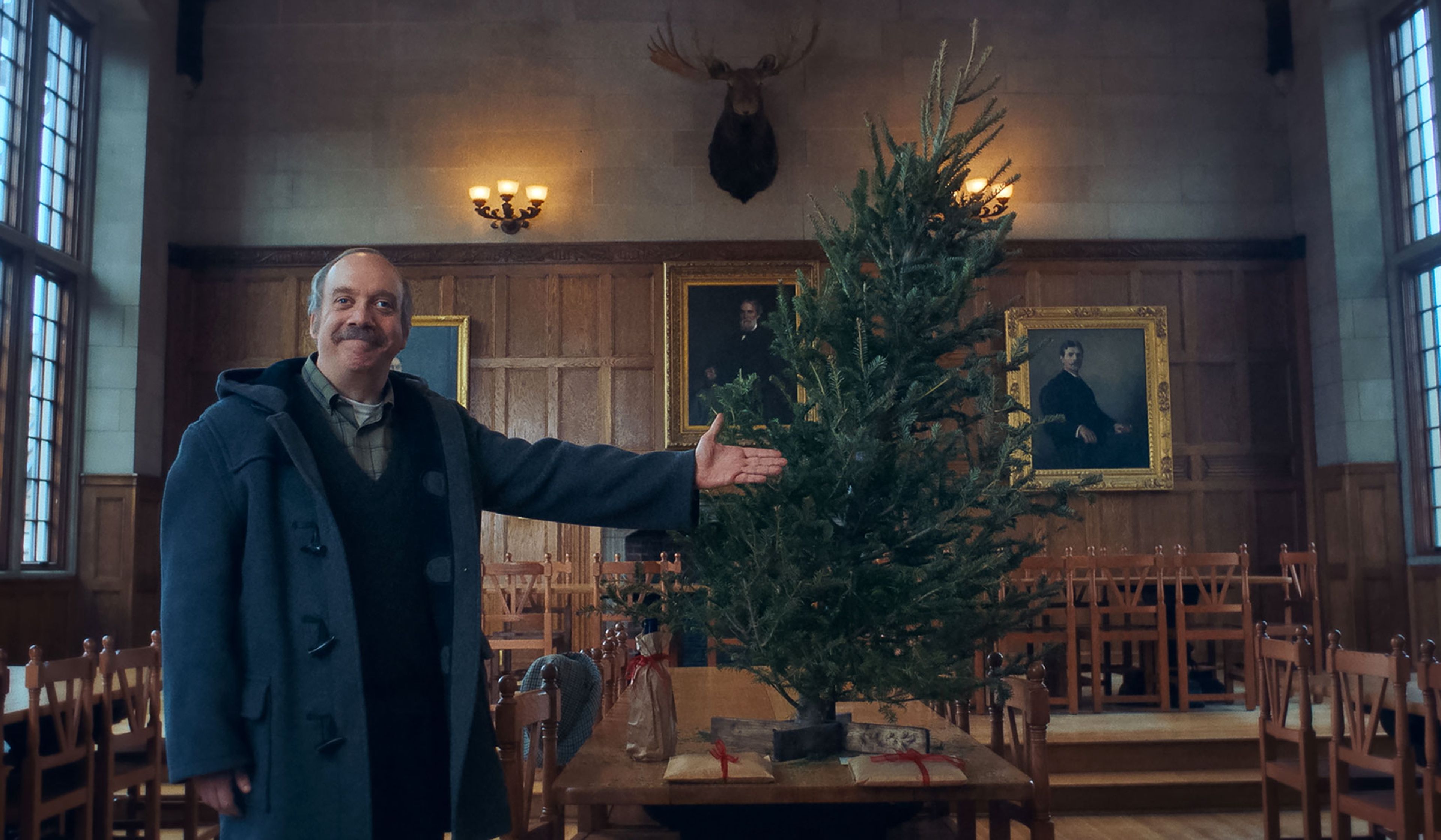
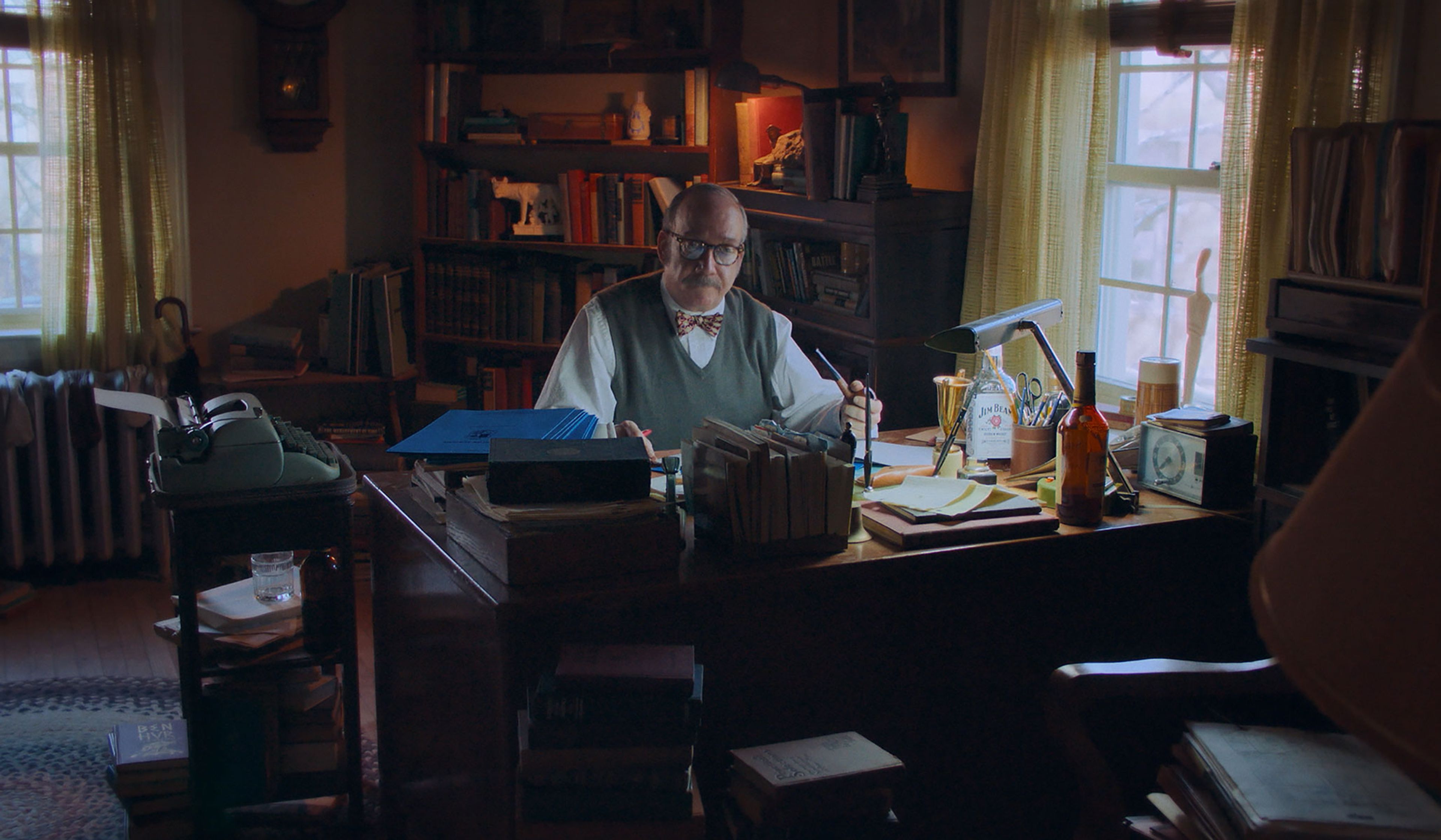
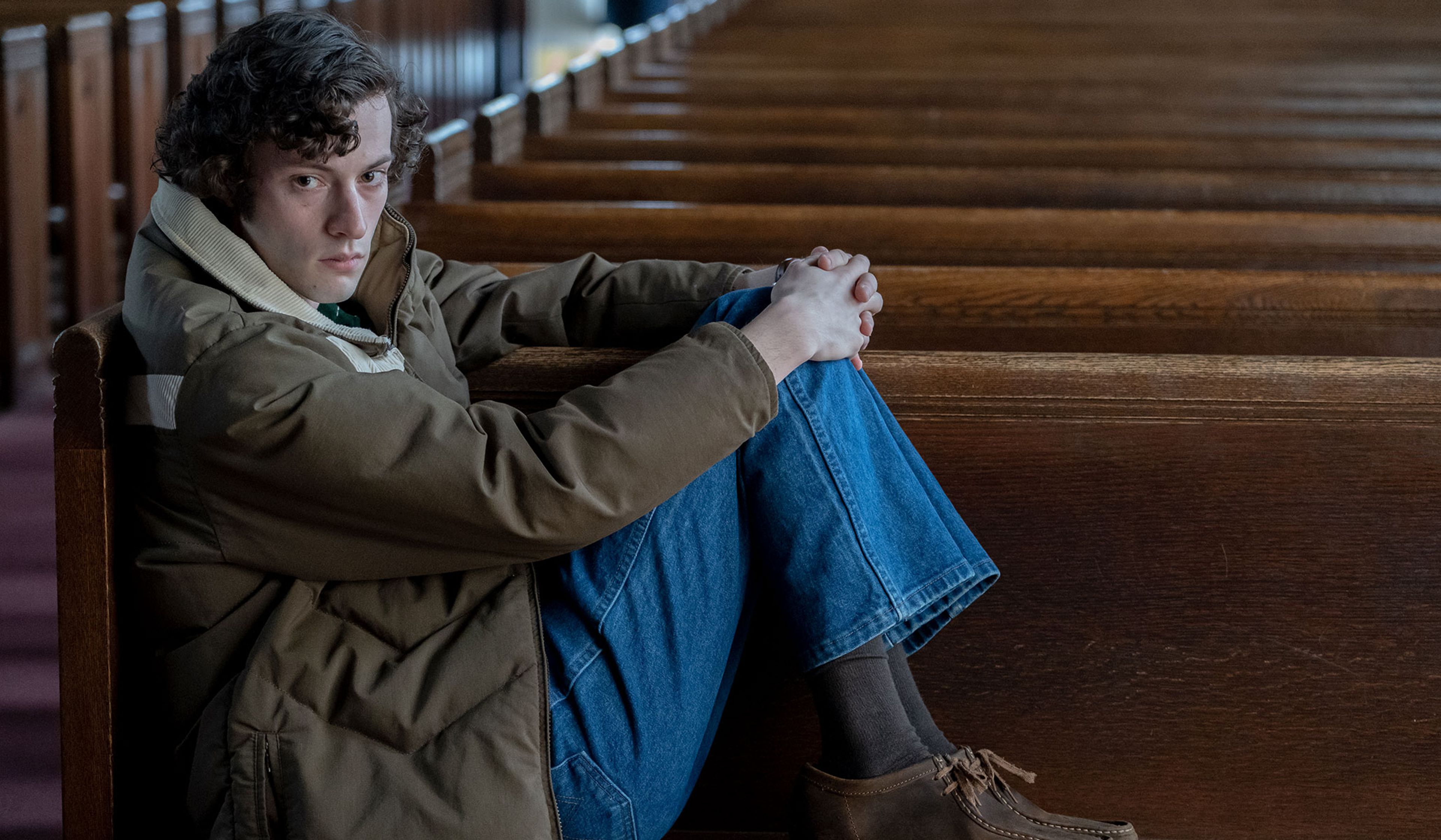
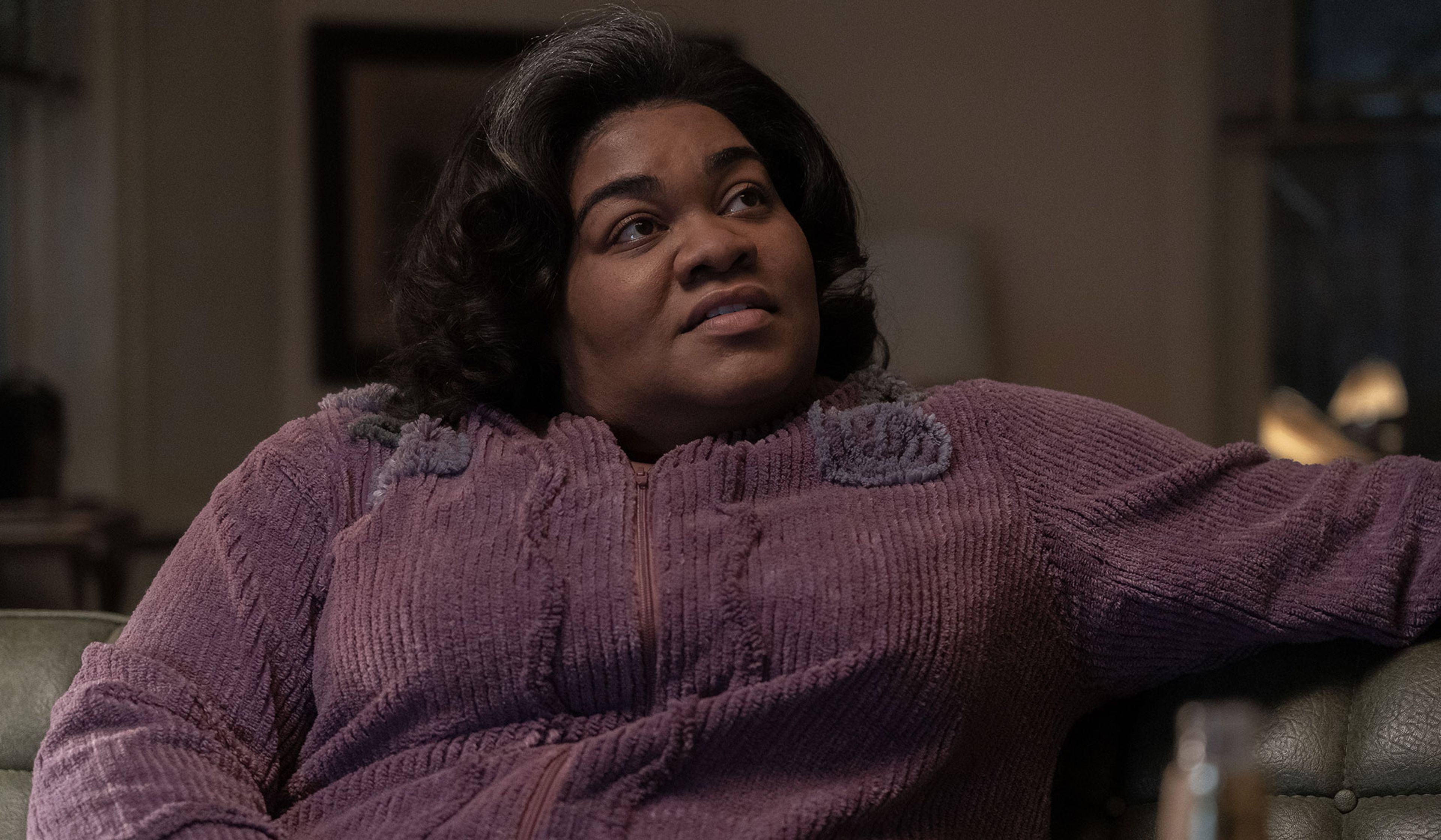
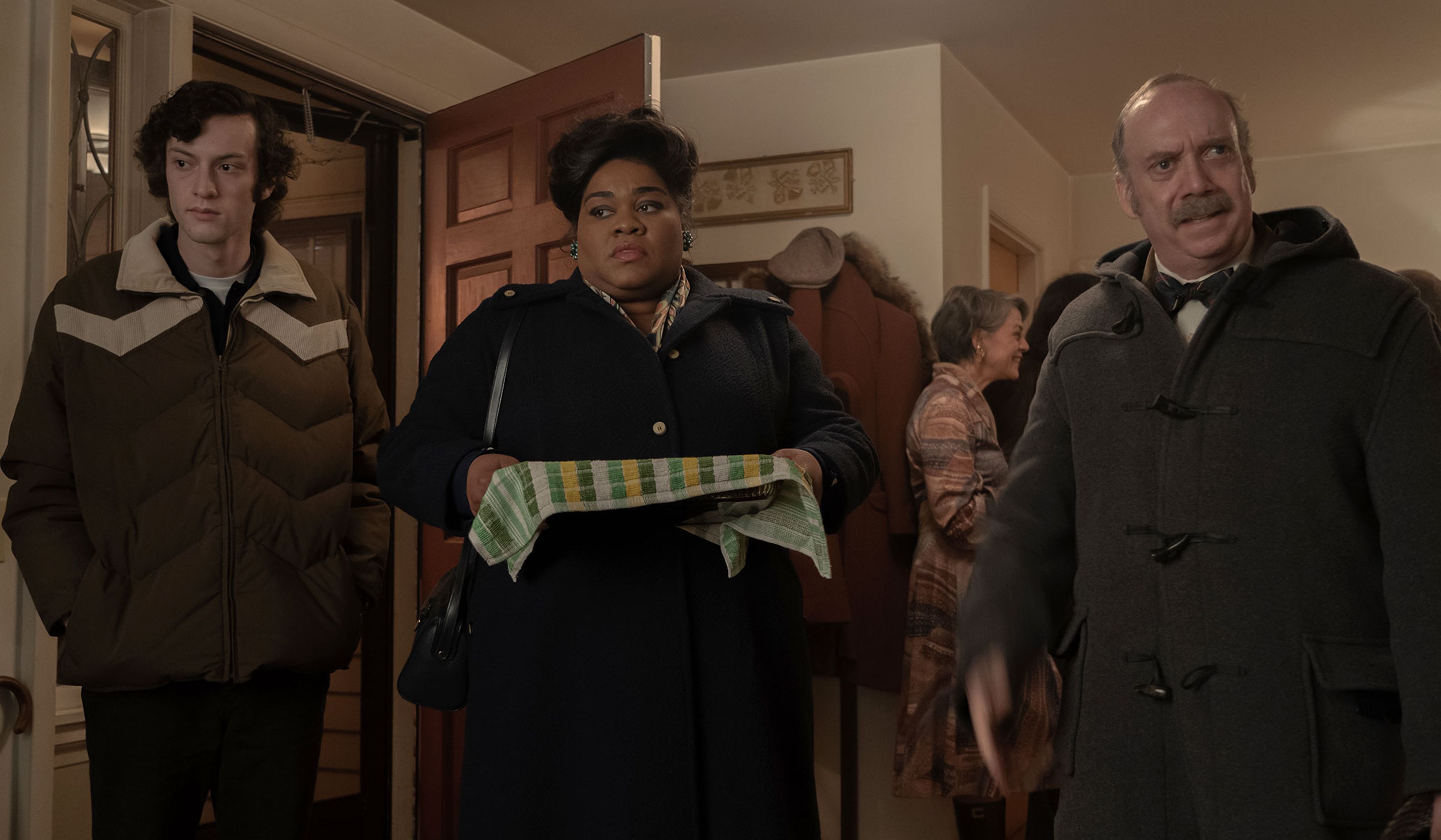
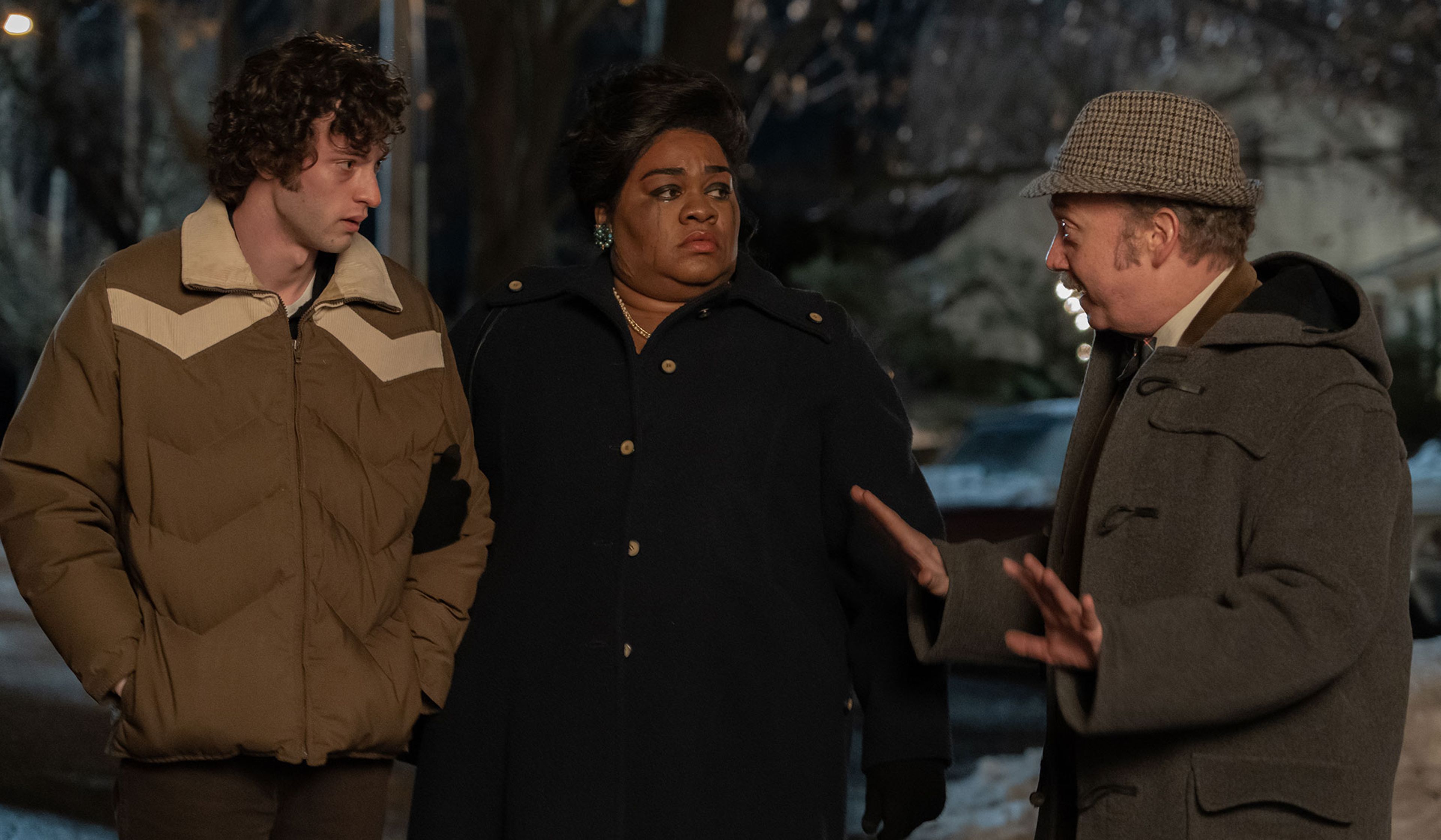
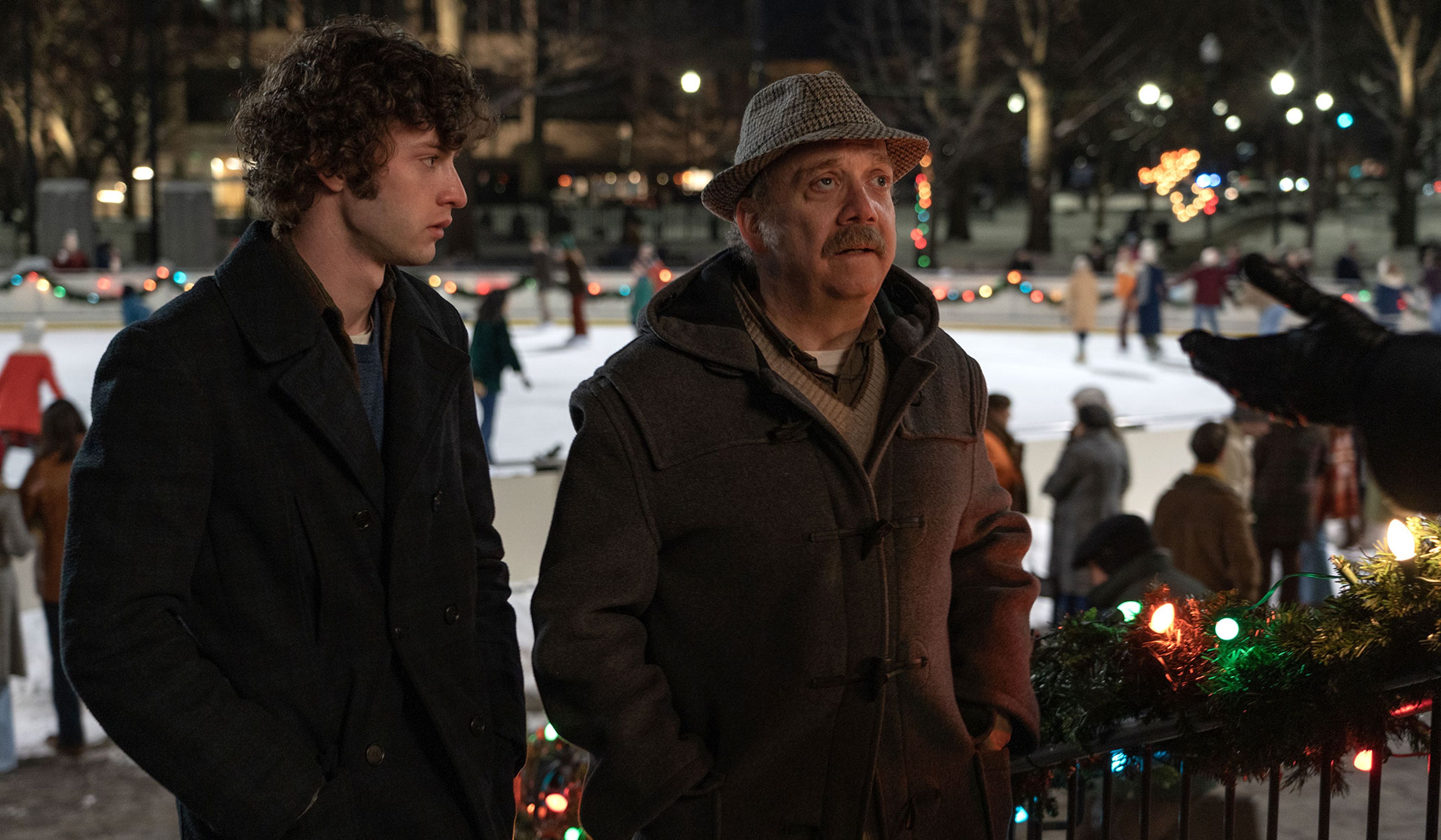
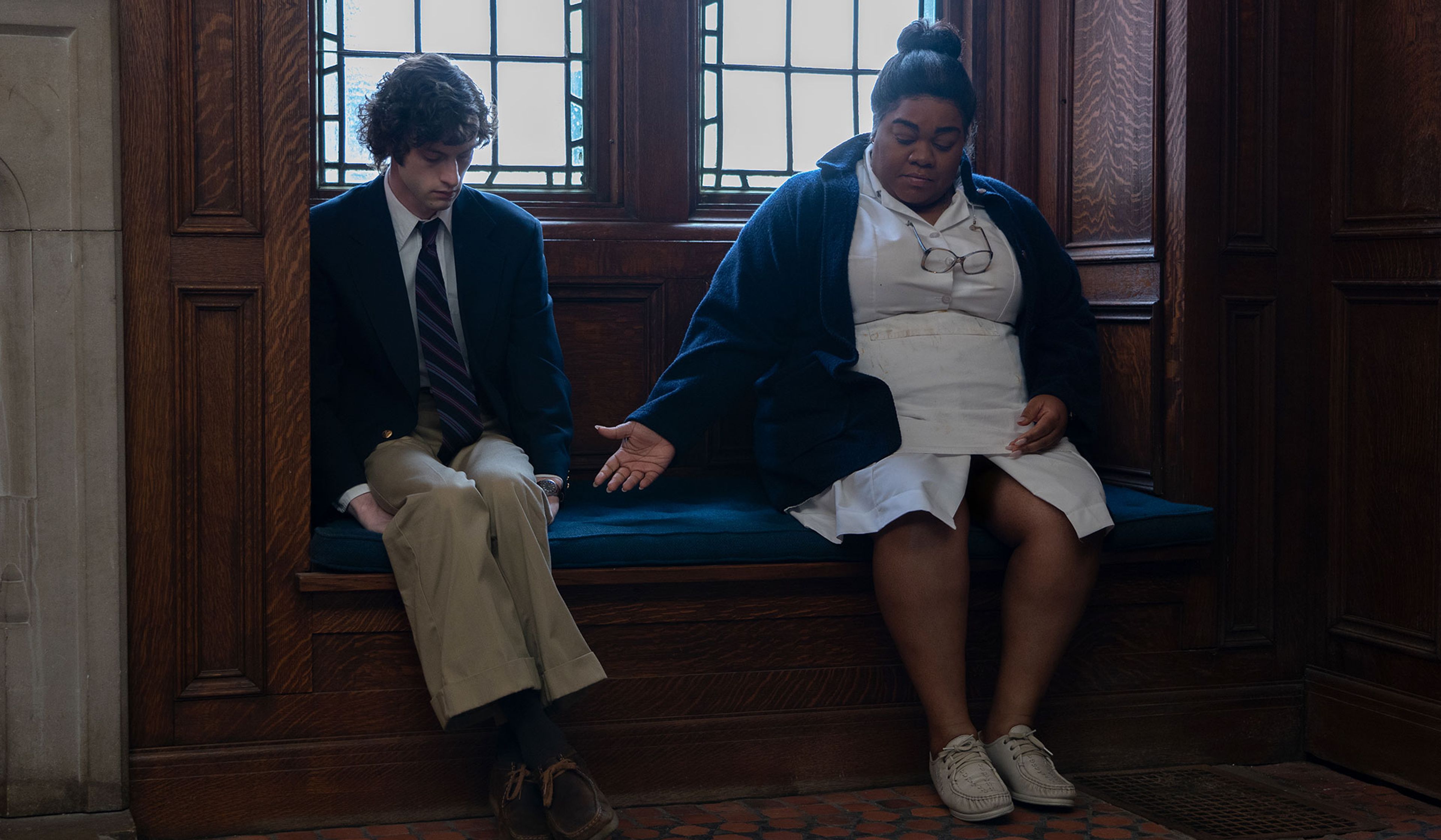
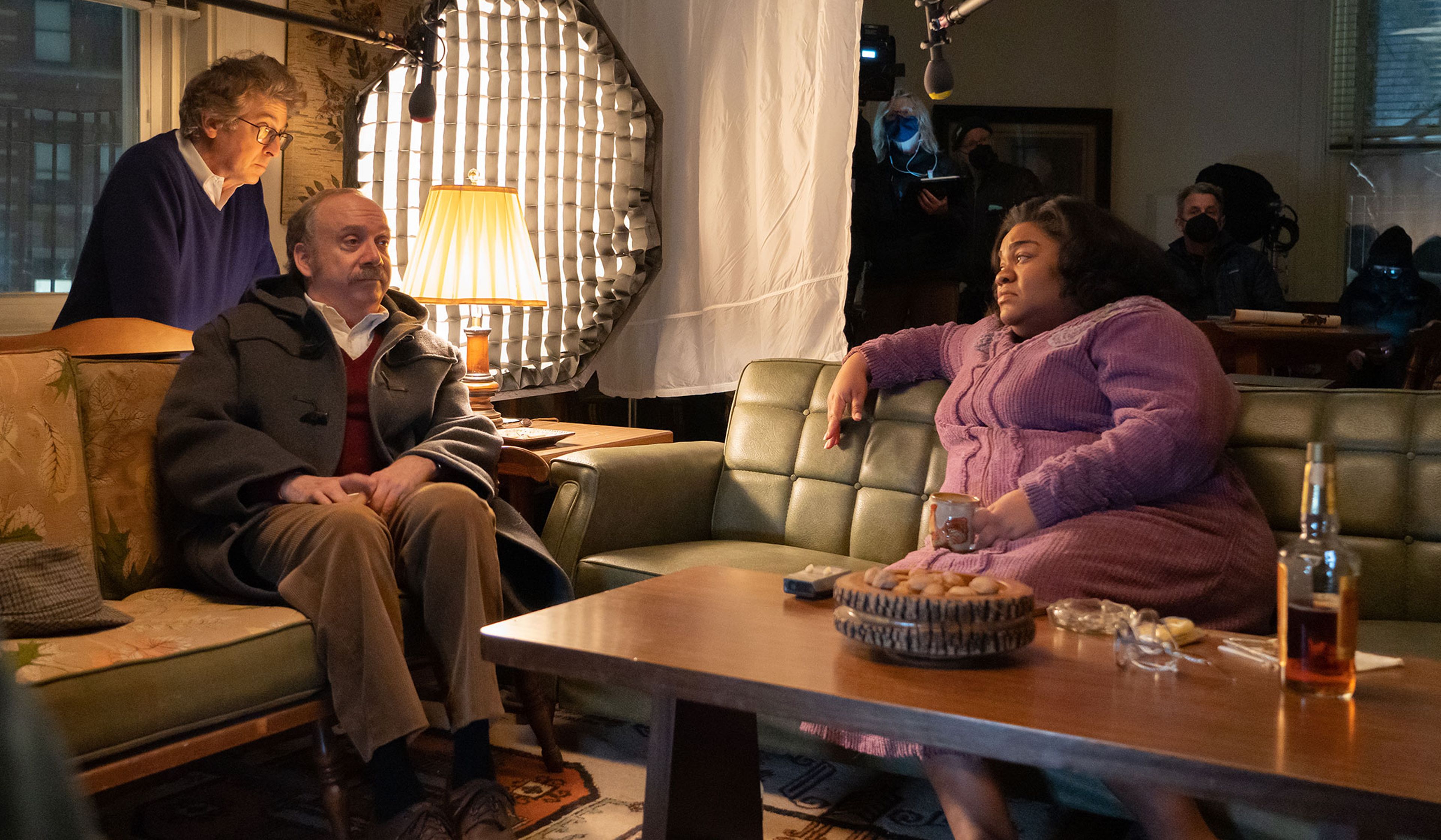
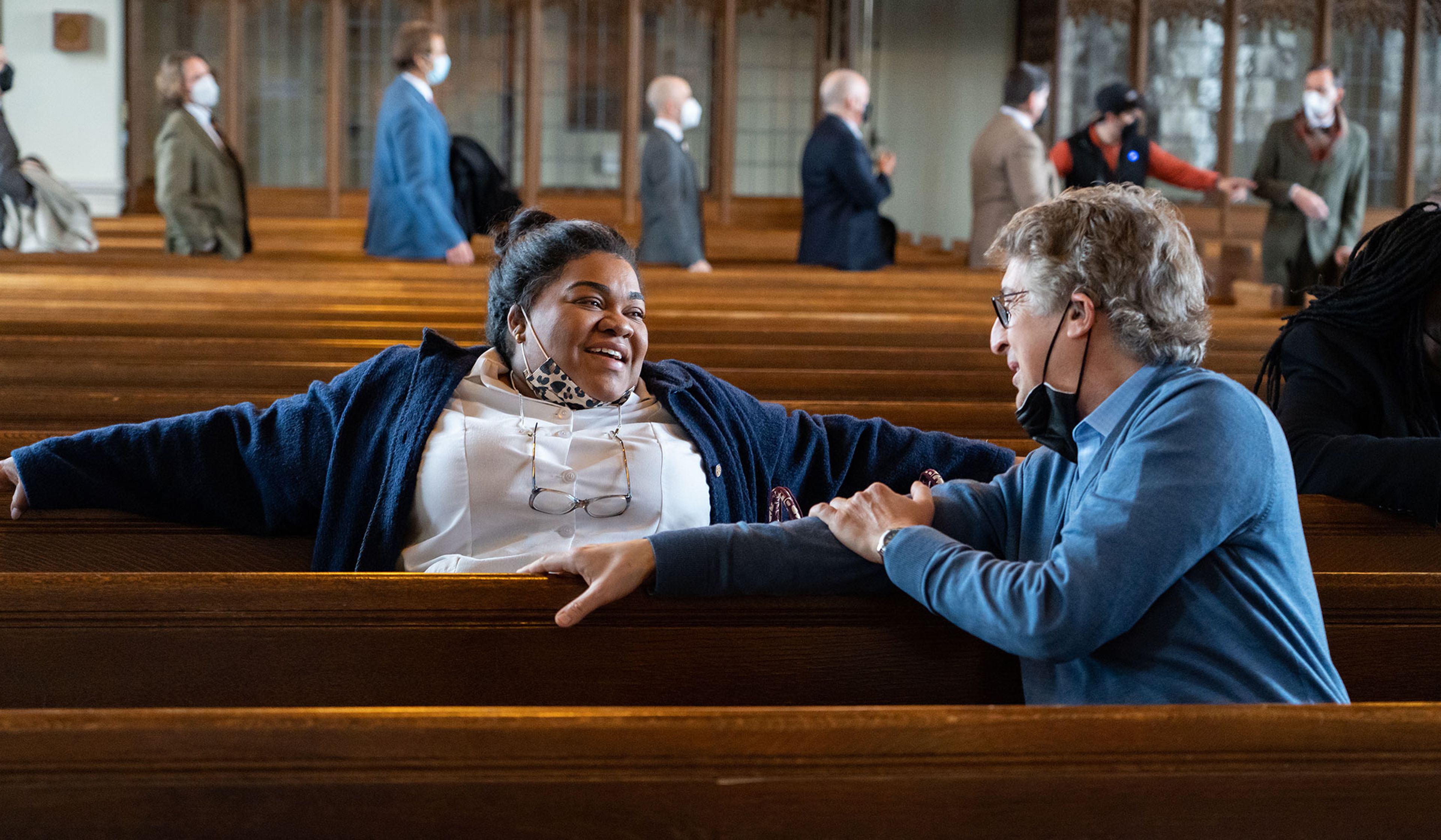
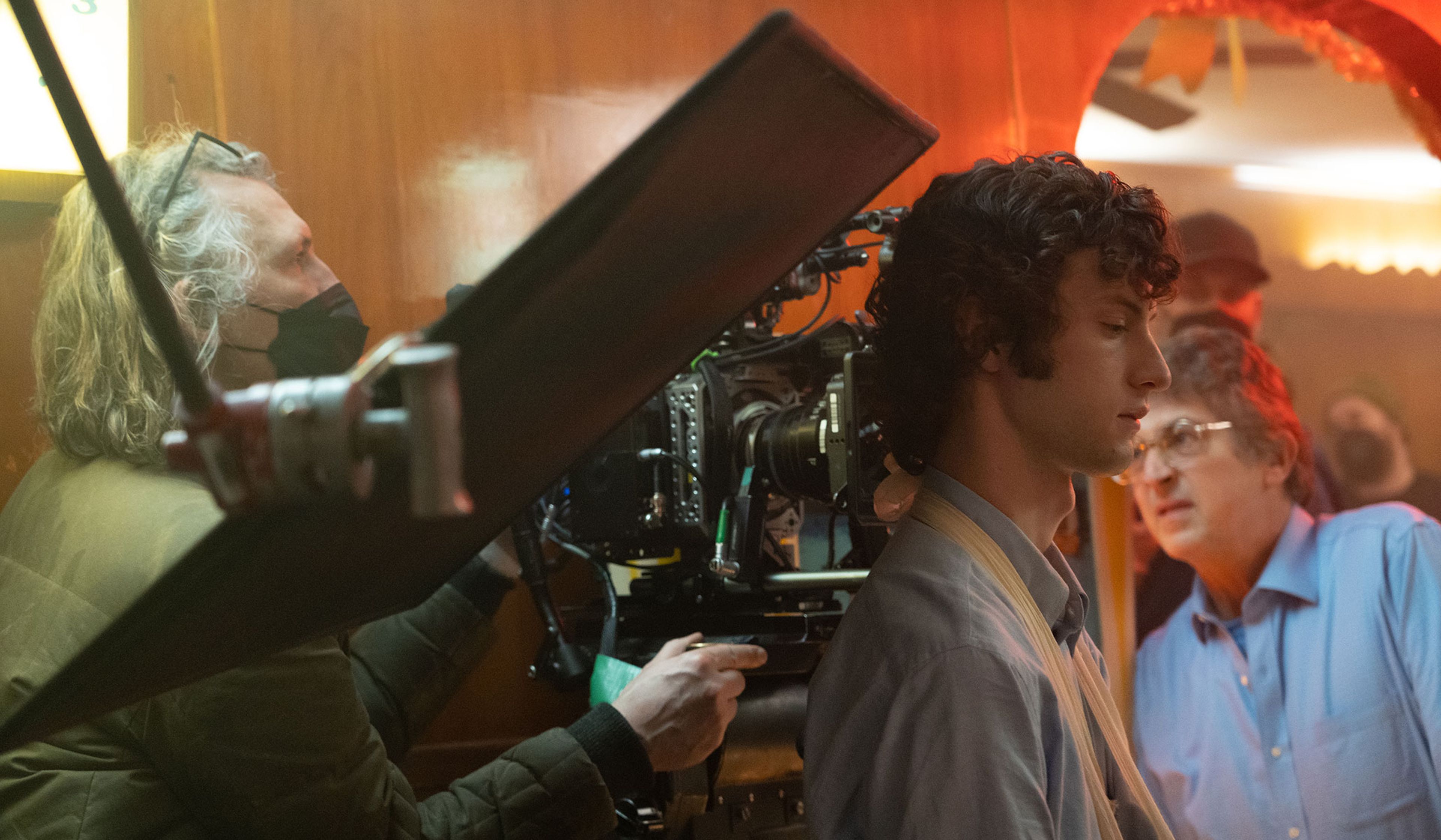

Dominic Sessa and Paul Giamatti in The Holdovers
Focus Features
Mary’s trauma is right there on the surface; for Angus and his teacher, the movie is a slow unveiling of the forces warping their young and older lives, with revelations waiting at the end of the various peripatetic misadventures — an injury, a local Christmas party, a trip to Boston — that are the stock-in-trade of the director, Alexander Payne. Waiting just beyond those revelations is the moral-juridical dilemma, the judgmental headmaster and uncomprehending parents, that you expect from the prep-school-movie genre. And then the movie is shot and framed and titled in the style of the period in which it’s set, giving you three genres for the price of one: It’s a Payne road-trip movie à la Sideways, crossed with a school-days movie à la Scent of a Woman, crossed with, let’s say, Five Easy Pieces.
The movie is consistently engaging, mostly because Randolph and Sessa more than hold their own against Giamatti, but the layers of genre and ’70s homage made me wonder if it might have been more ambitious and interesting to set the story in the present day. You would have lost the Vietnam backdrop and the heightened emphasis on the consequences of class and race divides, but that’s the most heavy-handed, unsubtle aspect of the story. (And also the most implausible, since I strongly suspect an elite New England boarding school with a brilliant black student would have found a way to get him a college scholarship to escape the draft.)
The real reason for the Nixon-era setting, I suspect, follows from a recent observation from the liberal writer Matt Yglesias: “People in the movie business think smartphones are not cinematic and would rather depict life from the pre-smartphone era.” That helps explain why the current revival of cinematic ambition is so focused on historical characters and incidents, but even in The Holdovers you can see the artistic attraction that the pre-smartphone era holds: A missed phone connection plays a crucial role in keeping Angus stranded while the other kids escape, and more generally the absence of the internet enables a certain kind of secret-keeping that’s important to the delayed revelations of the plot.
Thinking about it this way makes the ’70s setting more artistically understandable; Payne’s story would have to be told differently to work in 2023. But still the effort might have been worth it. We have plenty of cinematic portraits of unhappy privilege set in a WASPier and now quite distant past. The present and its discontents need more illumination.












Comments