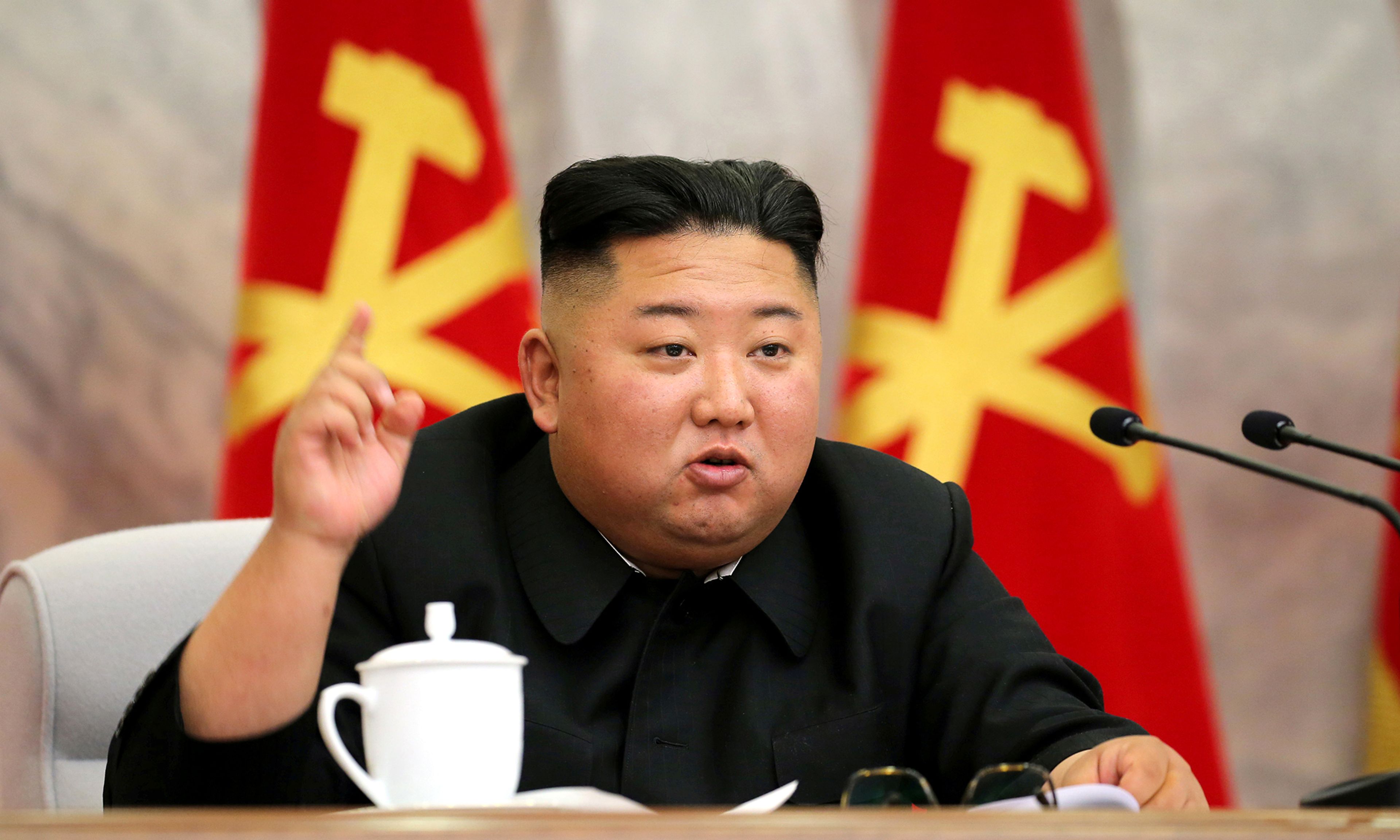
The review of North Korea policy announced by the Biden administration shortly after the president took office is still apparently a work in progress – but Kim Jong-un wrapped up his own review of North Korea’s Biden-administration policy in March. We know this because Pyongyang launched two short-range ballistic missiles that month, violating nearly a dozen U.N. Security Council resolutions specifically prohibiting such tests and daring Team Biden to do something about it. More challenges may soon be in store, given Pyongyang’s interest in testing both the performance of its latest WMD and the mettle of the new U.S. administration.
Kim is intent on continuing the North’s nuclear march. Nuclear weaponry is the key to his state’s goal of unconditional reunification of the Korean Peninsula on its own terms. He wants to be able to fight and win a limited nuclear war on the peninsula, and also — this is a necessary corollary — to train a North Korean nuclear arsenal on the U.S. heartland to serve as a checkmate against any possible U.S. intervention in a Korean crisis. This is the ultimate purpose of the relentless quest for credible intercontinental nuclear capabilities that the Kim dynasty has been pursuing for three generations — and the regime has been drawing ever closer to its goal.
Can the Biden administration stop Kim and thwart his nuclear ambitions? The answer is yes — if it is serious about doing so. Biden has the power and the options at his disposal to progressively reduce the North Korean threat. Accomplishing this, however, will take a vision and resolve his predecessors lacked — and determination as well not to repeat their mistakes in dealing with Pyongyang.
First, let’s focus on what the Biden administration should not do. The North Korea policies of previous presidents failed because they succumbed to the tempting delusion that the North Korean nuclear crisis can be solved through direct negotiations with the North Korean state. If the Biden administration repeats this mistake, its North Korea policy will fail, too.
At this late date in the nuclear saga of the Democratic People’s Republic of Korea (DPRK), the U.S. has no excuse for continuing to entertain illusions that diplomatic dialogue with the North can lead to a voluntary denuclearization by the Kim regime. Falling into this trap always has the same results: It hogties U.S. counter-proliferation strategy, it assures Pyongyang continuing control of the North Korean nuclear drama, and ultimately it provides the DPRK a measure of safety and camouflage for further development of its nuclear threat.
Kim needs conferencing with the U.S. now more than ever, for it is the clearest and easiest pathway out of his state’s dreadful and apparently worsening economic woes, troubles intrinsic to the grotesquely distorted DPRK system but acutely magnified by international sanctions and the country’s ongoing COVID-19 lockdown. He has just warned his nation that it faces another “Arduous March,” an official term last used for the famine years the DPRK suffered under his father, Kim Jong-il, in the 1990s. His father brought his Arduous March to a close, most improbably, by obtaining an international financial-rescue package from the states his nuclear program aimed to threaten — a remarkable bit of diplomacy known abroad as “sunshine” policy. Back then, the U.S. was the key to unlocking the foreign sunshine treasure, and although international circumstances are different in some important ways now, the U.S. remains the key to unlocking foreign treasure today. From the North Korean standpoint, luring the U.S. into talks in which Washington scores (further) own goals in its contest with Pyongyang would be fine; but engineering a crisis to bring a note of urgency to the corridors of power in D.C. and the capitals of panicked allies would be even better.
The survival of North Korea, a small, weak state with extraordinary disabilities and no true international allies, depends on its consummate reading of, and maneuvering on, the geopolitical chessboard. Kim and his advisers may impose unnatural isolation on their subjects, but they themselves pay extremely careful attention to the international news. Pyongyang is always looking for little telltale signs of weakness and confusion on the part of its international adversaries. We can be sure it is concentrating today on the incoming Biden administration like a poker player reading his mark. By picking up on inadvertent tics and unintended “reveals,” signals Team Biden may not even realize it’s sending, Pyongyang can detect promising vulnerabilities.
To date, Team Biden’s missteps and unforced errors on the North Korean front have been small ones. But these may already have raised hopes in Pyongyang that bigger blunders lie in store.
No doubt the North has already made note of the following three slips: the reported consternation at the National Security Council when a Justice Department official undiplomatically branded North Korea “a criminal syndicate with a flag” for its ongoing cybercrime spree; Secretary of State Antony Blinken’s wishful public musings that an increasingly hostile China might somehow play a helpful role in denuclearizing the DPRK; and careless but widespread Team Biden talk of “denuclearization of the Korean Peninsula” (as opposed to just North Korea), language long ago co-opted by Pyongyang to its agenda of breaking the alliance between the U.S. and the Republic of Korea (ROK) and forcing American troops out of the South.
Each of these slips will have raised hopes in Pyongyang that the new American team can be induced into offering, or surrendering, critical concessions to the DPRK if the North can draw the Americans back into “engagement.”
Further, it is no secret that the Biden administration hungers for a new nuclear deal with Iran, the North’s main partner in crime in the Middle East terror bazaar. Such overeagerness could open opportunities for Pyongyang, too — if the North can just get Washington back to the table.
The DPRK has perfected a playbook of stratagems and techniques for getting the better of its American negotiating partners. That playbook has been highly effective, as the regime’s growing nuclear and ballistic arsenals attest. Outsiders don’t have to guess about the moves the regime might make, because they have been repeatedly deployed against Democratic and Republican administrations alike. Many in Biden’s inner foreign-policy circle, including the president himself, should remember these North Korean gambits from their own firsthand experience in earlier administrations that fell for them.
North Korea plays its nuclear-crisis cards carefully, and its favored ploy for rolling the U.S. is a “heads I win, tails you lose” approach. It entails tightly controlled conferencing on the one hand and prolonged but equally orchestrated periods of non-negotiation on the other.
Conferencing is the stage at which North Korea rakes in its chips, through such devices as concessions for meeting, strict command of the negotiating agenda, and surprise rejection or relitigation of previously accepted points of agreement. And when the diplomatic run has been fully exploited, it is time for North Korean non-talk. This is when Pyongyang goes glowering and unresponsive. In this mode, the North brushes off overseas entreaties for “engagement.” It uses the “breakdown” in negotiations as a breathing space in which to race ahead with development of nuclear and missile capabilities to change the facts on the ground. These new facts necessitate new international “denuclearization” negotiations — at which point the cycle repeats itself.
Americans have been surprisingly slow learners in the face of North Korean nuclear gamesmanship. The last innovation in North Korea policy under a Democratic president, Obama’s “strategic patience,” implicitly recognized that previous administrations (both Democratic and Republican) made an embarrassing mess of their direct negotiations with the DPRK; the Obama team was determined to avoid entrapment by declining to negotiate at all. But that was only half a plan, a scheme for not losing in further talks with North Korea. It lacked any positive concept of how to make gains — to thwart proliferation while North Korea was away from the table. This oversight became ever more consequential in the later years of Obama’s watch.
Lest it go unsaid: The reason for North Korea’s great successes against American counterparts at the bargaining table is not that juche (the DPRK’s state ideology; the word might be rendered as “taking charge” or “in command”) somehow gave birth to a nation of latter-day Metternichs. Rather, a totalitarian state committed only to its own interests possesses inherent structural conferencing advantages over an interlocutor guided and constrained by the precepts and processes of Western rule of law. In an arrangement where one side is bound by its word and the other only by the dictates of situational ethics, it does not take a game theorist to see who will take home the pot most of the time.
To break the perverse cycle by which the North has, against all odds, emerged as an increasingly serious threat to the U.S., our allies, and the international community, America requires a clear understanding of the roles of diplomacy and other tools in the progressive reduction of Pyongyang’s potential to terrorize and inflict mass destruction on outsiders – that is, it requires an unflinching realism about the North Korean regime itself. Though these truths may be painfully self-evident to many readers, for some reason it nevertheless seems necessary to repeat them out loud slowly for each new American administration.
The single most important fact here is that the DPRK is an implacably revisionist state — irreconcilably opposed to existing political arrangements on the Korean Peninsula. Pyongyang is informed by “juche thought” and animated by the lesser-known but no less foundational “Ten Principles of Monolithic Ideology.” These doctrines together lay out a coherent ideology, extolling the racial destiny of the entire Korean people to unite under the infallible leadership of the Kim family of Pyongyang — and to stand up to the foreign powers that have subjugated and oppressed Koreans for so long. Suffice it to say this is a worldview that regards splitting the difference with the U.S. to be both impossible and immoral. Like it or not, this central truth about the North governs all subsidiary possibilities for our dealings with the Kim regime.
Given the creed that justifies its own power, the DPRK is fundamentally opposed to the existence of the rival state in the Korean Peninsula, to the American security guarantees that have permitted the despised government in Seoul to survive, and to the international liberal order that has helped enrich what it regards as corrupted race traitors in the ROK while wrong-footing the North’s own superior “racial socialism.”
The North’s foreign and military policies operationalize these core precepts of state. This is why preparing to fight and win a limited nuclear conflict on the Korean Peninsula, and developing the ballistic means to target nuclear weapons on the United States — Seoul’s superpower protector — are nonnegotiable objectives of North Korean strategy. They are also why diplomatic negotiations for a voluntary denuclearization of the DPRK are a fool’s errand, and always have been.
With its objectives and its ideology, North Korea can never be a good-faith partner in international negotiations to denuclearize it. It may attempt to ensnare the U.S. in arms-control talks — i.e., bargaining over the size of its nuke arsenal if we recognize Pyongyang as a permanent nuclear state. And it would delight in discussions about dismantling what it calls America’s “hostile policy”: ending the U.S.–ROK alliance, ridding the peninsula of U.S. troops, and otherwise clearing away impediments to its goal of unconditional reunification on its own terms.
But Pyongyang has absolutely no interest in helping its enemies disarm it, no matter what bribes they might dangle. While the North may make promises to the contrary, it will break them before they compromise its vital interests. And as we learned from Trump’s diplomatic experiment — no need to run that one again! — even if offered summit meetings with the U.S. head of state, North Korea’s supreme leadership could not be enticed into a deal that would result in any genuine denuclearization.
Because of these constraints, the scope for productive conferencing on North Korean denuclearization is unforgivingly narrow. Bilateral and multilateral talks with allies on the North Korean nuclear crisis may prove fruitful; so, too, might threat-reduction talks with other international coalitions or constituencies. Under certain clearly defined circumstances, discussions of the North Korean nuclear problem with unfriendly powers such as the Chinese Communist Party or the Kremlin may be worthwhile. And communication with Pyongyang itself could be helpful at times: in dispelling needless misunderstandings, for example, in contradistinction to the profound and unbridgeable disagreements that separate us.
But no more providing diplomatic cover for North Korean proliferation, please. Let future negotiations with Pyongyang commence in earnest after the regime has gone back and made good on its existing international pledges and redeemed its impressive inventory of broken commitments.
So much for avoiding the seemingly obvious mistakes with North Korea. What about a positive program of action? Can America fashion a North Korea policy that actually makes the U.S., our allies, and the rest of the world more secure?
The answer is: Of course we can — if we are serious about addressing the North Korean project. Moreover, if the regime is intent on pointing a nuclear pistol at our heads to force us to go along with its plans — if that project is the danger to our national security that it is so clearly intended to be — Washington has no responsible alternative but to be serious: to address the North Korean project systematically and to our own ultimate satisfaction.
The conventional wisdom among deciders and explainers in Washington holds that America cannot do very much — short of war — to thwart North Korea’s relentless nuclear quest (apart from negotiating with Pyongyang, that is — about which, see above). The Beltway thinking is encapsulated in the memorable adage, “North Korea is the land of lousy options.”
Fortunately, Beltway thinking is badly wrong on this score. Of course our options in contending with the North Korean threat are unpleasant. Pyongyang does its very best to make them so. And they may likewise be difficult, in the sense that they require bestirring ourselves to achieve our own protection. But when it comes to effective options for coping with the North Korean nuclear threat — yeah, we have those, plenty of them.
True, we may not be as favorably positioned as we were 30, or 20, or even ten years ago. For over a generation we squandered the chance to deal with the North Korean nuclear threat when it was smaller, and when our leverage was even greater than it is today. Nevertheless, making the North Korean threat smaller, and steadily so, is very much within the reach of American statecraft right now.
Before we turn to the effective options, we need to take a closer look at some of the essential features of the strategic landscape underlying the North Korea problem:
First, Kim Jong-un and his regime are in desperate straits today, severely beleaguered if not overwhelmed by their own domestic woes: a self-imposed, totalitarian COVID lockdown; the economic tailspin it triggered; and the famine that may be coming. If and when the risk of COVID subsides for North Korea, Pyongyang has no realistic plan for reversing this grim slide downward on its own, unless it is willing to take radical reform measures that might imperil the stability of the Kim dynasty.
Second, strict U.N. Security Council economic sanctions against the North are locked in place, forever — so long as the U.S. does not buckle and allow them to be removed. This is so because the U.N. sanctions against the DPRK, including the especially punishing international measures enacted back in 2016–17, have no expiration date. Thus the U.S., in its capacity as a permanent member of the Security Council, retains a veto over any proposals that might loosen or remove those strictures. In effect this means that the Kim regime has an international choke chain around its neck — and we have great discretion in deciding just how hard to tug at it.
This brings us to a third point: America’s command of the world’s reserve currency, the U.S. dollar, affords leverage we have barely begun to use — not just directly against the North but also against China, the North’s paymaster. Primary and secondary U.S. sanctions can deprive sanction-busters of the ability to conduct business in the global dollar-zone. Blocking such business is a likely death sentence for many firms facilitating violations of sanctions against the DPRK, and a dire prospect for a violation enabler such as China, given the large share of Chinese international commercial and financial transactions currently cleared in dollars. (Yes, Beijing is talking of an official cryptocurrency, and of other means for wresting itself from the dollar yoke, but as of March 2021 less than 2.5 percent of all international payments in the global SWIFT network were denominated in renminbi.)
Finally, the U.S. possesses a host of other formidable capabilities that have yet to be deployed in any systematic and sustained manner. These include, but are hardly limited to, international-law enforcement to interdict and disrupt illicit and criminal enterprise overseas; cyber countermeasures against Kim-regime assets at home and abroad; and a range of seldom-discussed covert capabilities.
As even this summary recap should underscore, America is in reality still advantageously poised for a long game against the North Korean threat — if we have the will and the patience. Our shortfall in coping with the North Korean nuclear crisis has never been a want of options. It has been a deficit of foresight and of leadership.
Part of the strange want of foresight in Washington’s North Korea policy has been a persistent inability to imagine a satisfactory outcome that does not entail getting to the conference table with Pyongyang. (Even under ur-outsider Donald Trump, “maximum pressure” turned out to be a warm-up act for diplomatic summitry; and once the parlaying collapsed, the policy wandered aimlessly for his remaining years in office.) Yet by now, unhappy experience should have taught even our experts that conferencing with the Kim regime is a dead end – or worse. America requires a very different conception for North Korea policy, one in which the prospect of a negotiated settlement with the North plays no promised role at all. We need instead to envision an approach that makes the North Korean problem smaller independently – over time and on our terms, not the North’s.
Thus the case for a sustained U.S. campaign of North Korean–threat reduction that does not count on Pyongyang’s diplomatic assent. A broad and workable strategy, based on our own action and cooperation with allies and friends, for progressively degrading the DPRK’s killing force would include the following five elements: first, enhanced civil and missile defense both in the U.S. and among our Asian allies; second, intensified economic pressure against the North Korean regime and its sanction-busting enablers overseas; third, aggressive interdiction of illicit North Korean revenues and resources, including funding that the North obtains from Iran and elsewhere in the Middle East; fourth, sustained cyber and clandestine efforts to degrade or cripple WMD development; fifth, a campaign of international ostracism of the North Korean state for its crimes against humanity, as documented by the U.N. Commission of Inquiry on Human Rights in North Korea. Note that every component in this approach is not only feasible but practicable — not easy, but eminently doable.
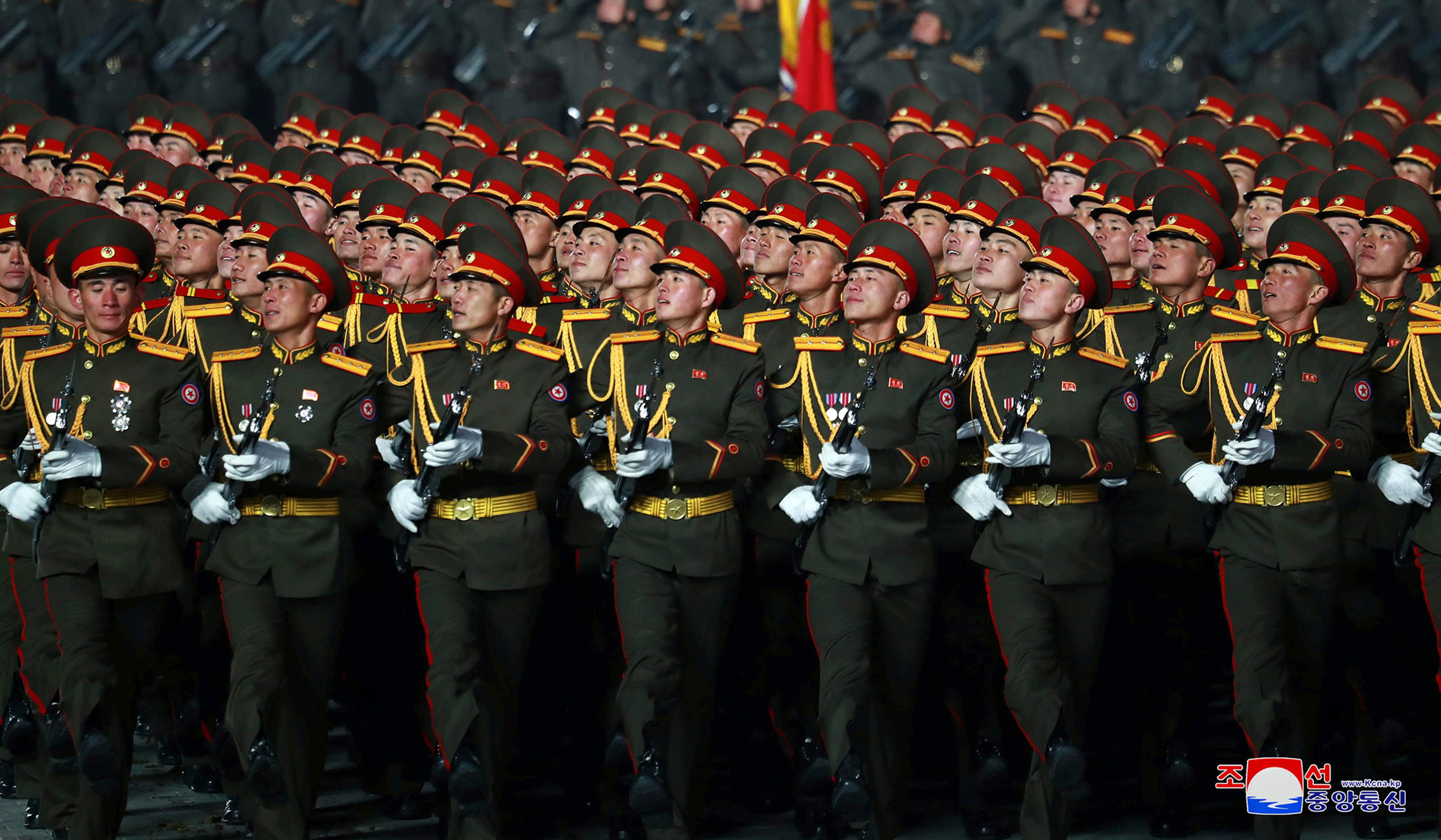
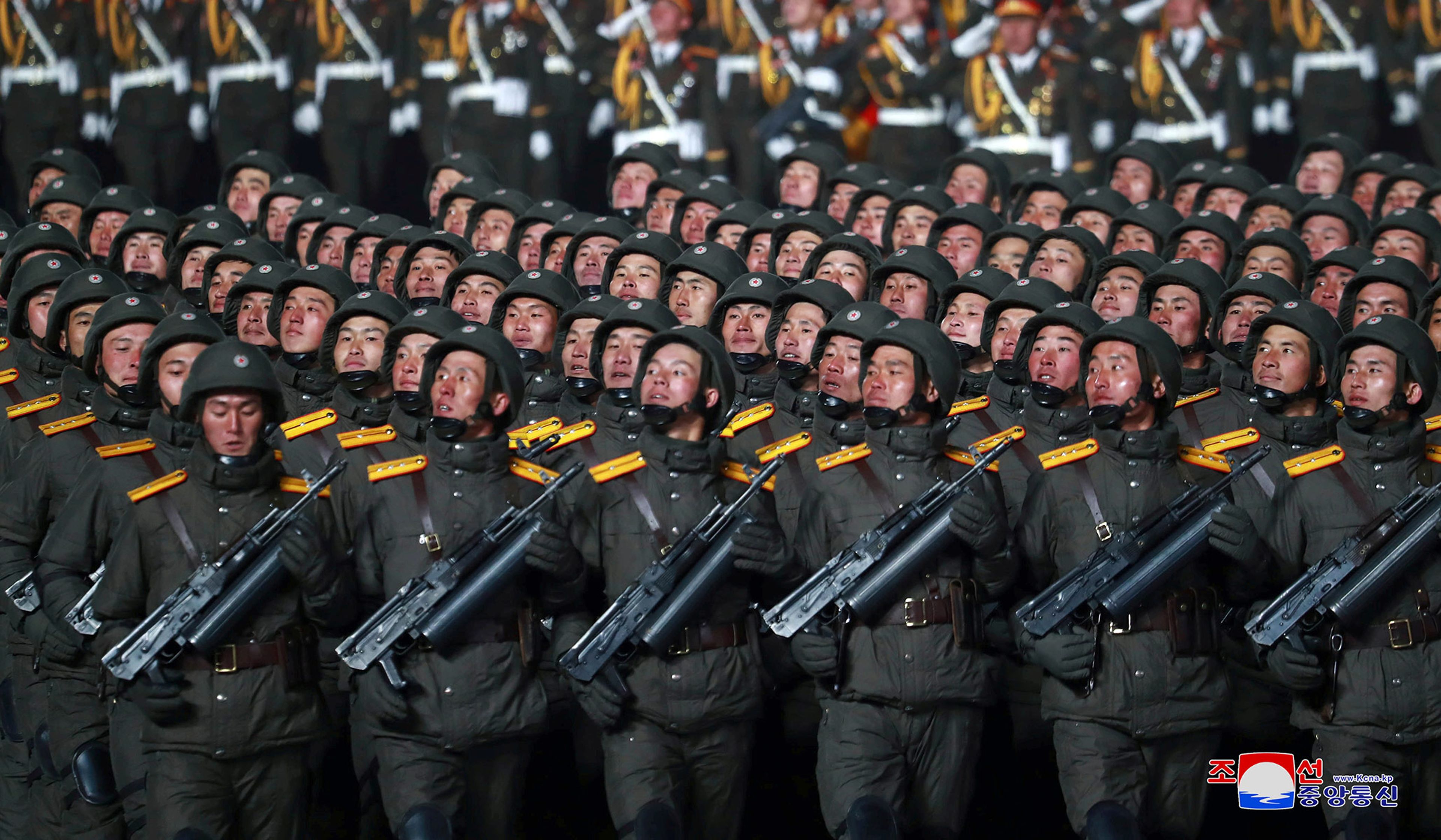
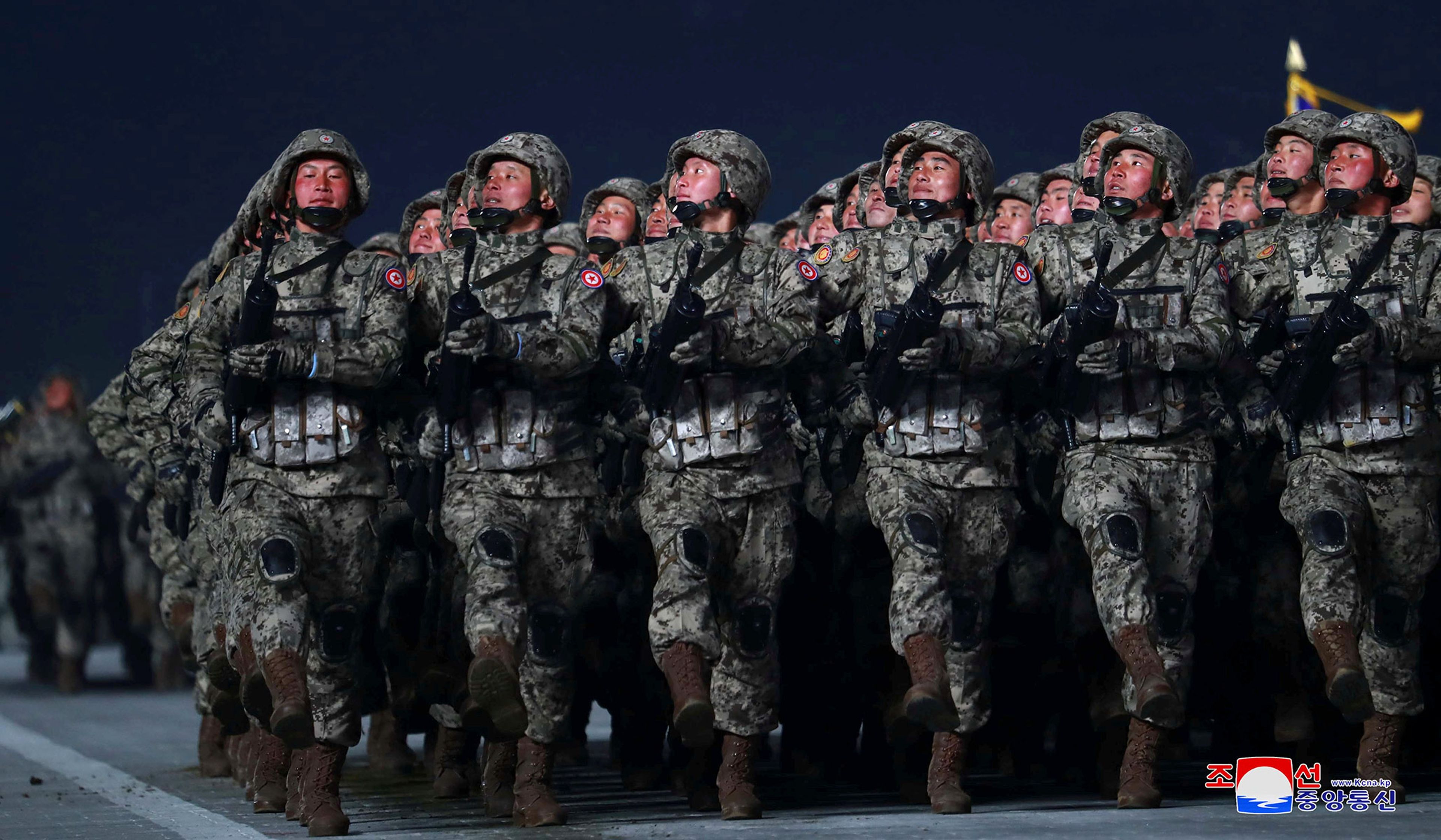
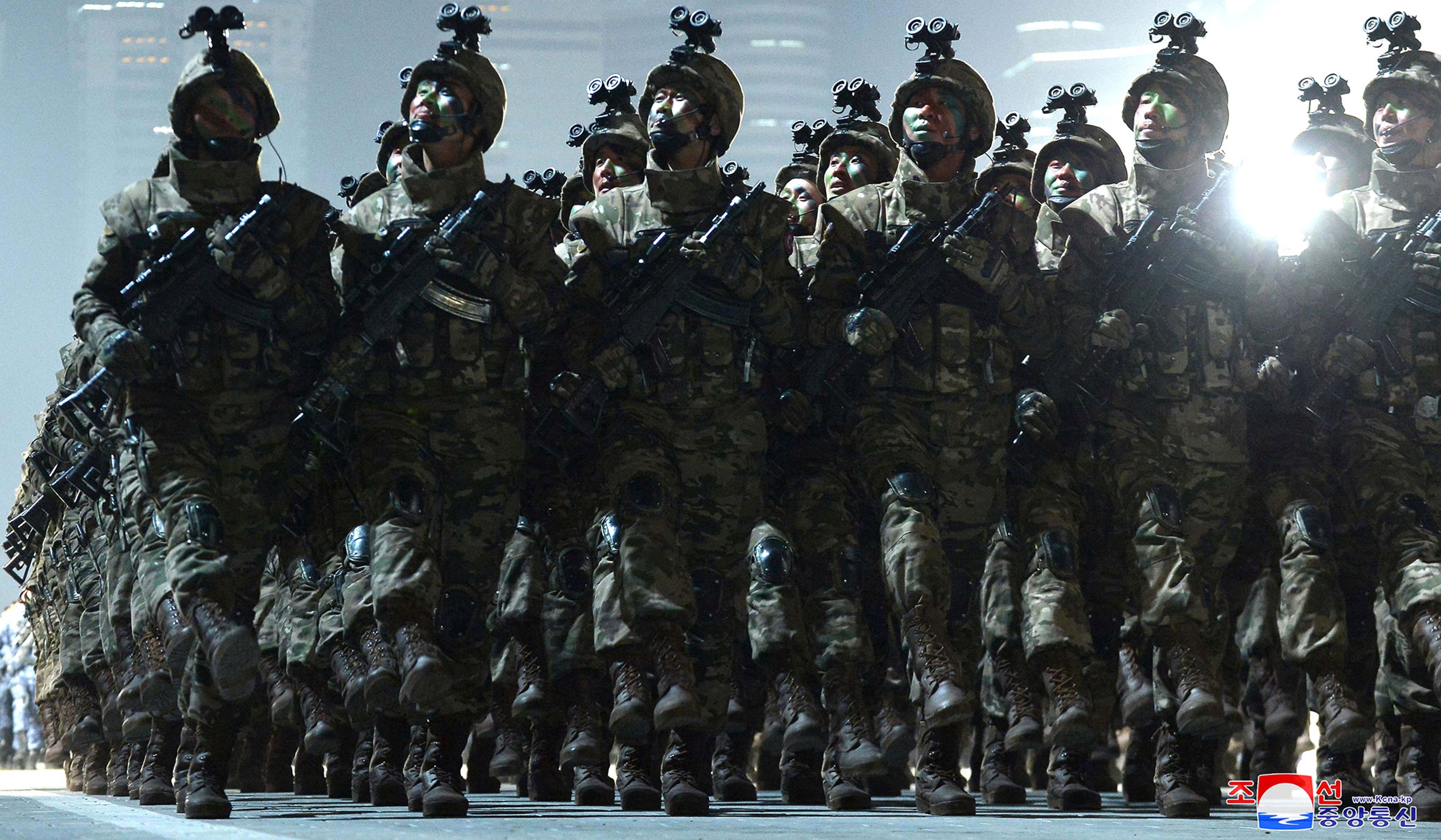
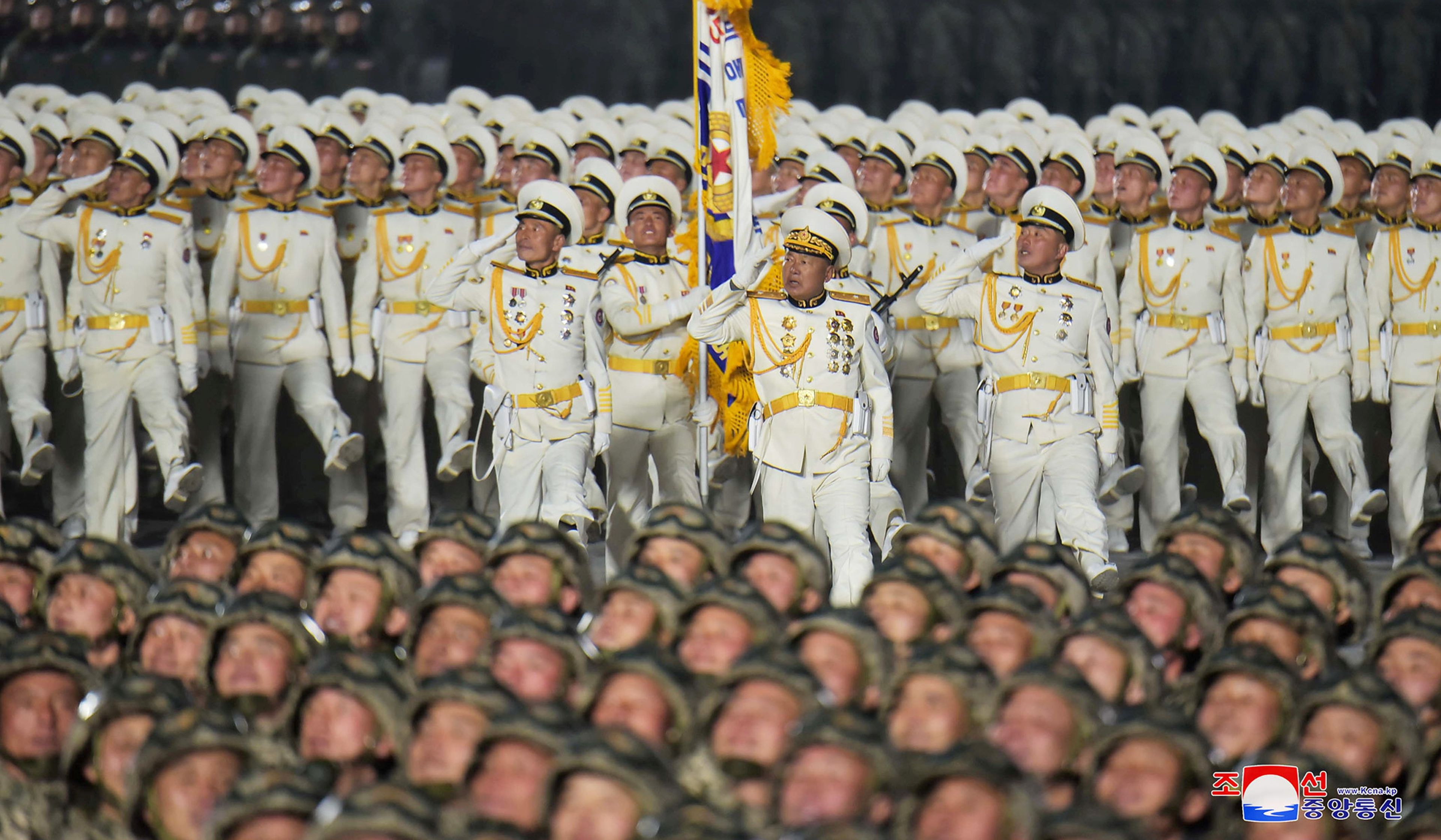
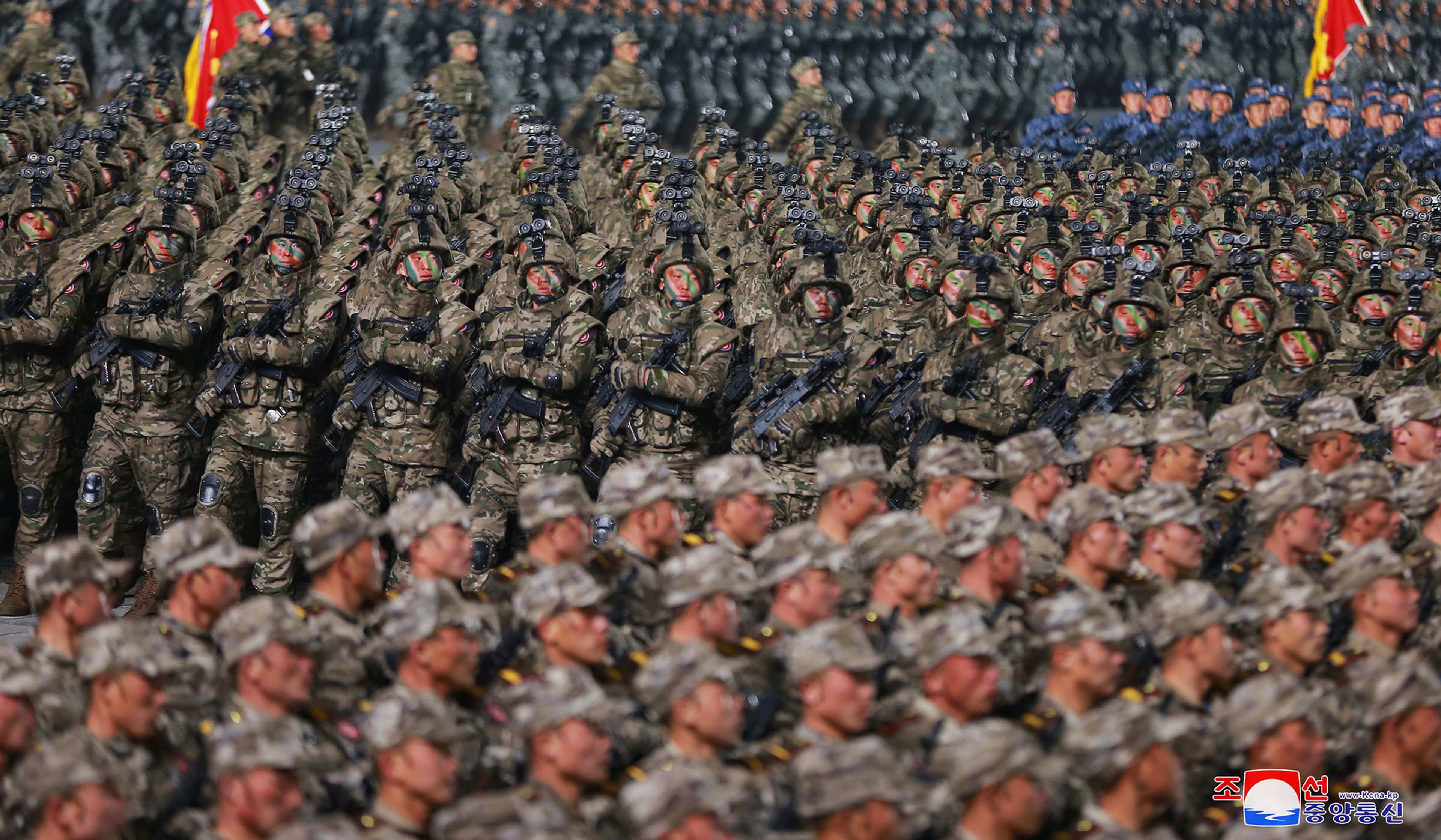
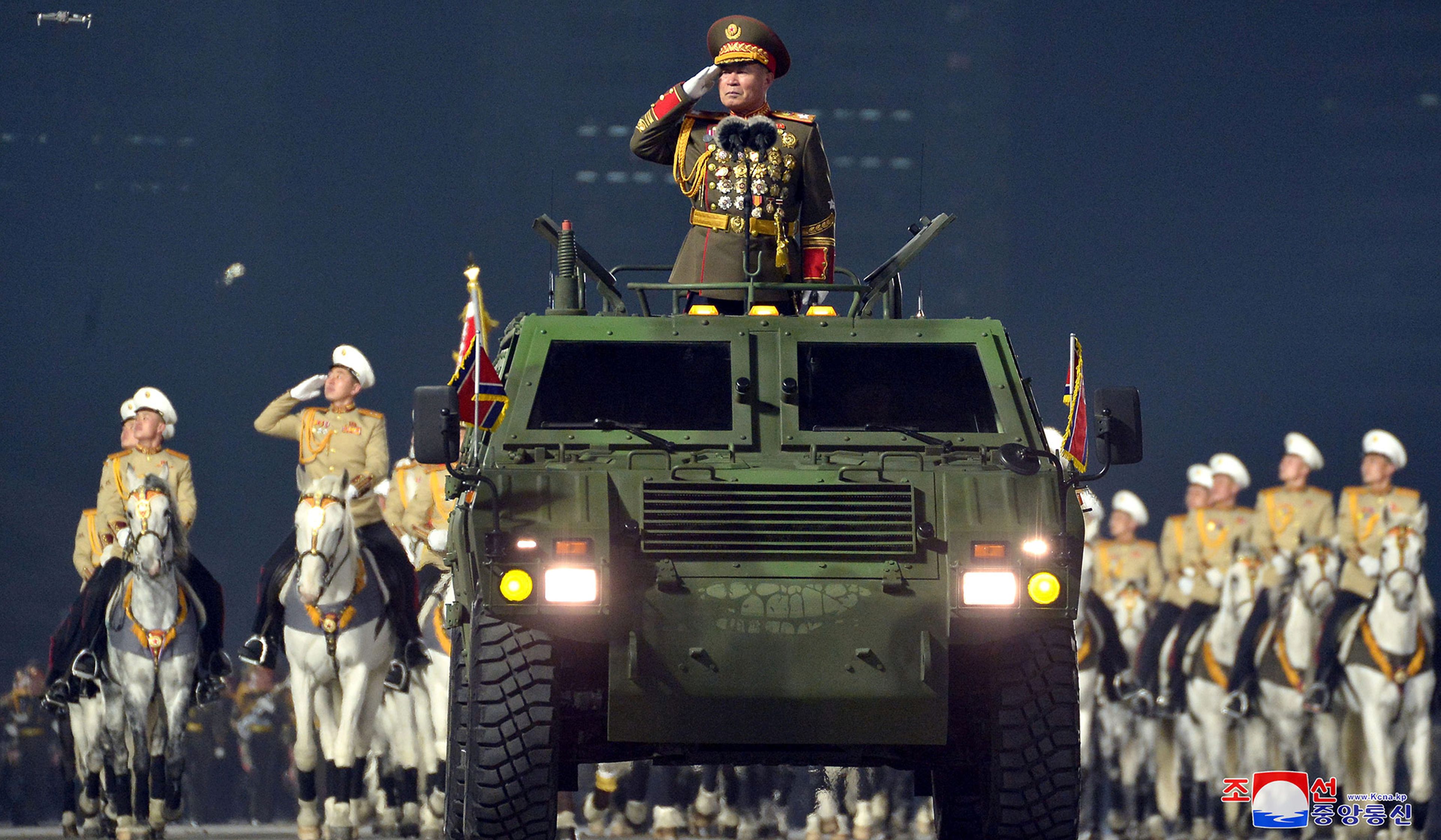
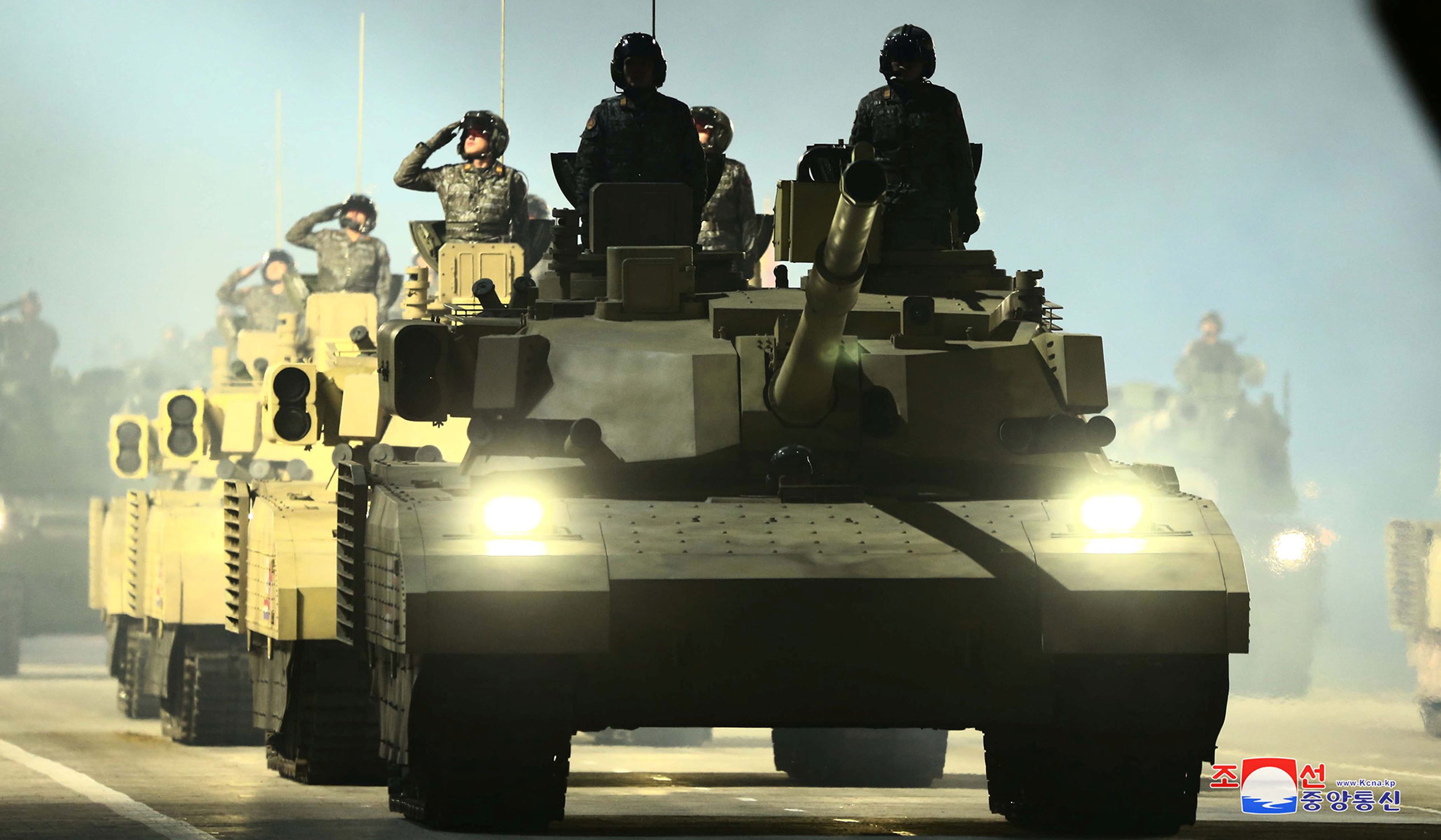
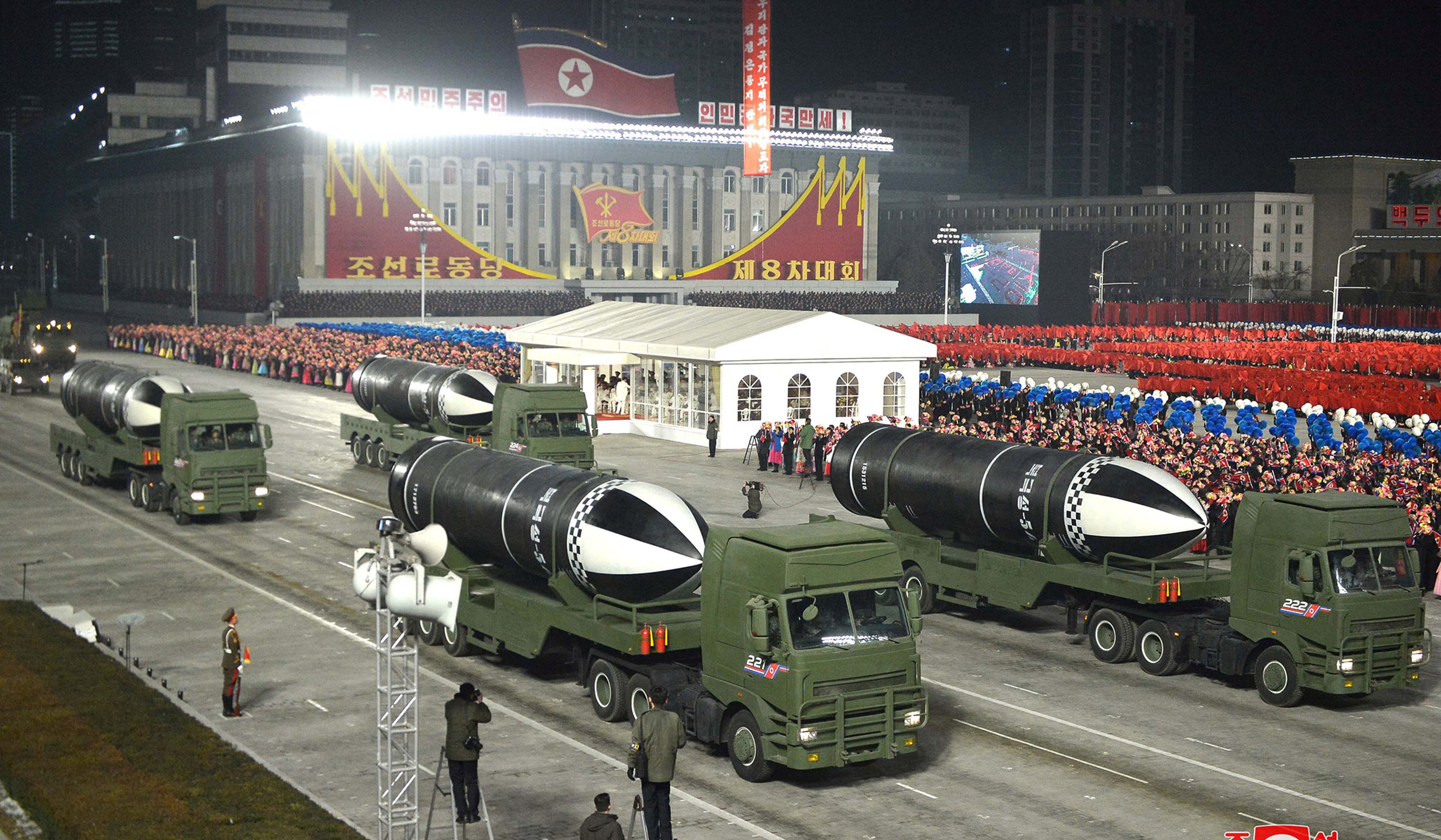
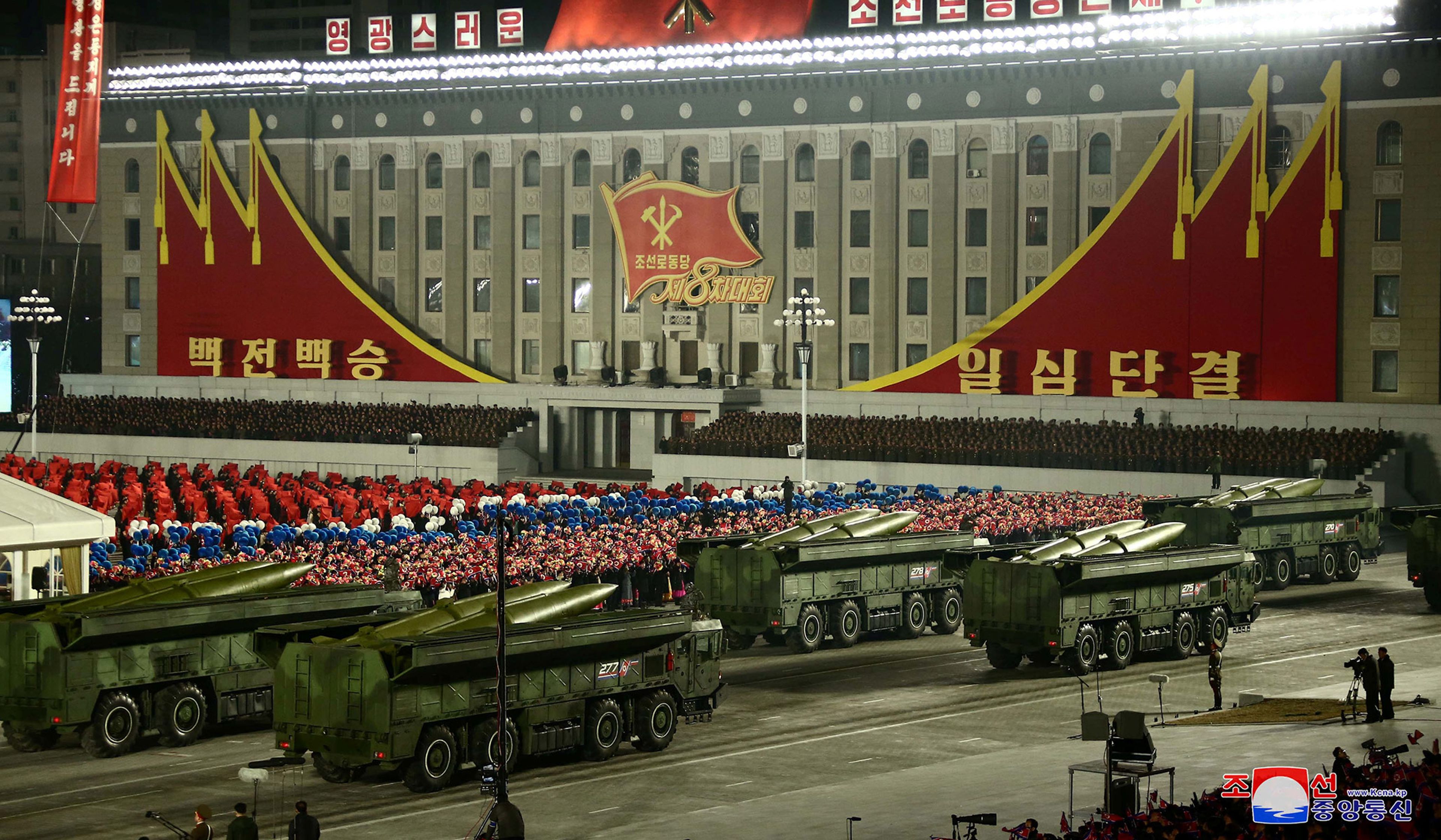
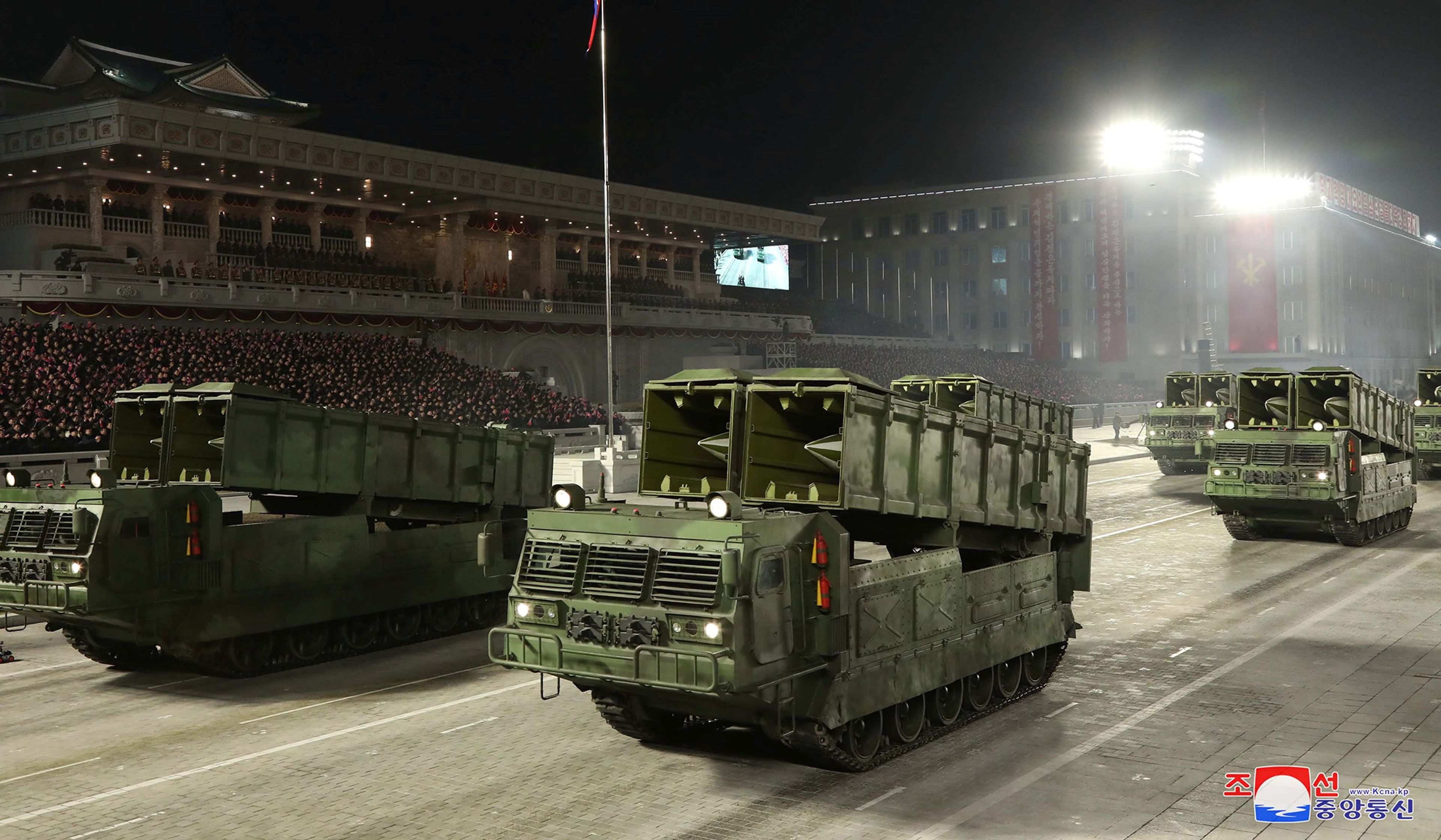
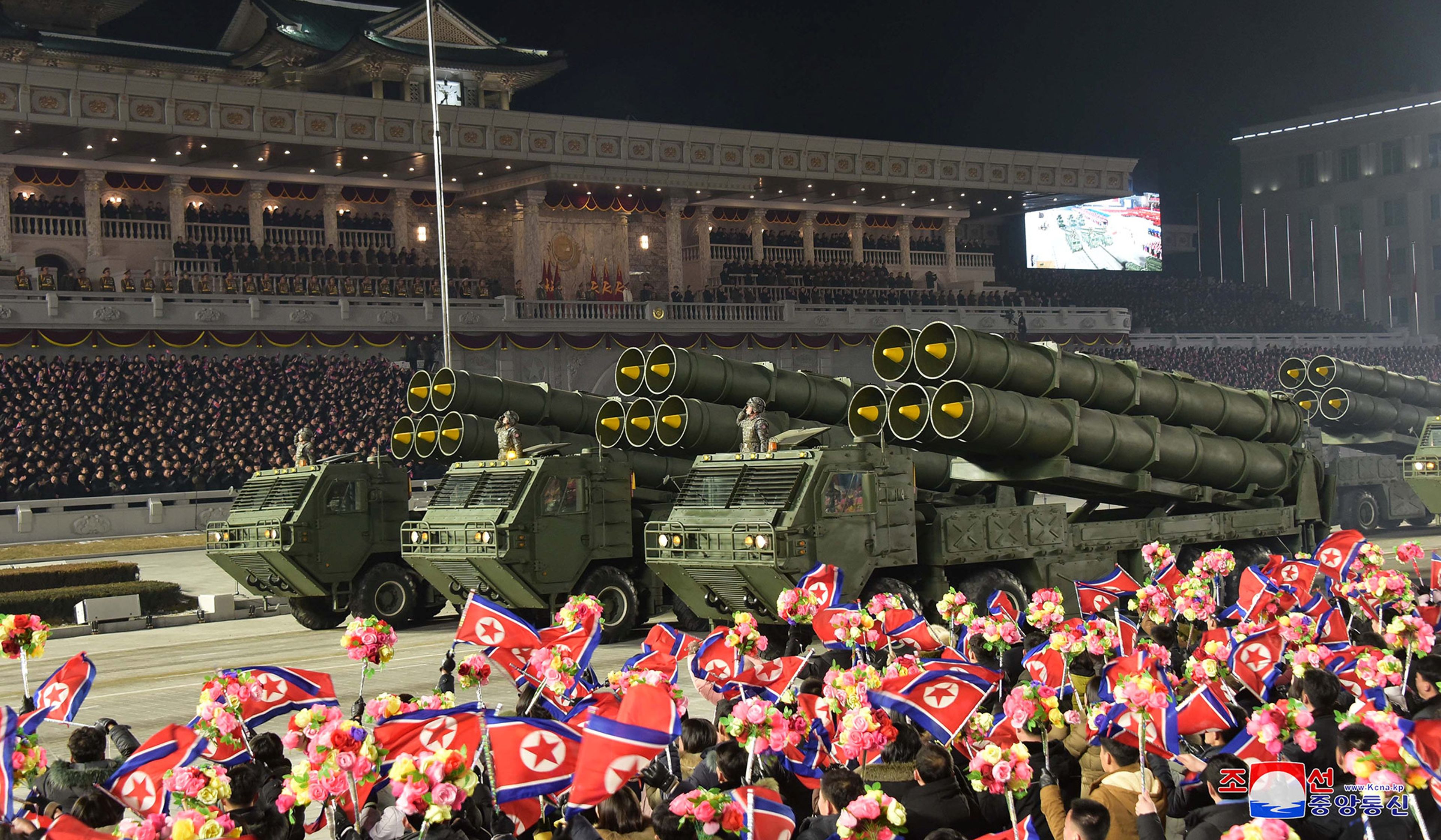
Troops march during a military parade to commemorate the Eighth Congress of the Workers’ Party in Pyongyang, North Korea, January 14, 2021, in a photo supplied by North Korea’s Central News Agency.
KCNA via Reuters
Of course, such a strategy of North Korean–threat reduction would raise a host of questions and possible objections. Without exhaustively detailing them, I offer a few points worth highlighting.
Threat reduction should not mean implicit, much less explicit, acceptance of the DPRK as a nuclear-weapons state: Signaling acquiescence in Pyongyang’s ambitions would have terrible implications for global nonproliferation, U.S. alliances, and a possible nuclear-arms race in Asia. Rather, the objective should be to suffocate the North’s defense economy, forcing it onto a road inescapably leading back toward the zero option.
The tired old mantra “We can’t do much without China” is an excuse for inaction that ignores our own power to coerce compliance from this unwilling “partner.” China’s financial vulnerability to secondary U.S. sanctions is immense — indeed, the risk here is not an inability to impose costs on Beijing for sanctions-busting but rather that severe U.S. sanctions could hurt China too much, risking international financial panic. If we play this card judiciously, reduction of the DPRK threat will move along that much more quickly.
The current leftist leadership in Seoul, riddled with North Korean sympathizers, is much less help with threat reduction than it could or should be. But this is an irritation, not an insuperable obstacle. In practical terms, President Moon Jae-in has very little room to provide aid and comfort to the enemy, and most South Koreans are wary of Pyongyang. Shoring up domestic support in the South for a policy of threat reduction in the North is practically an open invitation for U.S. public diplomacy.
Though existing sanctions against the North are hardly watertight, they are much more effective than some assume; Kim Jong-un himself has publicly admitted their toll. A well-crafted pressure program can deprive Pyongyang not just of money but of critical strategic imports. Here again, the risk is that pressure might be too successful — and might conjure a humanitarian catastrophe in the North. The Kim regime and some outsiders will use any humanitarian crisis as a pretext for undoing nuke and missile sanctions. If the U.S. relents on sanctions, North Korea’s timetable for blackmail against Washington advances. America and the West must instead be prepared, if need be, to undertake a program of “intrusive aid” in the North: a mission to feed the afflicted (likely the regime’s internal “class enemies” under its songbun system of officially assigned lifelong political status) without nourishing the state that oppresses them.
What about the risk that the North could attack America or our regional allies if it saw a serious threat-reduction campaign coalescing? This is perhaps the most important objection to such a campaign. If we are being honest, we cannot dismiss the possibility out of hand, though the likelihood of any such attack would be dramatically diminished if Pyongyang understood that it would be a regime-ending event. More likely than an attack per se would be a furious spate of the brinkmanship in which Pyongyang excels, unleashed to induce Washington to stand down. If we are serious about reducing the North Korean threat, we must be ready for this — and prepared to ride it out. Realistically, we must recognize what the alternatives to staying the course on a threat-reduction strategy will be: a permanent nuclear-weapons state run by the Kim dynasty that will ceaselessly blackmail America and endlessly strive to destroy South Korea, wreak racial revenge on Japan, and terminate Pax Americana in Asia.
With continuing vigilance and perseverance, a threat-reduction program can weaken the North Korean state and gradually restrict its ability to menace the world. No matter what Pyongyang hints, what foreign-policy luminaries counsel, or what foreign governments helpfully whisper, we should not assume that the Kim regime might ever be induced to voluntarily denuclearize. But we can do well enough without that outcome for the foreseeable future. Since the North Korean nuclear threat is the regime itself, the problem will likely not go away until a better class of dictator opens shop in Pyongyang. Far from fearing the end of the Kim dynasty, the U.S. and the international community should be doing strategic planning for that day and contemplating how to help the population of a post-Kim North Korea thrive.
Three decades after the Cold War, America has yet to fashion a serviceable North Korea policy. Doing so would generate unexpected benefits — above and beyond the hardly trivial security dividends from finally coping with Pyongyang. A U.S.-led strategy of North Korean–threat reduction would spotlight the very real limits of Chinese power. It would enhance U.S. credibility and demonstrate to our allies and friends, as the Biden administration dearly hopes to do, that America really is back.
On the other hand, if Biden and his foreign-policy team lack the enterprise — or the nerve — to seize the moment against Pyongyang, we should be under no illusions about what will follow. If Kim has his way, the coming acts in the North Korean nuclear drama will be vastly more unpleasant than anything America has yet experienced.












Comments