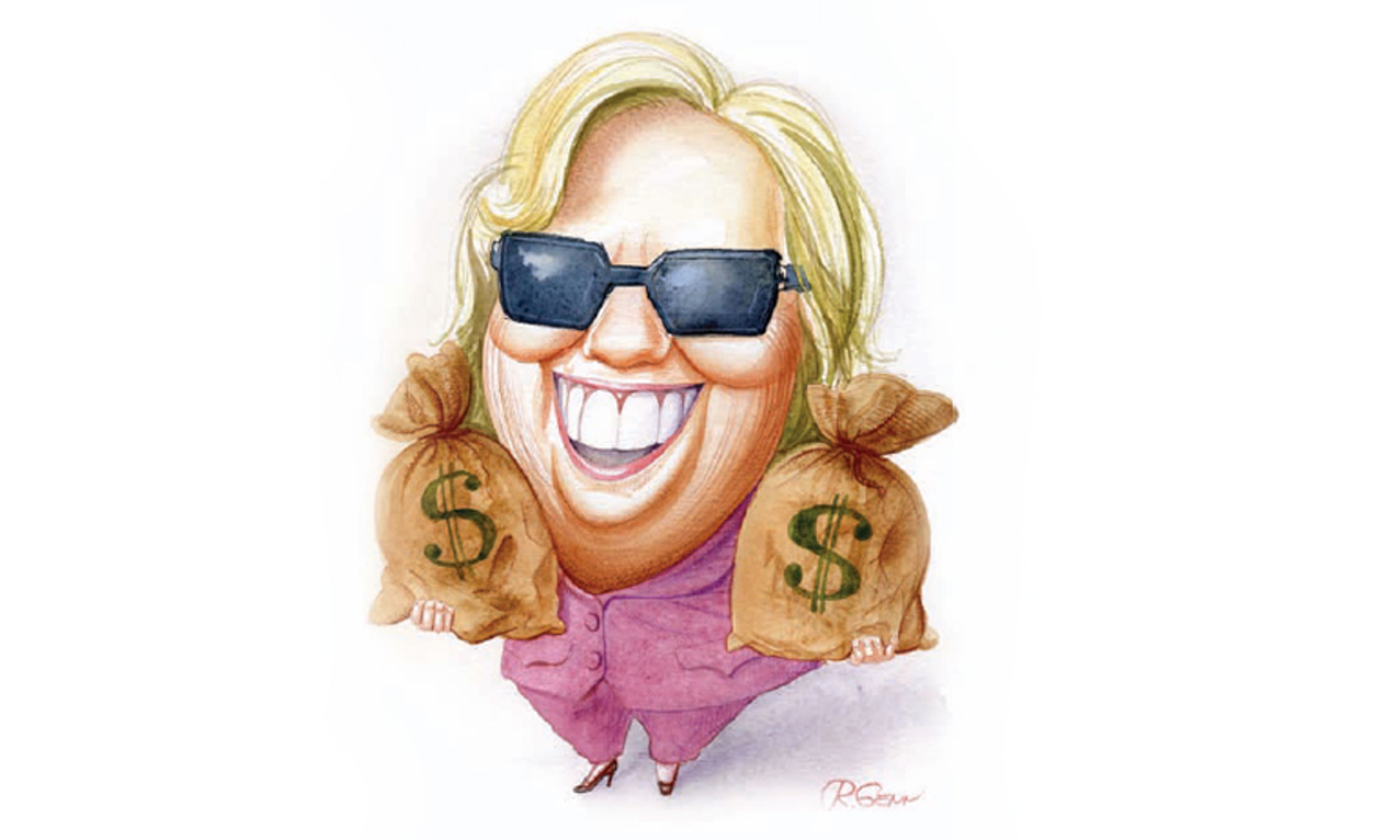
• When Clinton became secretary of state and said she would build stronger relations with foreign countries, she really meant it.
• On the morning of April 12, Freddie Gray was arrested after fleeing from police near the Gilmor Homes housing project in Baltimore. He was hauled into a police van to be transported to the local police station. When he arrived, less than half an hour later, he required urgent medical treatment. He died at Baltimore’s Shock Trauma Center one week later, his spine “80 percent severed” at the neck, according to his family’s attorney. How that happened is the outstanding question that has much of Baltimore’s black community outraged — and, indeed, it is difficult to envision a scenario in which the police were not, at best, grossly negligent. (Requests by Gray, during his arrest, for medical attention were ignored by the arresting officers.) As in Ferguson and Staten Island and elsewhere, however, the Black Lives Matter crowd had no interest in allowing the investigation to run its course, and, predictably, peaceful protests did not remain so. On Saturday, April 25, hundreds of protesters shattered storefronts, threw trash cans into police cruisers, and brawled in the streets, while a mob of “youths” assaulted a Russia Today camerawoman and robbed her of her handbag. Two days later, the city was engulfed in riots; stores were looted and burned, and the police force was beaten into retreat. Such violence has nothing to do with Freddie Gray, with “anger,” or with “justice.” It is “rioting mainly for fun and profit,” in Edward Banfield’s famous phrase. And it’s no coincidence that it is happening in a city ruled for nearly half a century by Democrats. Look on your works, ye mighty, and despair.










Comments