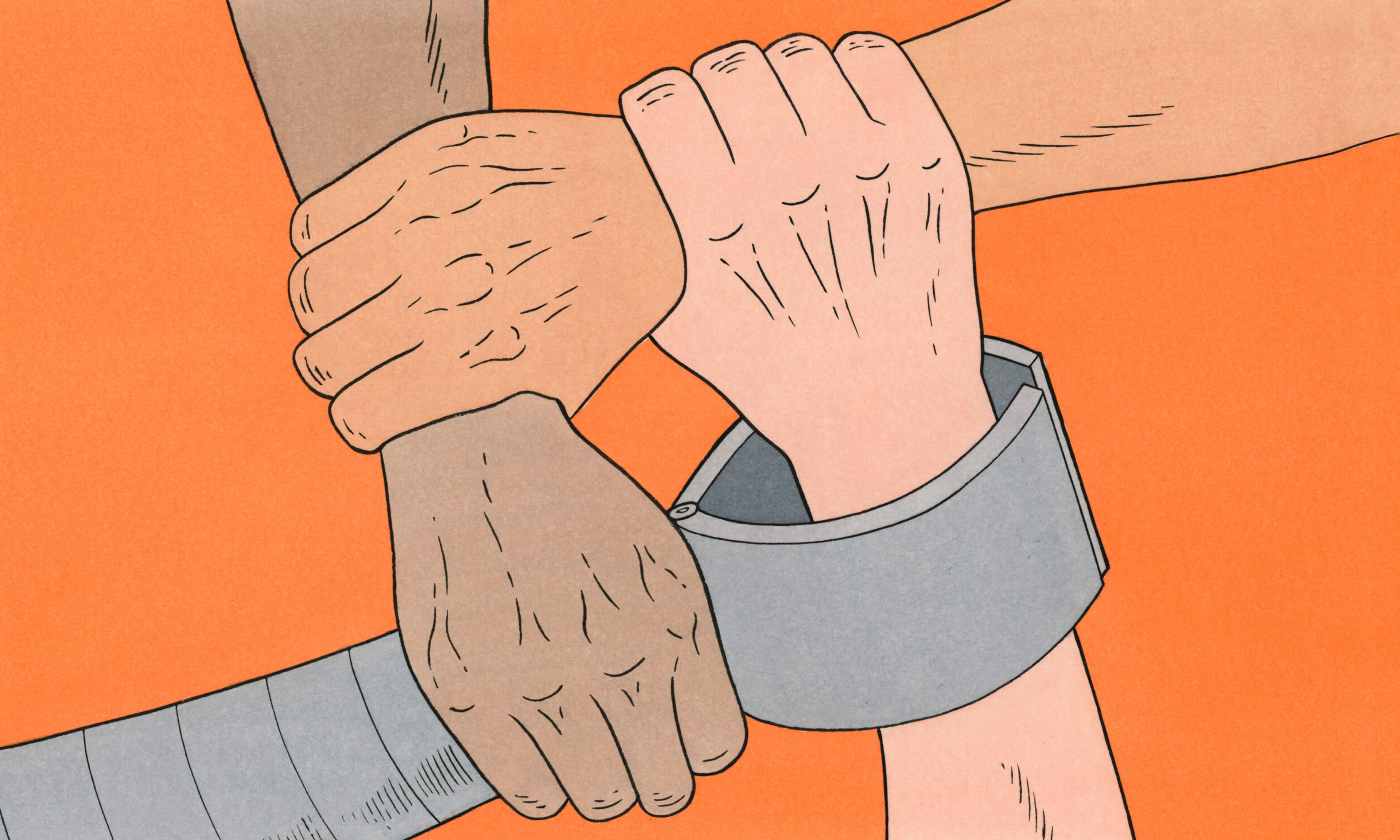
Most critiques of the nascent “AI personhood” movement have come from the right. Writing for National Review Online in 2017, Wesley J. Smith concluded that artificial intelligence programs are “machines, without any ‘eternal’ significance.” The president of Asbury University, Kevin Brown, pursued a similar line more recently, asserting in the Christian Scholar’s Review that consigning our personhood to AI “risks a disfigurement of God’s image.” Even criticism from outside of conservatism has tended to borrow our language and values. In The Atlantic in 2023, Stephen Marche declared that AI is no “closer to artificial consciousness than a car is.” Were a truly sentient AI program to arise, Marche argued, we would discover that human beings had only ever been soulless “series of instructions.”
Given this uniformity of perspective, scholar Lisa Siraganian’s new book holds out the possibility of a welcome change. Composed unapologetically from the left, Siraganian’s polemic argues that we have erred by designing a legal system in which “‘person’ and ‘human being’ are not synonyms.” Because so-called expansive personhood requires “an impoverished notion” of what it means to be a moral or legal being, attempts to employ it liberally have undermined our thinking and discourse. “Granting personhood to nonhumans,” Siraganian warns, “is not an incremental step forward; it is a dangerous leap off a cliff.”









Comments