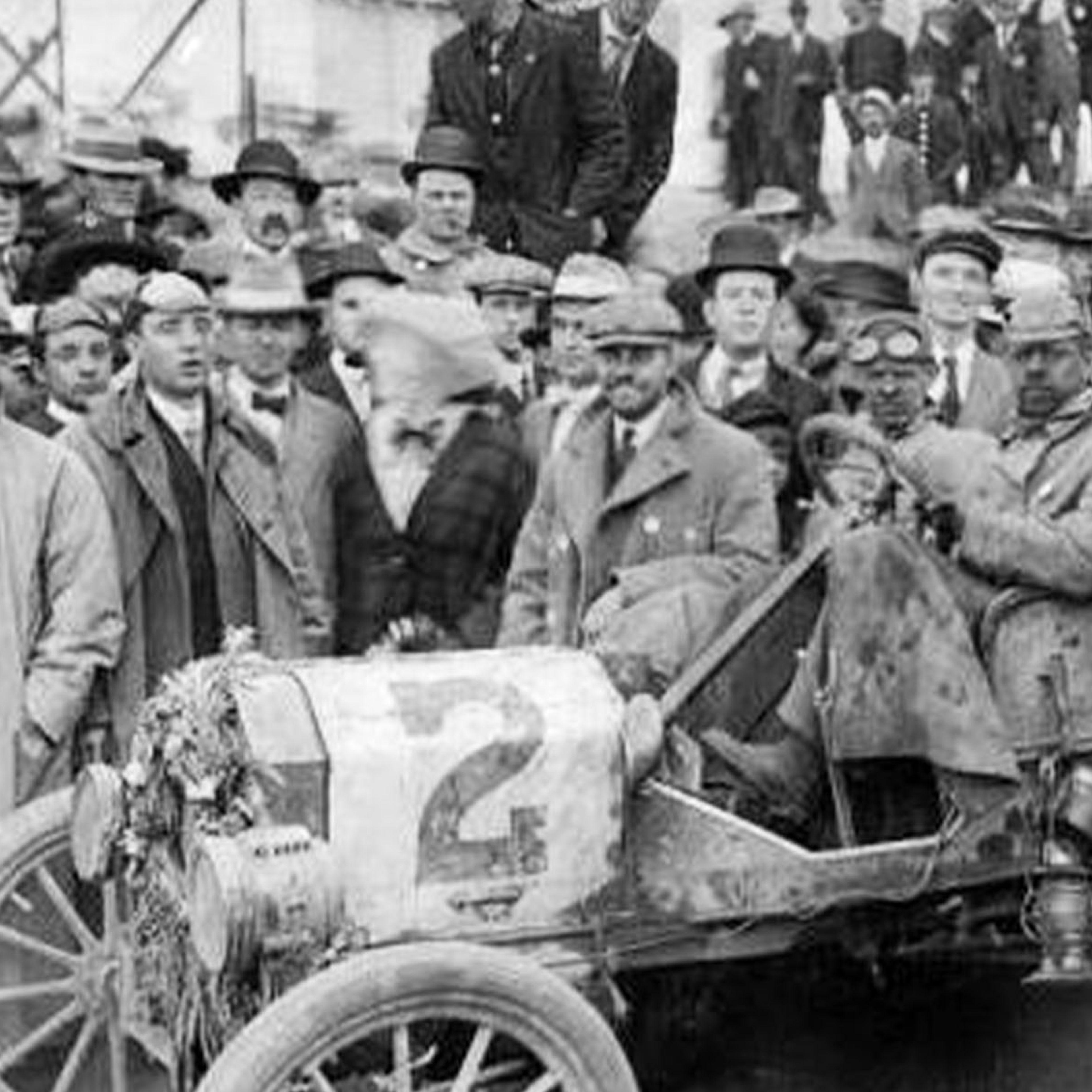
The Longest Auto Race, by George Schuster with Tom Mahoney (John Day, $5.95). For the antique car fancier, this book provides a wealth of detail about the people and cars involved in a race from Times Square to Paris, via San Francisco and Vladivostok. For others, it offers a vivid description of the hazards facing drivers in 1908. Amid the ghosts of seldom-remembered automobile manufacturers walk men of derring-do whose exploits at least rival those of today’s astronauts— indeed, their greater proximity to the forces of nature forced them into a closer, more elemental form of combat. Driving across this country today fails to conjure up the horror of riding on the old, thin tires across open fields, down muddy wagon ruts, bumping over miles of railroad ties, and getting pulled across a river with a quicksand bottom by a team of horses. The authors fail to make the reader identify with the participants, and the detail can often seem superfluous to the non-car buff. But the simple, yet colorful, narrative and the numerous photographs add appeal for the younger reader, whose parents might do well to expose him to the pre-flight era of man’s struggle with nature. d. b. duval
The Battle of Caporetto, by Cyril Falls (Lippincott, $4.50). Caporetto is one of the most fascinating battles of World War I. Italy waited a year before going to war against its old allies, then spent two years in bloody, futile attacks against a supposedly decrepit Austria. Suddenly the Austrians struck back (with German help), smashing the Italian army so completely that only Franco-British help prevented total disaster. Strange victory! Austria, that paradox of history, struggled through four years of war, survived to see its enemies (Russia, Serbia, Roumania, and— almost—Italy too) defeated, and then collapsed. The precarious political order the Habsburgs maintained for so long in Central Europe was succeeded first by German and then Russian conquest; it is no wonder that many people along the Danube remain nostalgic about Die Kaiserzeit. Mr. Falls treats all these matters with fond attention. If the battle narrative is a little too detailed, tedium is broken by copious use of the young Erwin Rommel’s account of his (junior officer’s) part in the attack. Rommel — and Falls — write with gusto. This little book can provide a most enjoyable evening.


Comments