Miami
Like many Latin Americans — and many other people — Leopoldo López took part in family gatherings on Sundays. From older relatives, he heard about a great-grandfather of his: Eudoro López. This López was an opponent of the Venezuelan dictator Juan Vicente Gómez. Eudoro paid for his opposition with prison and exile.
So would his great-grandson, three generations later. Leopoldo López is a leader of the opposition to the current Venezuelan dictatorship, started by Hugo Chávez and now headed by Nicolás Maduro. This week, López is appearing at the Oslo Freedom Forum, held in Miami. The Venezuelan exiles who are present greet him rapturously.
You can understand the rapture. López is handsome, personable, and articulate, yes — but also uncommonly brave.
After telling me about his great-grandfather, Eudoro, Leopoldo tells me about something that happened yesterday. “Somebody asked me, ‘Do you think it was worth it, to go to prison for all those years and be separated from your wife and children?’ I took some time before answering, and I said, ‘Yes, I think it was worth it.’” Why is that? “Because, though it was a great hardship for me, and a greater hardship for my family, my children now have something that is cherishable: a sense of purpose, the willingness to fight for an idea. I can’t think of a better inheritance.”
Happiness involves more than smiles and good times, says López. “In the end, happiness is about having a sense of purpose, and my children have now been part of an experience that will make them happier and better people.”
Leopoldo López was born in 1971 to one of the most prominent families in Venezuela: a family long involved in politics, publishing, medicine, engineering, and so on. Indeed, López is a descendant — one of the few — of Simón Bolívar himself.
López was educated in the United States. He went to the Hun School of Princeton, named after its founder, John Gale Hun, who had been a math professor at Princeton University. He then went to Kenyon College in Gambier, Ohio. And finally to Harvard’s Kennedy School, where he earned a master’s in public policy.
“Did you have a choice?” I ask him. “Did you have to enter public life, given your family background, or could you have been . . . anything?” He smiles and recalls the job interviews he had during the end of his time at Harvard. He received offers from McKinsey, to work in its Atlanta office, and from J.P. Morgan, to work in New York. The thing is: He did not want to work in either consulting or banking. He just wanted the satisfaction of having a choice — options.
He went home to Venezuela, and, before long, he was in public life. He was elected a district mayor of Caracas at 27.
Those were “super-happy years,” he says — eight years, two terms. Not yet married, he threw himself into the work, effecting many reforms, of which he is proud. He wanted to run for mayor, or “governor,” of Caracas at large, and was leading in the polls. But the national government barred him from running.
He took his case to the Inter-American Court of Human Rights, in Costa Rica. He won the case. But the government of Hugo Chávez simply thumbed its nose at the inter-American system.
“I had to reinvent myself,” López says. He goes on to say that he has had to do this many times. In 2009, he founded a political movement, a democracy movement, dubbed “Voluntad Popular” (“Popular Will”). Working alongside him was Juan Guaidó, who today is an opposition legislator and regarded by many as the rightful president of Venezuela.
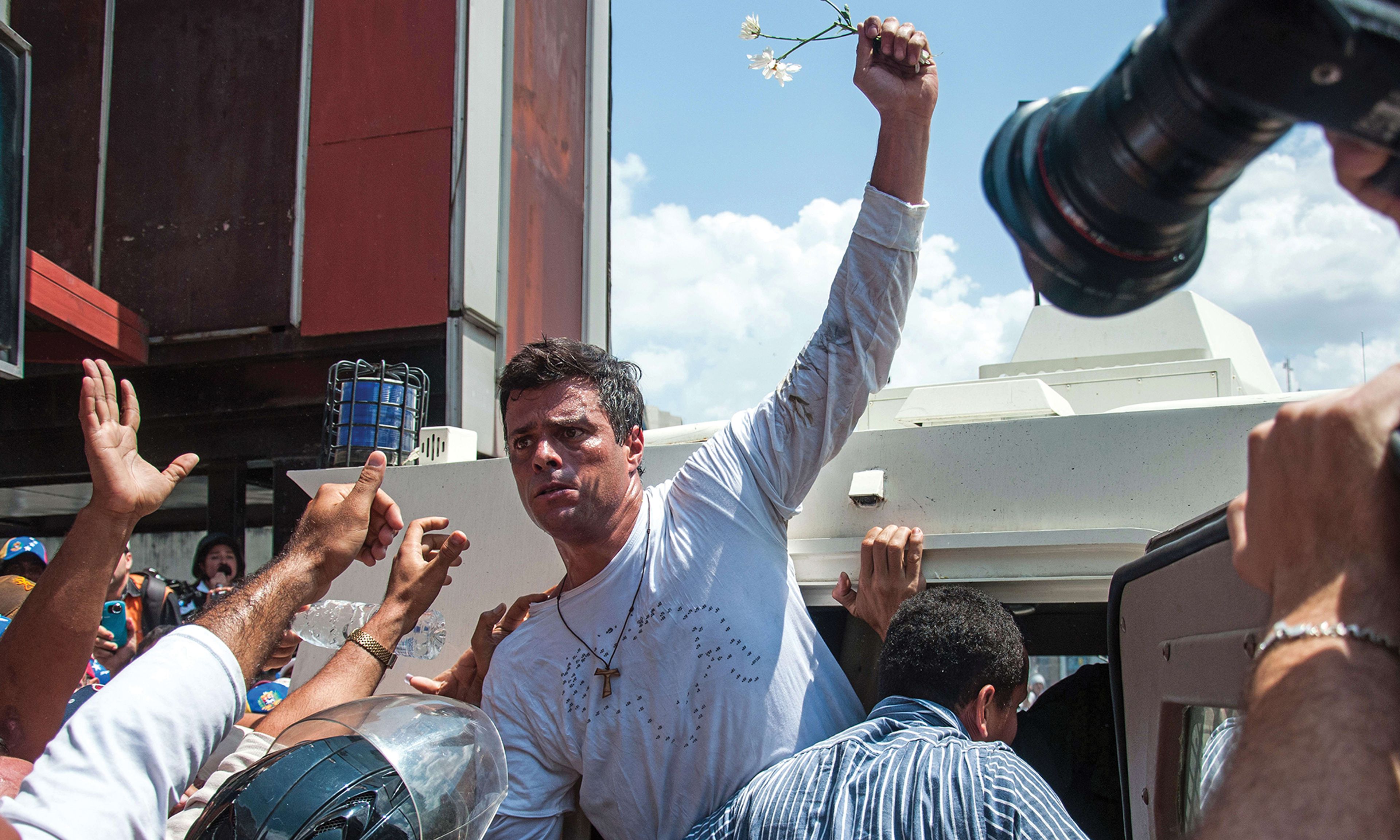
In 2014, López led mass protests. The government was keen to get him out of the way. López faced a choice: flee the country or submit to arrest. He submitted. After the usual joke of a trial, he was sentenced to 14 years in prison. López was confined in Ramo Verde, a notorious military prison.
How did he keep his mental and physical fitness? He had read a variety of prison memoirs, López tells me — such as The Road of Hope, by Nguyen Van Thuan, the Catholic prelate from Vietnam. All of these memoirs said one thing, loudly: develop a routine, and be absolutely strict about it. López took this to heart. He would do three things, every day, without fail.
“Every day, I prayed,” he says. In previous times, he had been a “mechanical Catholic,” as he puts it — sort of going through the motions. But in prison, “I learned to pray from a different perspective”: thoroughly, conscientiously, and persistently. He gave gratitude for everything — even relatively simple things, such as an opportunity to hear birds sing. He even gave thanks for the ordeal of being a political prisoner itself. He figured it would make him a better person.
Then there was “intellectual fitness,” as he says. He read all he could, when his jailers allowed him to have books. In one period, he could have only the Bible — which he read from Genesis to Revelation. He also learned how to draw. And how to play the cuatro — a small guitar — before the jailers took it away from him.
Then there was physical fitness. He exercised as much as possible.
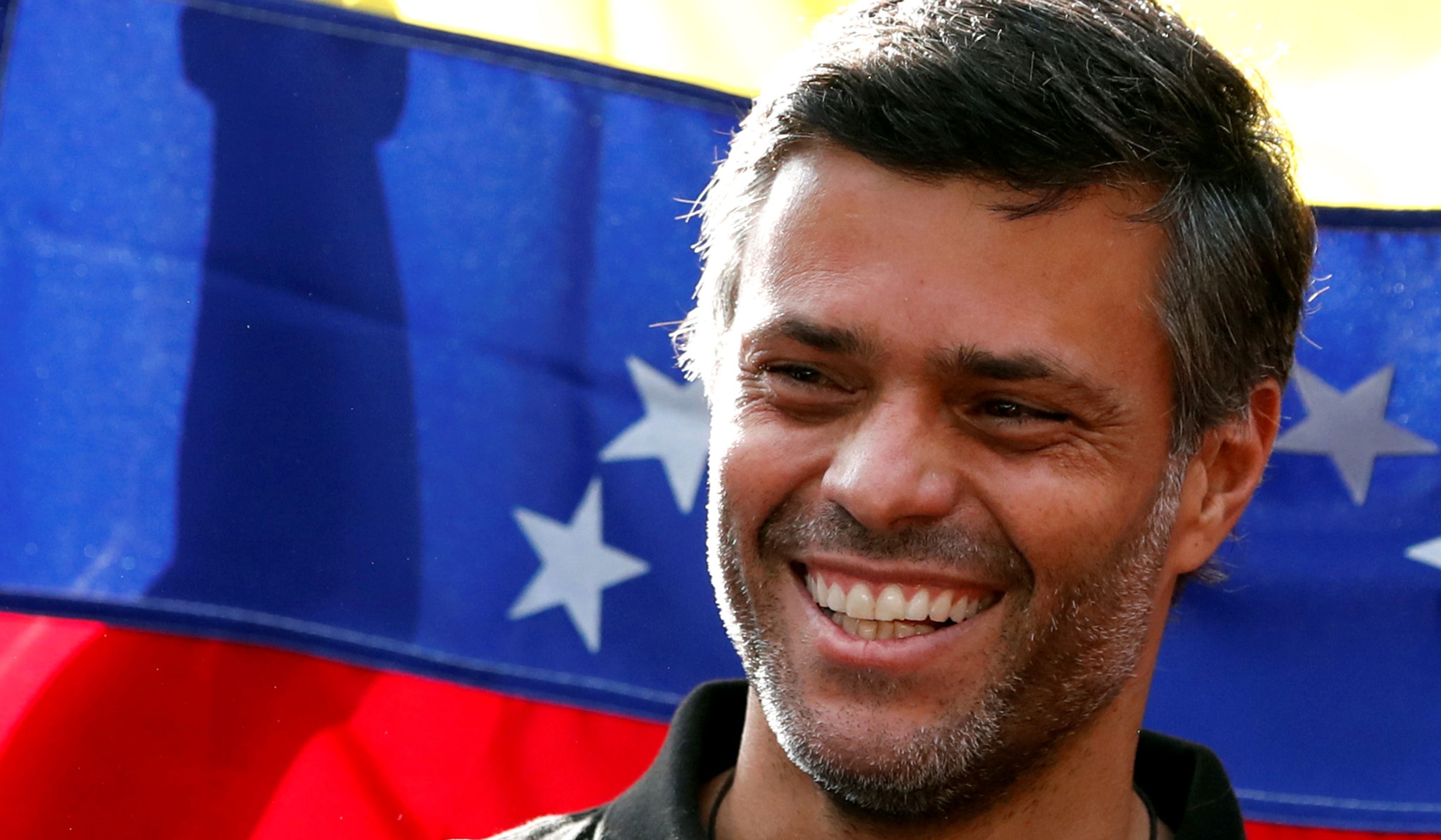
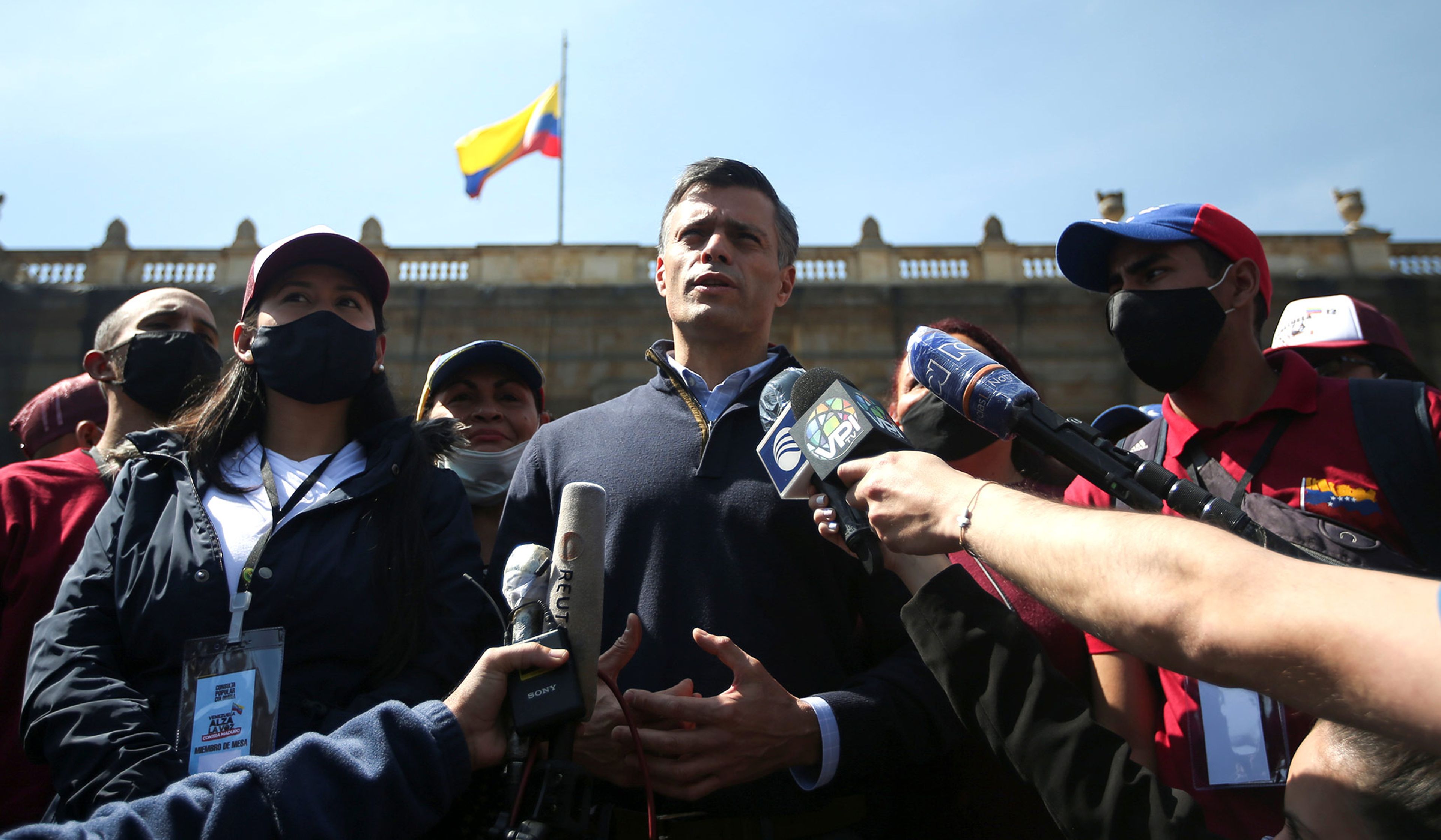
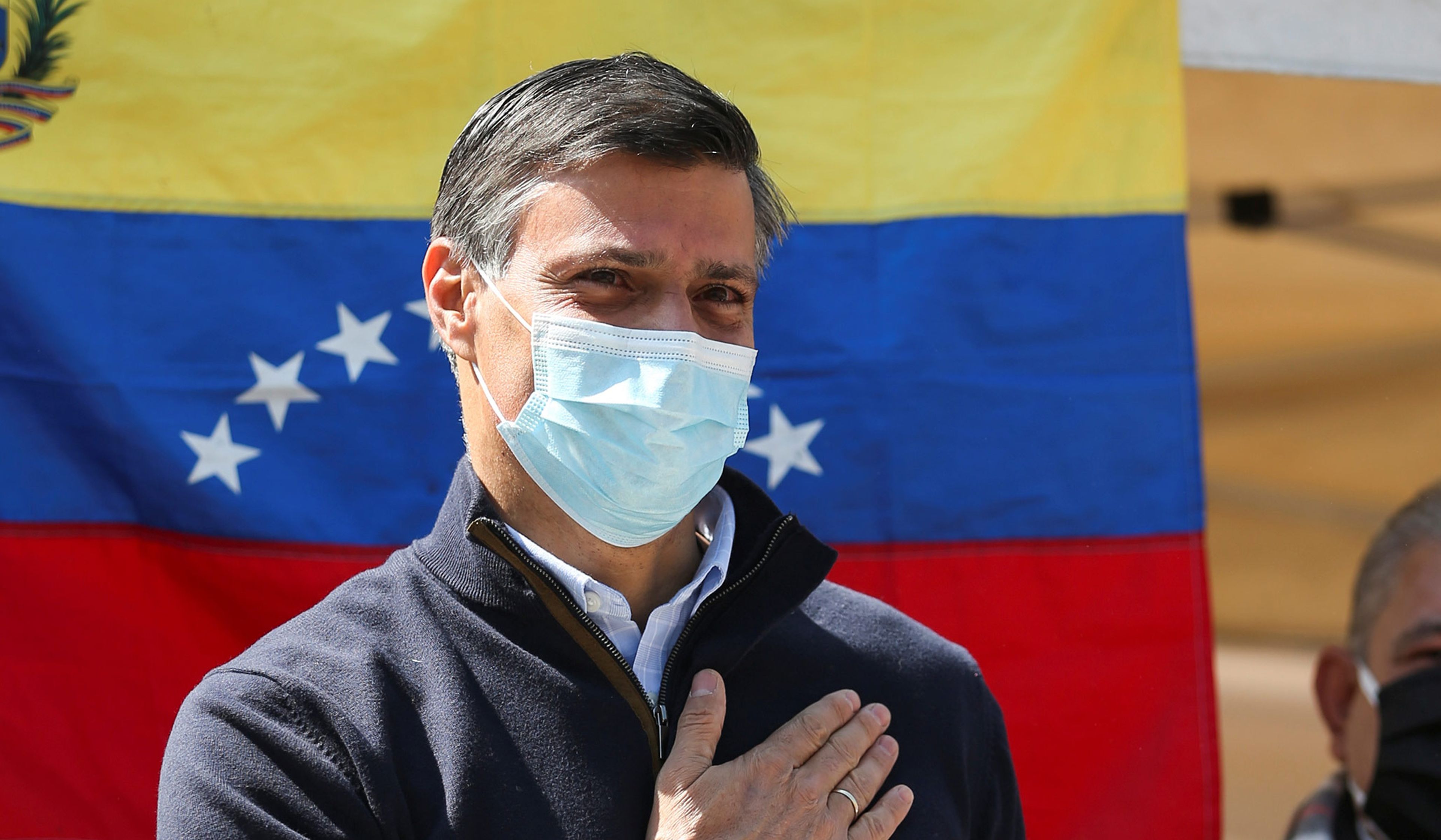
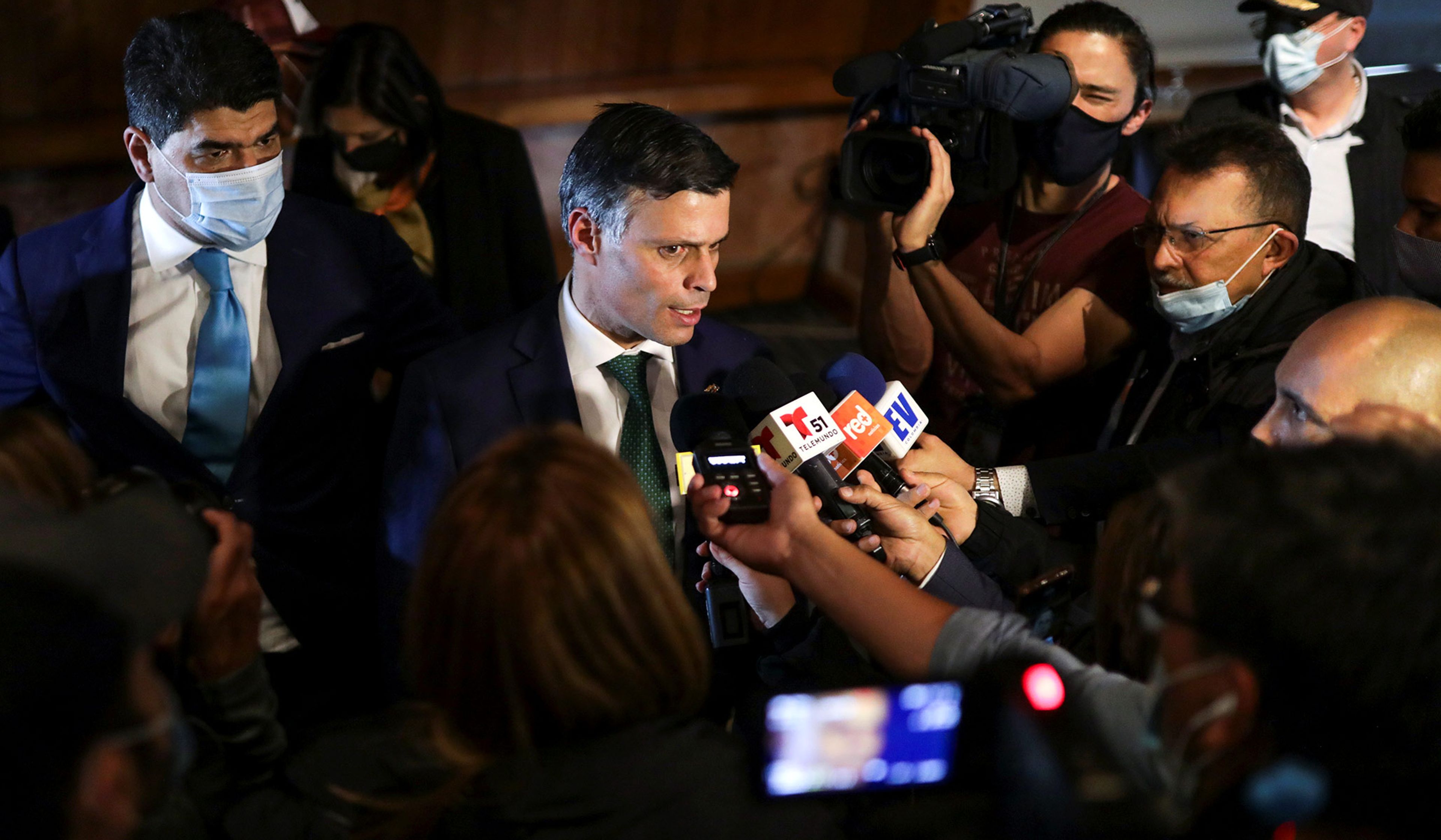
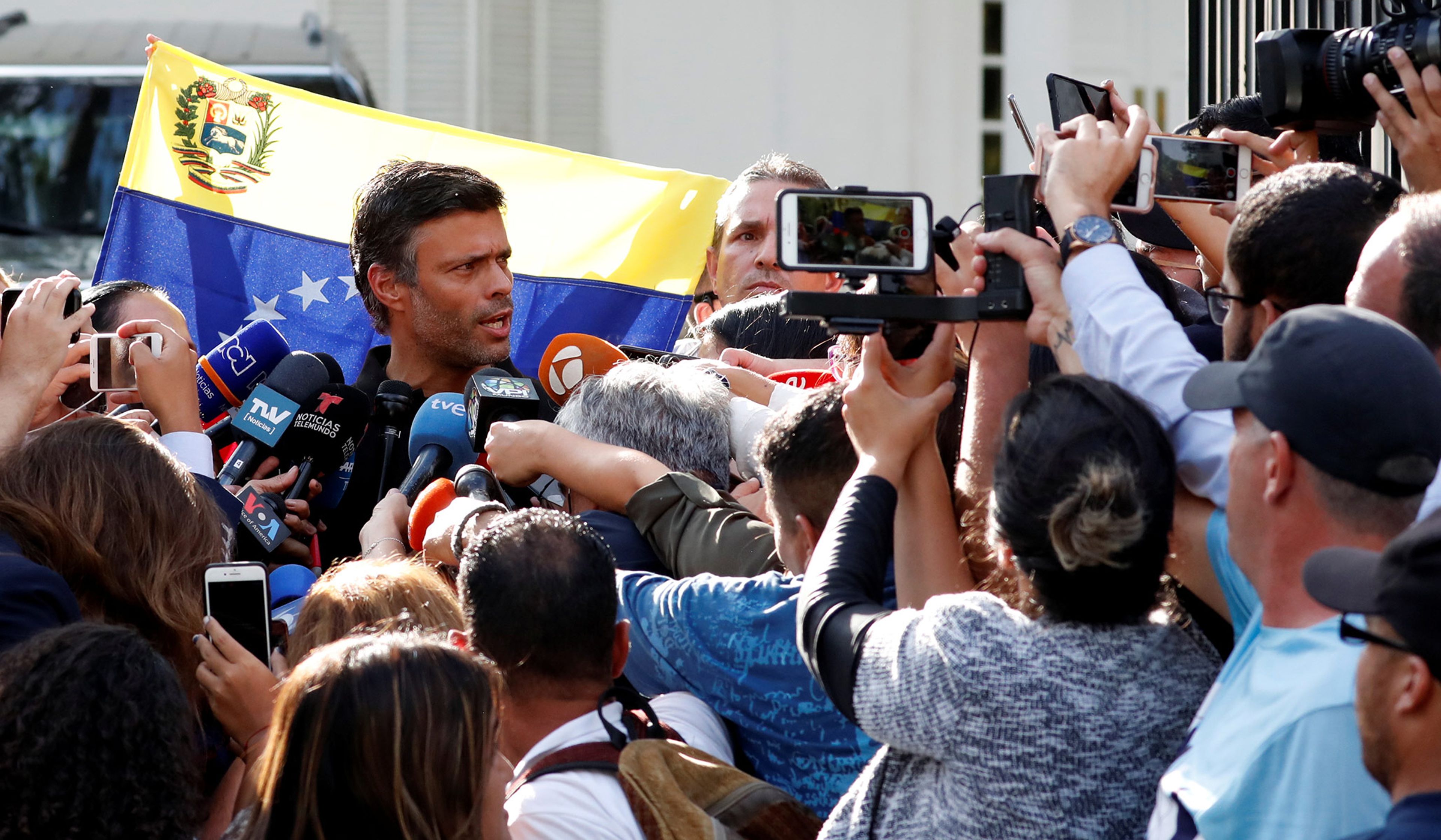
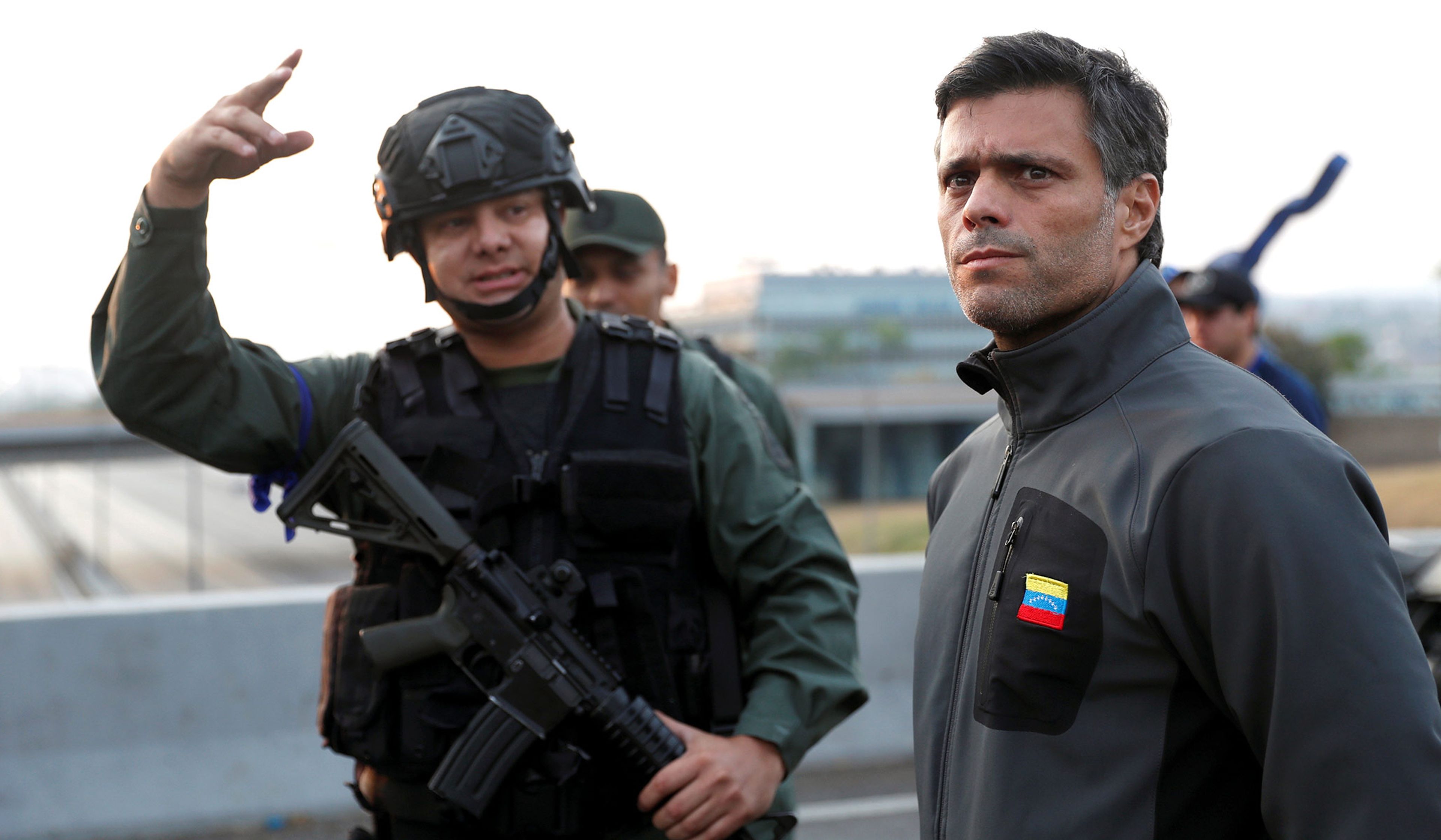
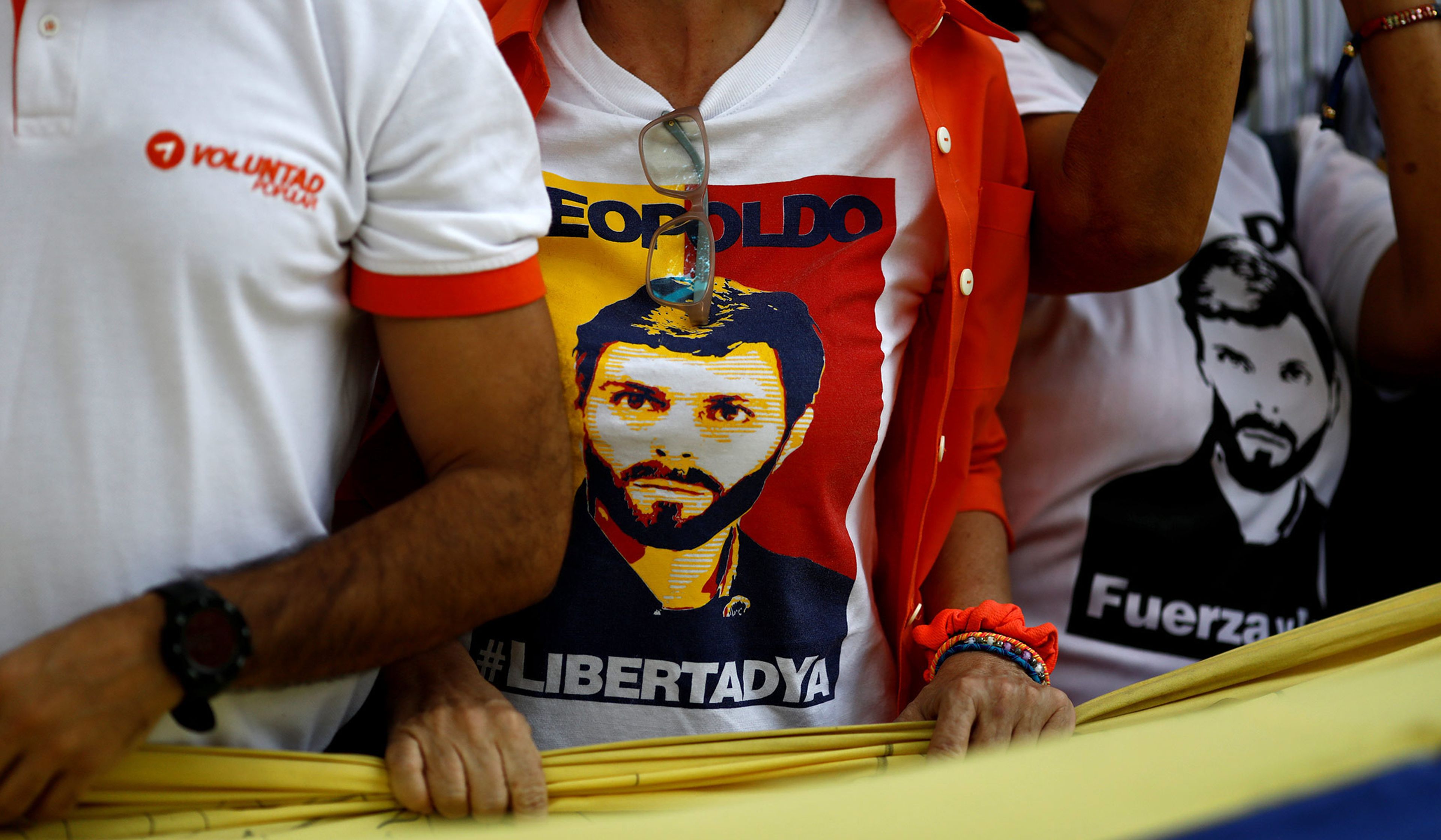
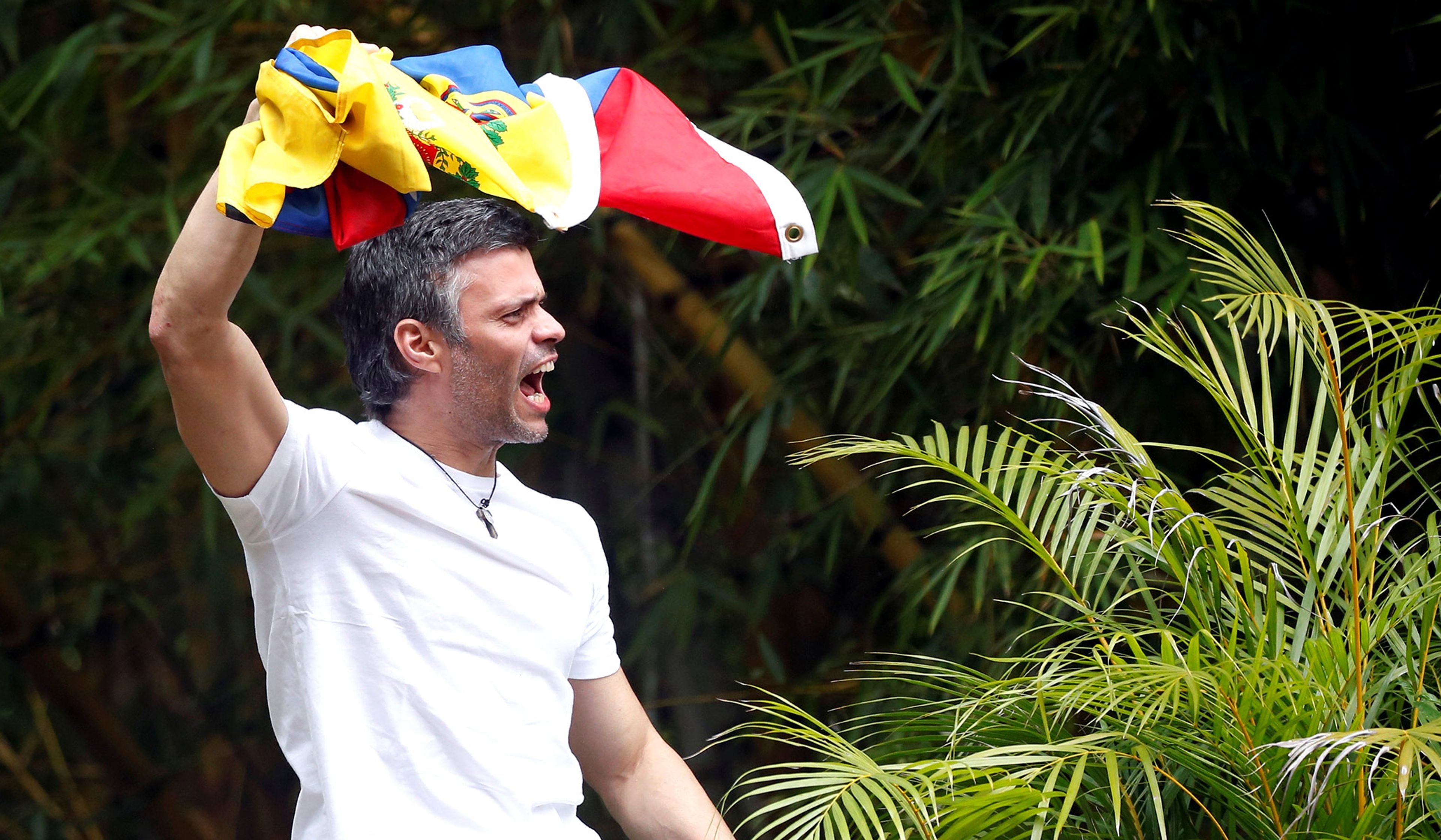
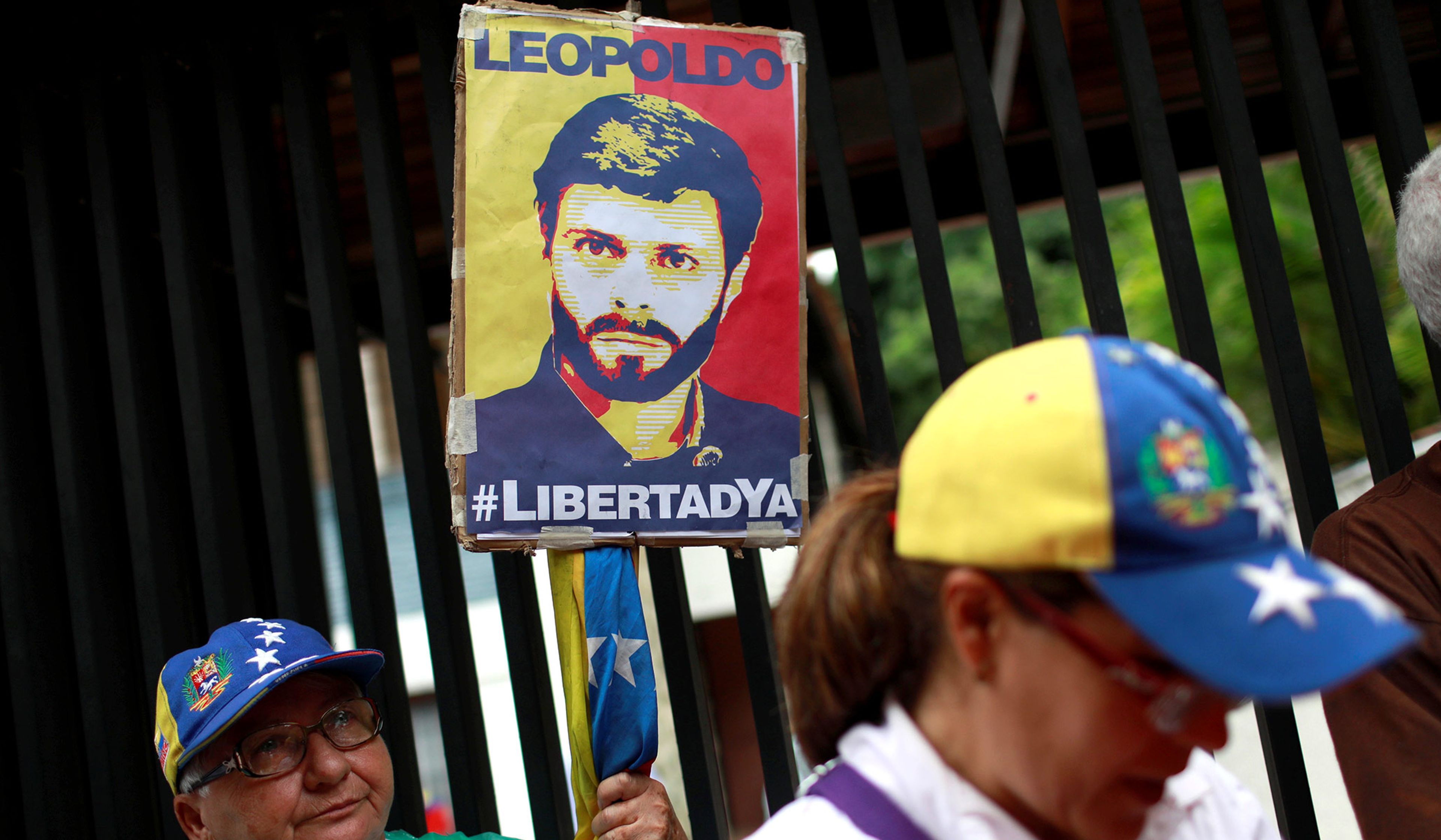
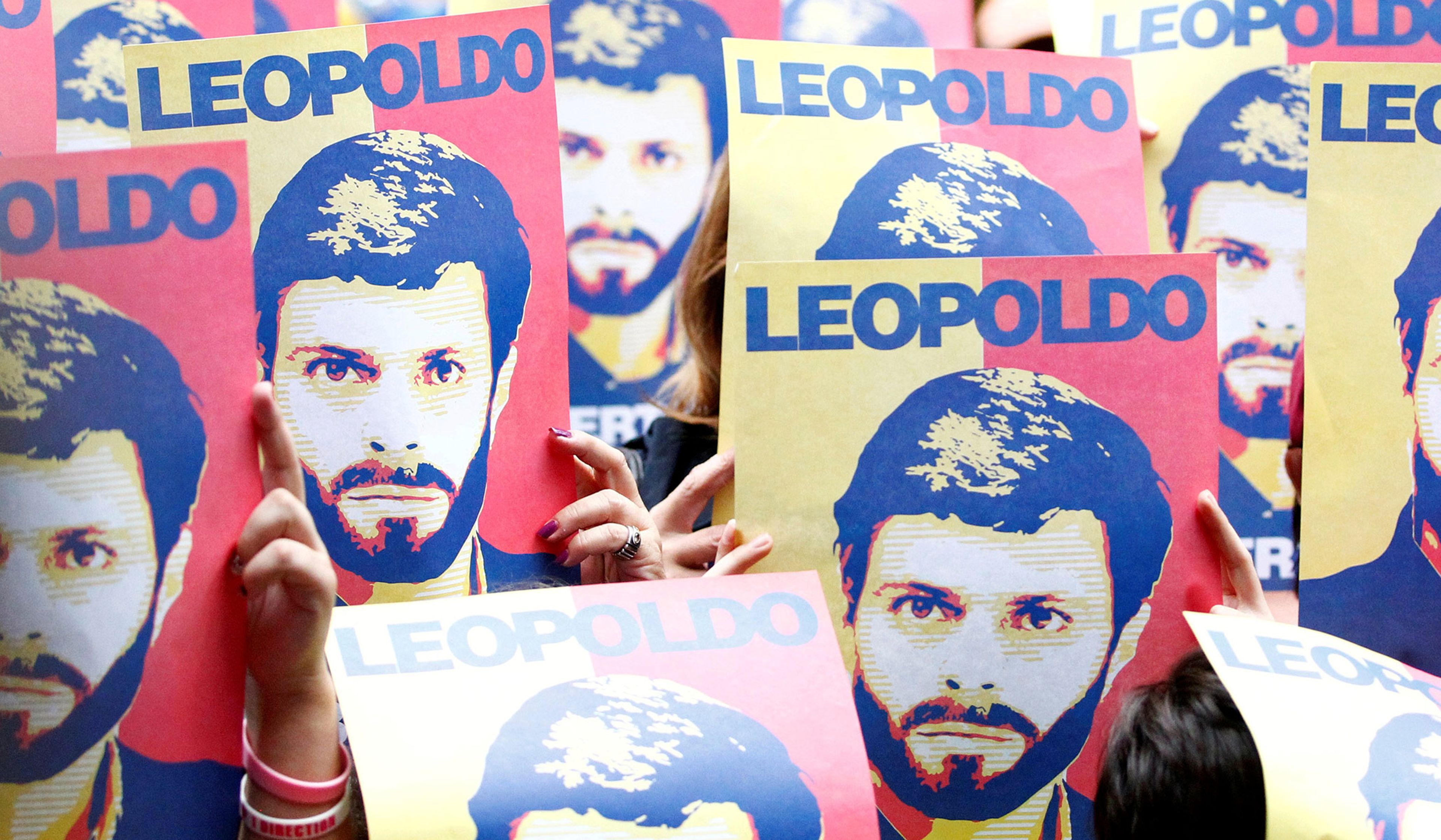
Leopoldo López talks to the media at the residence of the Spanish ambassador in Caracas, Venezuela, May 2, 2019.
Carlos Garcia Rawlins / Reuters
López was imprisoned at Ramo Verde for three and a half years. For almost half of that time, he was in isolation — solitary confinement.
How did his guards treat him? Very well, at first. They liked him (as it is very hard not to do). Many times, they asked him for personal advice. But there was a change, after López went on a hunger strike (28 days). Six people were selected to guard him, and only him. Initially, these six were open and friendly. But one day — without warning — they closed down. They would not even make eye contact with López. Why?
Eventually, one of the guards had a furtive moment with López and explained. They had been coached by Cubans, who stressed that guards were supposed to dehumanize a prisoner.
“It was tough,” says López, “because, even though I was in solitary confinement, at least I had guards to say good morning and good afternoon to.” After the guards were instructed by the Cubans, “the situation became a bit bitter.”
And yet: López has won a victory over bitterness and resentment. He has prayed about this matter diligently. “I was always aware that I had an enemy, which was resentment, and that this could build upon my heart. I can tell you very honestly that I don’t feel hatred toward the people who put me in prison.” To work for a free and democratic Venezuela, says López, “you need to have your heart in the right place.”
This does not mean he is not a fighter, López adds. Far from it. “I box every day. I will have my first amateur bout before the end of November. I’m a fighter at all levels. But that’s very different from being angry. I am not an angry person. I am not resentful.”
In July 2017, López was transferred from Ramo Verde to house arrest. Police agents surrounded his house, constantly. Four times a day — at six, noon, four, and eight — López had to have his picture taken with a newspaper, showing the date.
Then came the Venezuelan uprising of April 2019. Sympathetic soldiers freed López from house arrest, and he even walked the streets of Caracas for a couple of hours. He appeared before throngs with Juan Guaidó. But it quickly became necessary to find refuge — which he did, in the Spanish embassy. He stayed there for a year and a half.
In October 2020, he escaped — escaped the country at large. It was very daring, this escape, very dangerous. At the last moment, he was almost caught.
The details of this escape would take an article, or a movie, of their own. Suffice it to say that the escape was inspired by a 2012 movie, Argo, about the extraction of U.S. diplomats from Iran. López was disguised as an electrician. After a heart-stopping encounter with guards, he made it across the river to Colombia, where he was flown to Bogotá, and then on to the United States, and finally to Spain — where he lives in exile.
López tries to rally the spirits of the Venezuelans — those at home and the 6 million who, like him, are in exile. He also appeals for democratic solidarity, from all of us. Authoritarians are very good at being in alliance with one another — López cites the governments of Russia, Cuba, and Turkey, among others. But democrats tend to be isolated and embattled.
“‘Freedom’ and ‘democracy’ are words that are used all the time here in the U.S.,” López tells me. “For us, those words are not abstract. For us, those words mean a lot.” He would like to tell Americans that “they have a great responsibility to give meaning to those words. The United States continues to be, whether you like it or not, the beacon of light and hope for freedom and democracy in all the world.”
He further says, in no uncertain terms, that if the people of the United States turn their backs on freedom and democracy abroad, they may find themselves losing those things at home. A general defense of freedom and democracy, says López, is a form of self-defense.
For many years, he has had a slogan: “El que se cansa, pierde” — “He who tires, loses.” I say to him, “You haven’t tired, have you?” “No, I haven’t,” he answers. “I’ve had moments of great difficulty, I can tell you that, but I have a commitment, and I can’t afford to get tired. I have the responsibility to continue, I have a sense of purpose. I’m blessed to have that.”
Venezuela, he points out, is not only under dictatorship, it is also wracked with hunger. Outright starving. Venezuela is the poorest nation in the Americas — even poorer than Haiti, which has suffered cruelly for generations.
“People find their purpose in different ways,” says Leopoldo López, “and I thank God for giving me a purpose in life: to fight for the freedom of my country.”










Comments