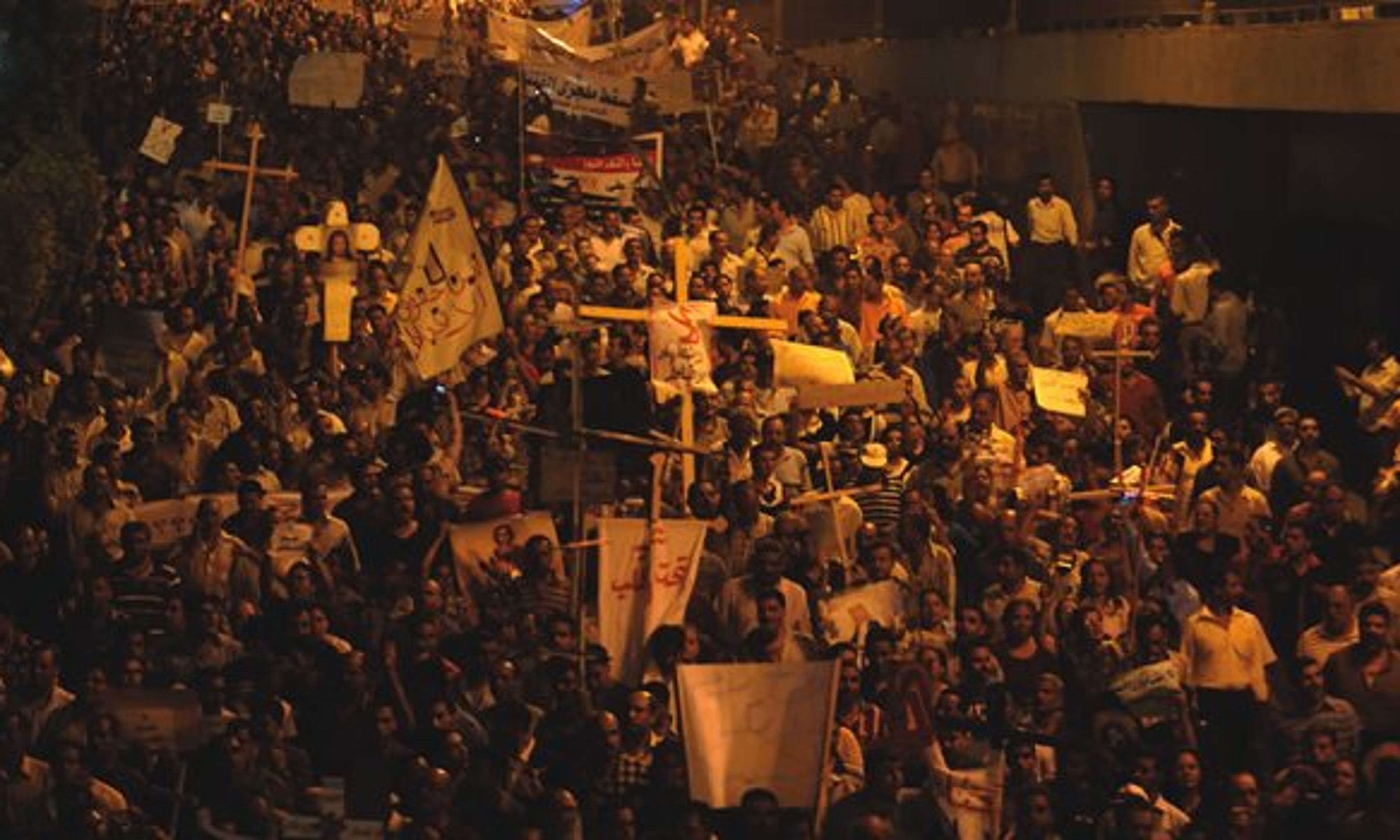
One of the powerful images that came to define the Arab Spring was that of Christians and Muslims praying together in Tahrir Square in Cairo. That image helped shape the understanding of what was being portrayed as a liberal and secular uprising, one that stood in dramatic contrast to the region’s eternal dichotomy of politics as a choice between the authoritarian regimes and the Islamists. As Hosni Mubarak was leaving the presidential palace for the last time, the conventional wisdom echoed from the pulpits of academia and the offices of the Obama administration was that Egypt was beginning a long-overdue transition to democracy and becoming a free society.
The myths associated with the Arab Spring are numerous, but none is perhaps more fatal than the quite modern debasement of the concept of a free society to mean, essentially, the holding of elections. The ballot box is perceived as a magical solution, from which freedom of speech, free enterprise, and religious freedom necessarily follow.










Comments