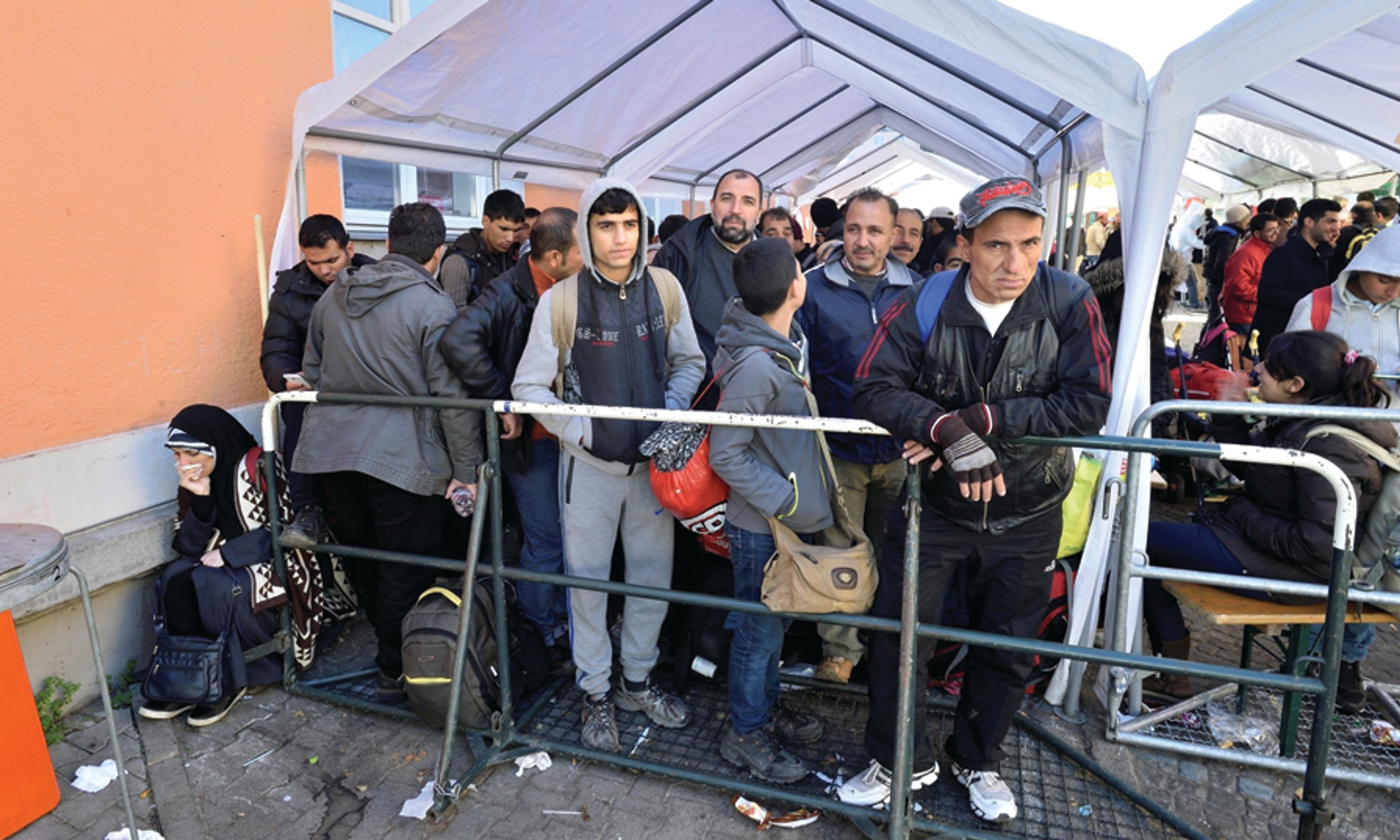
A “plastic hour,” in Karl Marx’s useful phrase, occurs when the course of events is so confused and confusing that it could go this way or that, which is the case right now as millions of Muslims flee the Middle East to reach somewhere, anywhere, in Europe. One in four or five are genuine refugees from the fighting in Syria and Iraq. The majority are migrants out to better their circumstances. Taken together, their arrival day after day is a standing vote of no confidence in their own countries. This is a collective phenomenon. An undefined new order is struggling to be born out of a civilization that refuses to die.
As a correspondent during the Six-Day War of June 1967 between Israel and its Arab neighbors, I happened to witness just such a collective phenomenon, admittedly on a scale far smaller than today’s. Palestinian inhabitants of the West Bank — until that moment under Jordanian rule — were leaving their homes en masse, abandoning the elderly and infirm, their livestock and their possessions, sometimes with dishes still warm on the table of an empty house, in order to cross a rickety wooden bridge into Jordan. Their fears and hopes were unreal. They believed that Moshe Dayan, the general in charge of Israeli military operations, would massacre and disperse them, as strongmen in the Middle East are accustomed to do. I stopped a few families in flight to try to explain that they were bound to be worse off without work or a roof of their own. Dispersing themselves, they were placing control of their lives in unknown hands. Nobody paid attention. The shuttered expression on their faces has stayed with me. Only a few weeks later, Yasser Arafat began the armed campaign that made him the strongman of the Palestinians and put paid to any idea of peace and a return to former homes.










Comments