Since the days of Richard Nixon, the United States has sought a replacement for oil, for reasons economic, political, and environmental.
Our reliance on oil makes our economy vulnerable to oil-price spikes. Each oil-price shock since the 1970s has been followed by an economic recession, and as our oil imports have risen, that impact has become more severe. Some economists credit the most recent oil-price spike with contributing to, or even kicking off, the global recession.
Also, keeping military equipment moving uses a lot of oil. The U.S. military uses 130 million barrels of oil each year, which is about how much the entire country of Sweden uses. The idea of being dependent on oil supplies from hostile regimes is troubling, as is the idea of facing guns and bombs that were purchased with dollars you provided.
Adding to the pressure to find a replacement for oil is the drumbeat of alarm over greenhouse-gas emissions, especially as China and India continue their economic development, adding millions of gasoline-powered vehicles to the world’s roadways.
Unfortunately, an economically feasible replacement for oil is hard to find, because oil is a marvelous, energy-dense fuel, inexpensive compared with alternatives. Ethanol from corn, a favored contender as an alternative to gasoline, has lost its luster as it shows itself to be both economically and environmentally disastrous. (The government continues to subsidize it, of course.) Converting coal to liquid fuel is a proven technology, but it too fails tests both economic and environmental.
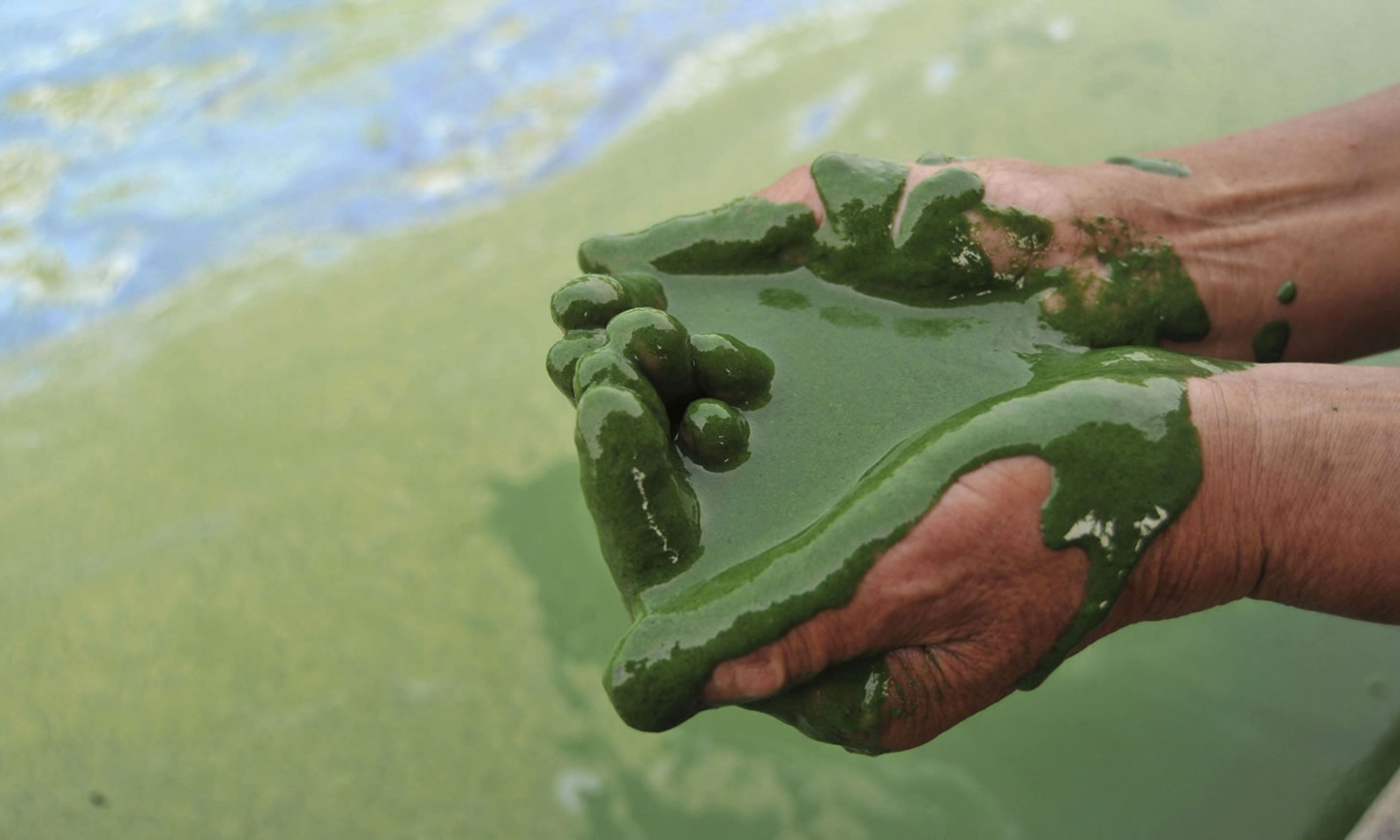
But a new contender has entered the ring. That contender is (drum roll) — pond scum. More precisely, algae, which can be turned into a renewable, environmentally friendly replacement for gasoline, diesel, aviation gas, and more. Algae fuels hold so much promise, in fact, that venture capital is pouring into their development even in the face of a massive recession — suggesting that, unlike other “green” fuels, it won’t need government subsidies to thrive. More than 150 companies around the world are putting money into algae-fuel research. And you know things are serious when Big Oil buys in: Shell, Chevron, ConocoPhillips, and ExxonMobil have jumped into the pond with big money, hoping to find another source of liquid fuel to complement oil in meeting expected world demand. ExxonMobil is in the game to the tune of $600 million, serious money even for them.
Here’s how it works. Algae use sunlight to convert carbon dioxide (the dominant man-made greenhouse gas) into sugar molecules, which they then convert into the myriad chemicals they need to live. They have high population-growth rates, and, most important, they’re oily: About half their mass is fat, which can be chemically converted into diesel fuel, gasoline, aviation fuel, etc.
Several things make algae especially interesting from a fuel perspective.
First, the National Renewable Energy Laboratory estimates that algae can produce 10,000 times more oil per acre than other biofuel crops, such as soybeans. That means we can produce a significant amount of liquid fuel in a relatively small area. The Carbon Trust estimates that algae biofuels could displace 12 percent of annual global jet-fuel consumption by 2030, if aggressively developed. Estimated prices for algae biolipids are only slightly higher than those for oil, at $70 to $100 per barrel. Since algae fuels are more akin to gasoline than to alcohols, there’s no need to change the existing infrastructure that transports liquid fuels to our many millions of vehicles, nor is there a need to change the vehicles themselves. A jet has already flown using algae fuel.
Second, algae don’t compete with food crops for land. Algae don’t need arable land, just flat land, where they’re grown in long, oval, racetrack-like ponds. Algae can also be grown in enclosed growth systems, which can be just about anywhere there is a combination of warmth, sunlight, and surplus carbon dioxide.
Third, unlike ethanol, algae don’t need to consume fresh water. They can grow on salty water, or even waste water, which they clean up as they grow. By contrast, according to some estimates it takes 140 gallons of fresh water to produce a gallon of corn ethanol.
Fourth, the stuff left over after you squeeze all the oil out of algae is a mixture of protein and sugars that can be used in many different products, including animal feed, bio-plastics, and pharmaceuticals, or you can just chuck it into a furnace and generate electricity from steam. We already use algae for all kinds of things, such as food, coloring agents, pharmaceutical production, and treating sewage.
Finally, there’s the greenhouse-gas connection. Algae fed on the carbon dioxide in regular air are carbon-neutral. They pull carbon dioxide out of the air when they grow, and it’s released back into the air when they’re used as fuel. Even better, if they’re fed on carbon dioxide from coal power plants or other combustion sources, and then used in place of oil-based fuel, they’re carbon-negative; that is, their substitution for other energy sources would reduce the total amount of greenhouse gases emitted.
Of course, there are plenty of challenges to be overcome. The best strains for given growing conditions have to be identified and optimized. Algae grown in open ponds are susceptible to weather, predation, and disease. If fresh water is used, evaporation becomes a significant problem, increasing water use. Algae grown in bio-reactors are more stable, but that technology is still considerably more expensive than open-pond systems. Harvesting and drying the algae prior to processing is energy-intensive, unless you’re in the desert, where the problem is again too much evaporation. Placing algae farms next to greenhouse emitters may be challenging, and the oil-extraction and chemical-conversion processes have to be made more efficient.
Will algae fuels let us have our Hummers and drive them too? Nobody knows yet, but with the private money pouring in from around the world, there’s certainly nourishment for the scum to grow on.












Comments