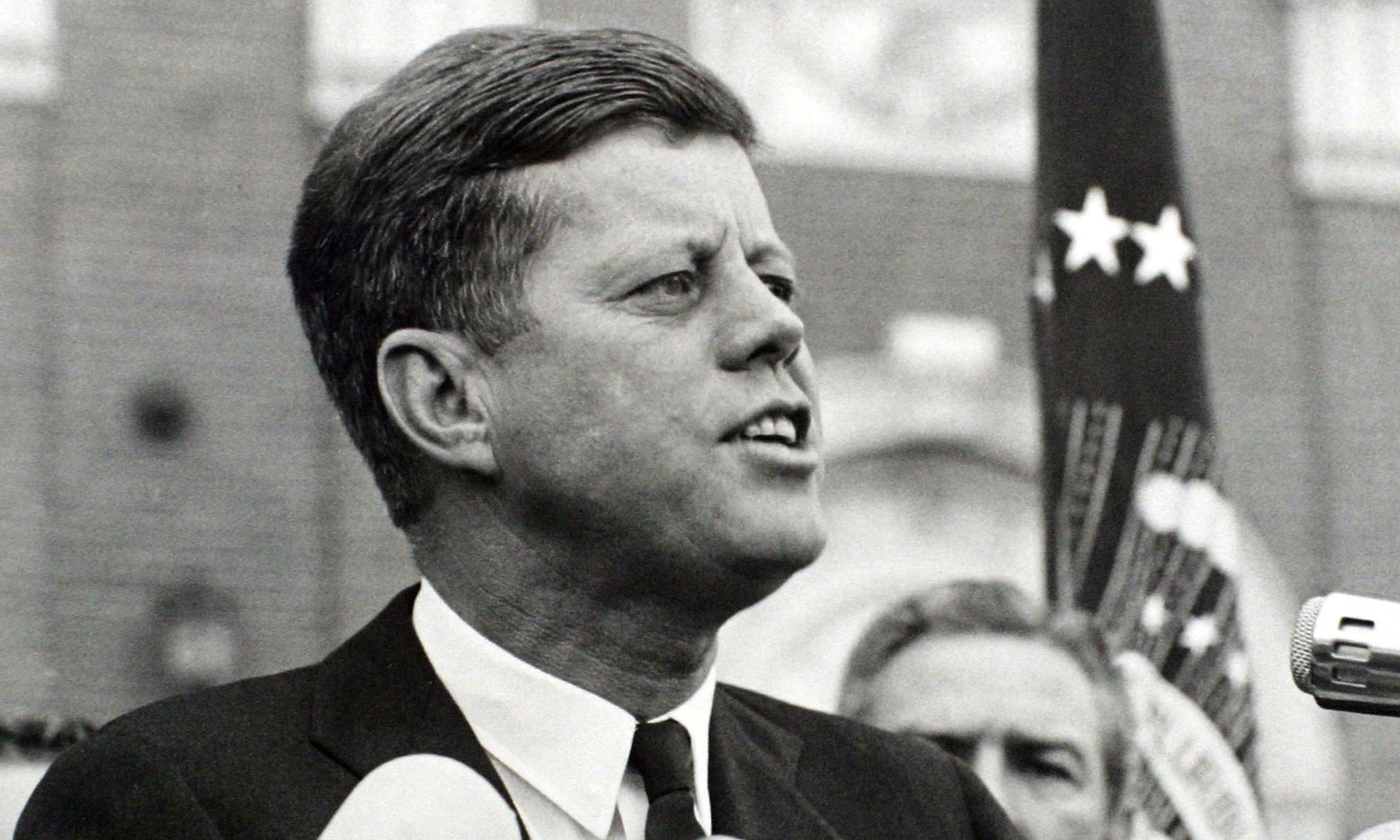
On Sunday, November 22, 1964, some 40,000 Americans — a crowd greater than the capacity at Boston’s Fenway Park — visited Arlington National Cemetery to pay their respects on the first anniversary of the assassination of John F. Kennedy. Stung by the numbingly cold air of that crisp, sunny day, the mourners paused, one by one, to gaze upon the “eternal flame” that flickered, and still burns today, at the gravesite of our 35th president.
That same month, Redbook magazine, its stark white cover adorned with a charcoal sketch of JFK, carried a special 14-page tribute. Therein liberal literary critic Diana Trilling asked whether Americans glued to their television sets a year earlier hadn’t been “indulging ourselves in our extreme of mourning . . . not from devotion to Kennedy himself but from the need to know the gratification of strong feeling . . . while again and again we rehearsed our emotions of devastation.” No, Trilling concluded; the outpouring of grief stemmed from a deep affinity with JFK himself, whom she described as “all romance . . . all romantic heroism.” While conceding that Kennedy was “a man of whom it was possible to guess that he could be ruthless,” Trilling nonetheless saw in the slain leader not just “a figure of political dominance and authority [but] also the fulfillment of our dream of what a human being can be”:











Comments