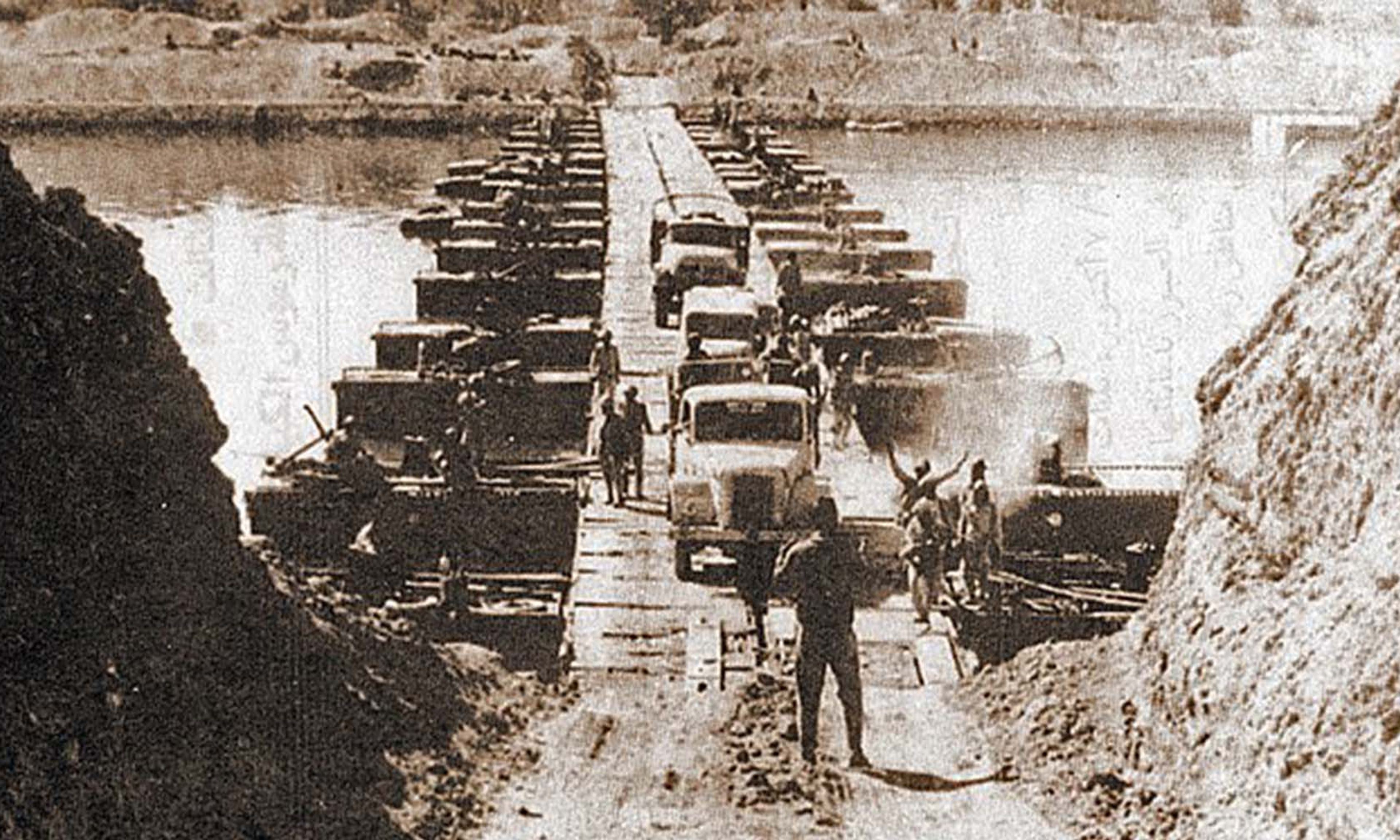
Israel’s dashing victory in the Six-Day War of 1967 left it in control of the Sinai Peninsula and the Palestinian territories. It also lured the Jewish state into a dangerously self-satisfied complacency. On September 26, 1973, the Jerusalem Post proclaimed in an editorial, “There was never a period in which our security situation seemed as good as now.” Not even a large build-up of Egyptian and Syrian forces could shake Israel out of its torpor. On October 5, Israeli intelligence rated the possibility of war as “lowest of the low.”
The next day, on Yom Kippur, Egypt and Syria attacked from the west and northeast. Israel was taken totally by surprise. Now well trained and superbly well armed with the latest Soviet weapons, the Egyptian army executed a brilliant crossing of the Suez Canal and quickly threw Israel’s front-line units into disarray, while the Syrians were soon mauling Israeli forces with wave after wave of tanks.











Comments