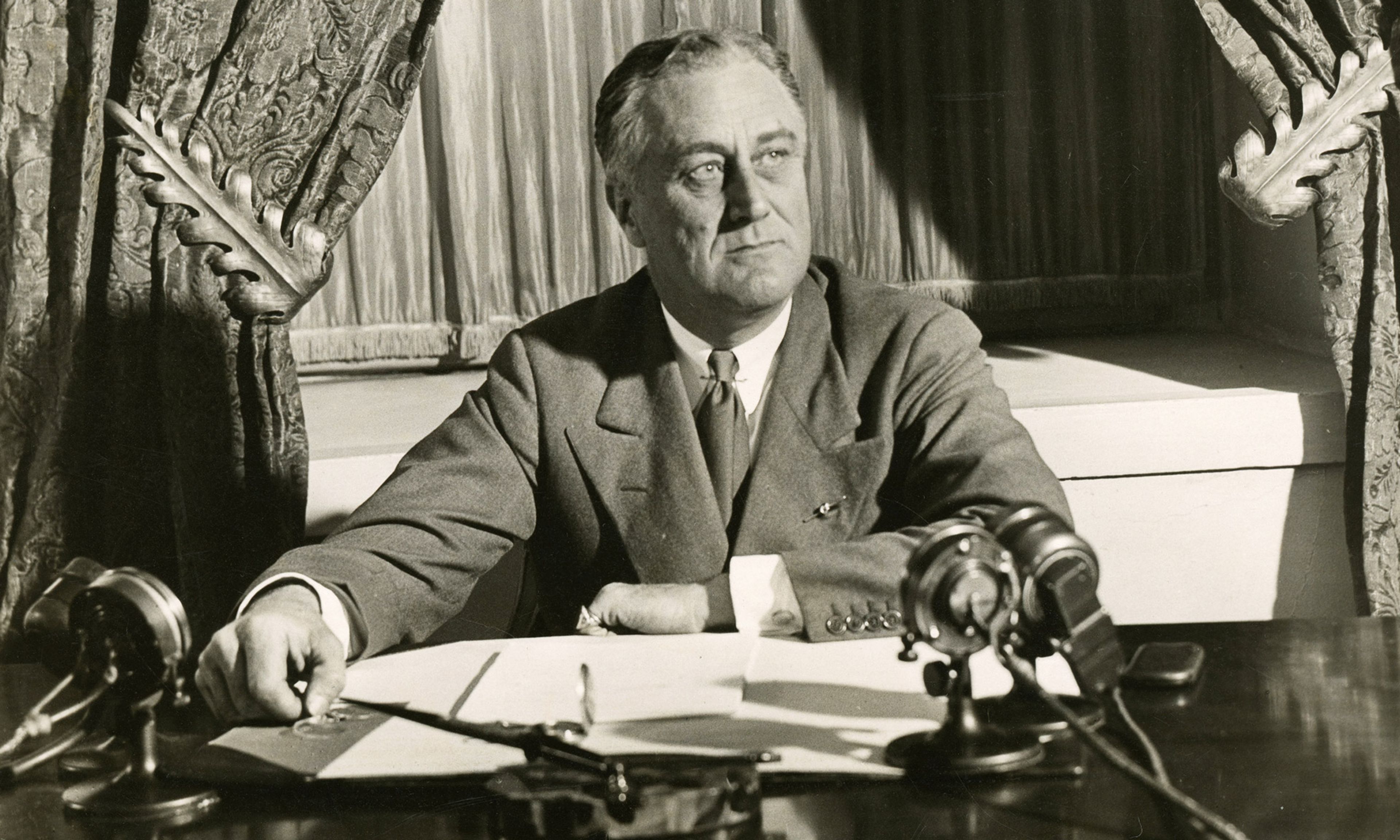
Jay Winik is a master of the annus magnus school of history, in which the past can best be fathomed and told by ferreting out individual seminal years. During certain annual spurts, historic decisions come thick and fast, leaving the world altered for decades (hence the common phrase “the year that changed history”). Winik’s April 1865 was a masterly account of how a few unforeseen events in the final month of the Civil War, none of them preordained (from the assassination of Abraham Lincoln to Robert E. Lee’s decision to surrender, disband his forces, and eschew guerrilla war), changed the trajectory of American history.
Winik believes a similar hinge of fate was the year 1944 — especially Franklin Delano Roosevelt’s wartime decision-making over those twelve critical months. The big-year genre of history, however, is a difficult one, precisely because all years have their moments and see critical change. It is hard to establish scholarly criteria that qualify some as landmark and others as more ordinary periods. Indeed, dozens of books with years in their titles — 1914, 1919, 1939, 1943, 1968 — seem to share the same premise.











Comments