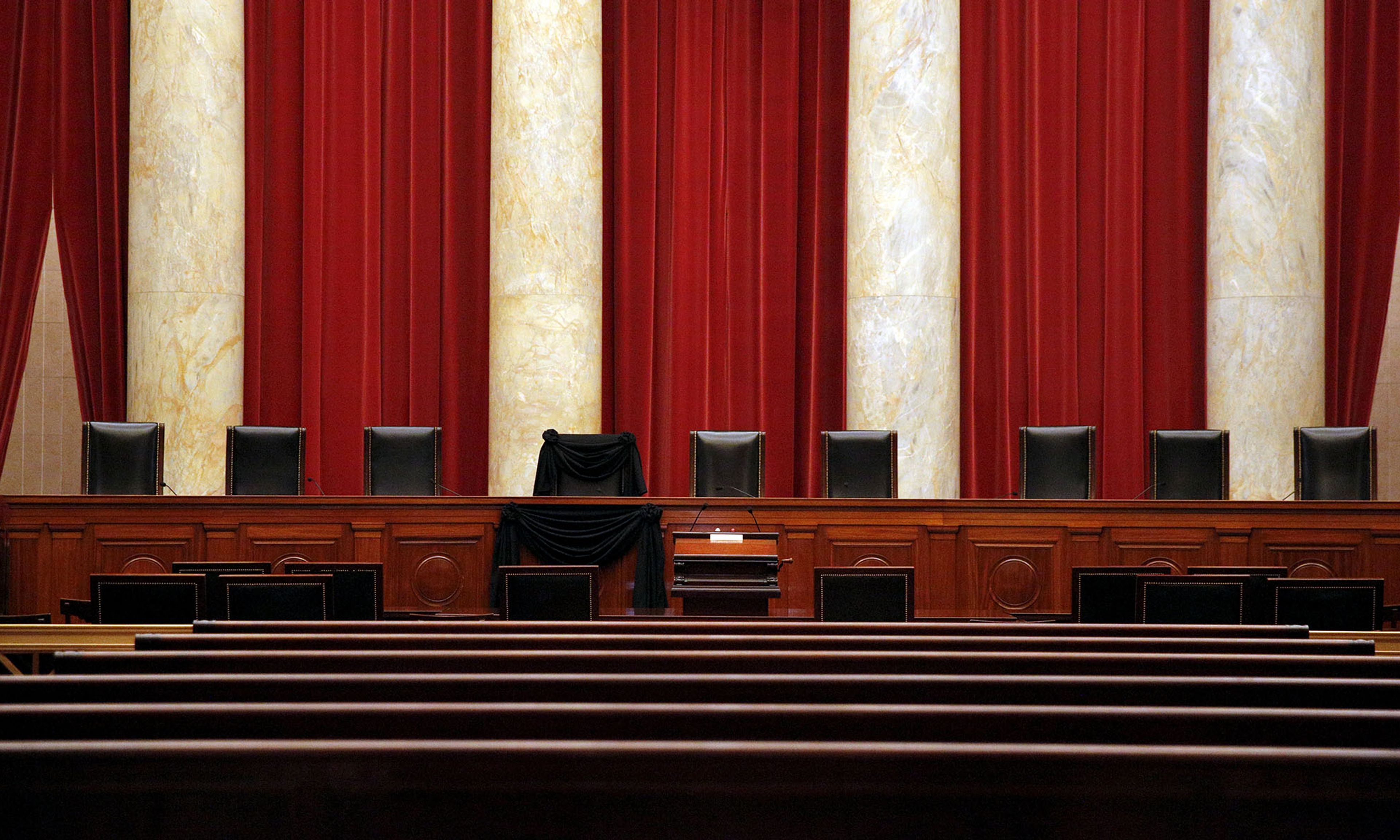
If you know a student who has recently started or returned to law school, you might want to give that aspiring lawyer a short volume of supplemental (and likely alternative) reading about our Constitution and legal tradition. Two distinguished former law clerks to Justice Antonin Scalia, federal circuit judge Jeff Sutton and Ed Whelan, president of the Ethics and Public Policy Center, have teamed up to edit and publish a collection of the late great justice’s classic legal opinions, lectures, and essays, The Essential Scalia: On the Constitution, the Courts, and the Rule of Law. It includes a foreword by Justice Elena Kagan and an introduction by Judge Sutton, and it provides the third and likely final installment in a series of collections of Scalia’s writings, following Scalia Speaks: Reflections on Law, Faith, and Life Well Lived (2017) and On Faith: Lessons from an American Believer (2019). The earlier books were collections of writings on topics of interest to a general audience; this new book will especially appeal to a readership of judges, lawyers, and law students.
The Essential Scalia offers a succinct overview of the justice’s jurisprudence in his own words. It starts with general principles about judging: that the rule of law should be a “law of rules” that constrains judges and produces predictable outcomes, and that the text of the Constitution and other written laws should be interpreted according to the fair meaning of the words when those laws were adopted. It then turns to Scalia’s writings about the Constitution, beginning appropriately with constitutional structure, which he described as being “everything.” That is, Scalia emphatically endorsed James Madison’s prediction that the structural guarantees of separated powers and federalism would do far more to protect our freedom than would a “parchment guarantee” of civil rights. The book then provides several terrific examples of how a judge in an independent judiciary should understand and safeguard many of our fundamental rights: the freedom of speech, religious liberty, the right to bear arms, equal protection and due process of law, economic liberty, and the protections afforded those accused of crimes. It ends with signature examples of Justice Scalia’s method of statutory interpretation and his views about administrative law — the two areas where he made his most influential contributions.
To be sure, The Essential Scalia presents his landmark, originalist opinions for the Court, illustrating the rigor of his methodology. The most famous, of course, is District of Columbia v. Heller, which held that the Second Amendment protects an individual right to bear arms. But perhaps the best is Crawford v. Washington, which upheld the Sixth Amendment right of an accused to confront any witnesses against him. Justice Scalia exhaustively reviewed the historical record to conclude that “the Framers would not have allowed admission of testimonial statements of a witness who did not appear at trial unless he was unavailable to testify, and the defendant had had a prior opportunity for cross-examination.” And in Kyllo v. United States, Scalia showed why he refused to call himself a “strict constructionist,” by ruling that the general language of the Fourth Amendment prohibiting unreasonable searches barred government agents from using the modern technology of thermal imaging to invade the privacy of an individual’s home.
As with the earlier collections, what makes this book so valuable and entertaining is the writer’s skill. Scalia’s rhetoric was so powerful because it was accessible and jargon-free. Consider an example from his dissenting opinion in a case about the arcane field of campaign-finance regulation, McConnell v. Federal Election Commission, in which he described the controversy this way: “Who could have imagined that the same Court which, within the past four years, has sternly disapproved of restrictions upon such inconsequential forms of expression as virtual child pornography, tobacco advertising, dissemination of illegally intercepted communications, and sexually explicit cable programming would smile with favor upon a law that cuts to the heart of what the First Amendment is meant to protect: the right to criticize the government.” Or consider his classic dissent from the decision in Morrison v. Olson, upholding the now-discarded law creating an independent counsel: “This wolf comes as a wolf,” he warned.
Regrettably, too many of Scalia’s best writings were dissenting opinions, but he once explained that he wrote them the way he did in the hope that they would someday be read widely and taken seriously by law students. Justice Scalia was playing the long game. And even if too few law professors will assign their students his best opinions as reading material, you can do your part by sharing with them this latest and perhaps most subversive collection. A few years ago, Justice Kagan famously said about the influence of her late colleague and friend, “We’re all textualists now.” Someday may a future justice say, “We’re all originalists now.”












Comments