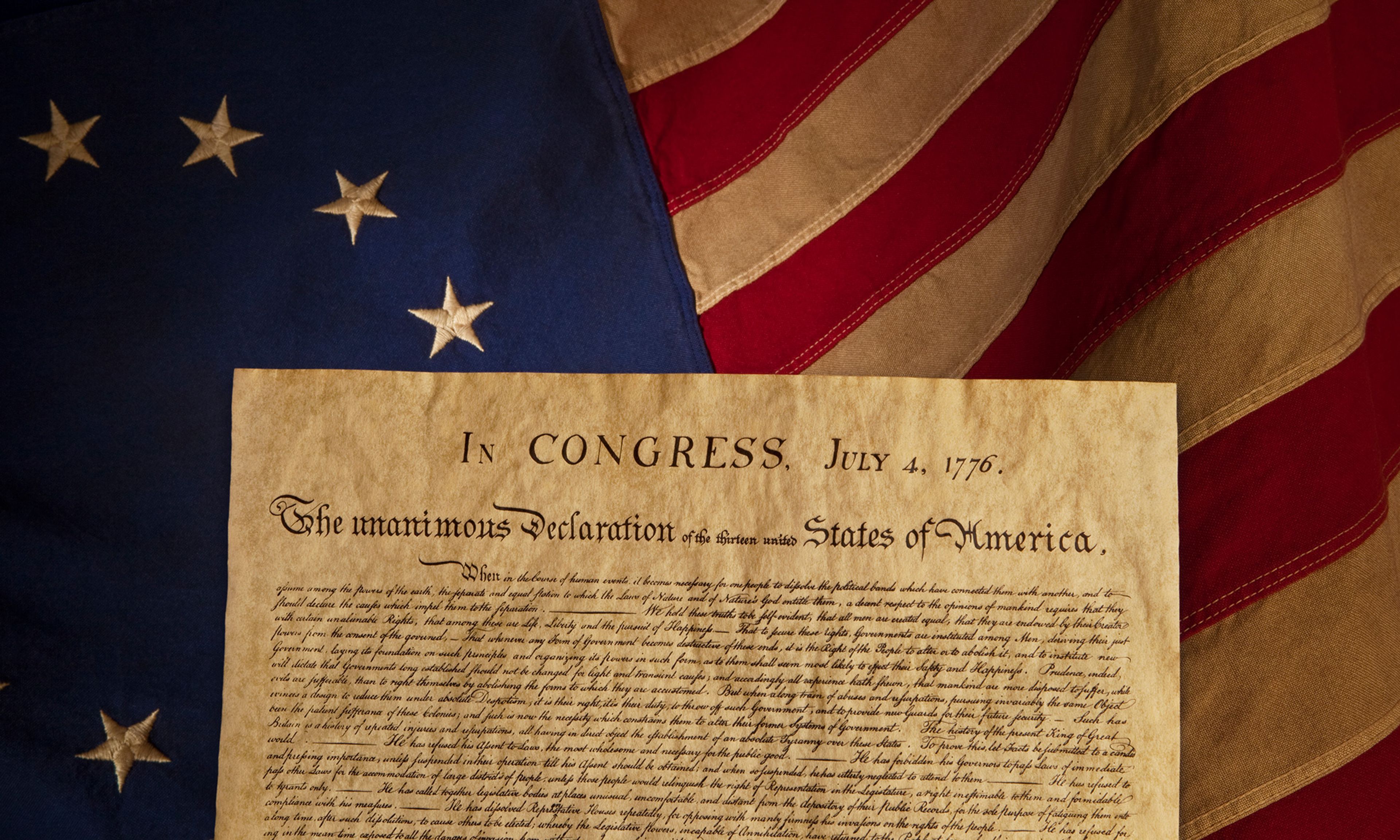
It has always been the fate of the Declaration of Independence to bounce back and forth between the political equivalents of foster homes and orphanages. This owes to its ambiguous status in American political life. It is generally, though not universally, revered. But it is usually contested. Both Mitt Romney and President Obama quoted the Declaration prominently during the 2012 campaign (and Obama returned to it in his second inaugural address), but for contrasting purposes. Its formal legal status is doubted. Although it appears at the beginning of the U.S. Statutes, it is seldom — except, notably, by Clarence Thomas — cited as a constitutional authority.
The ideological character of the Declaration is even more diffuse. Many liberals and many conservatives are not sure they like it. Conservatives, following Tocqueville, worry that the emphasis on equality has eaten up, or will eventually eat up, liberty. The appeal to abstract principles of right is the kind of thing that Edmund Burke (who sympathized with the American cause) wouldn’t approve. The ultimate insult from the right: It’s too French.










Comments