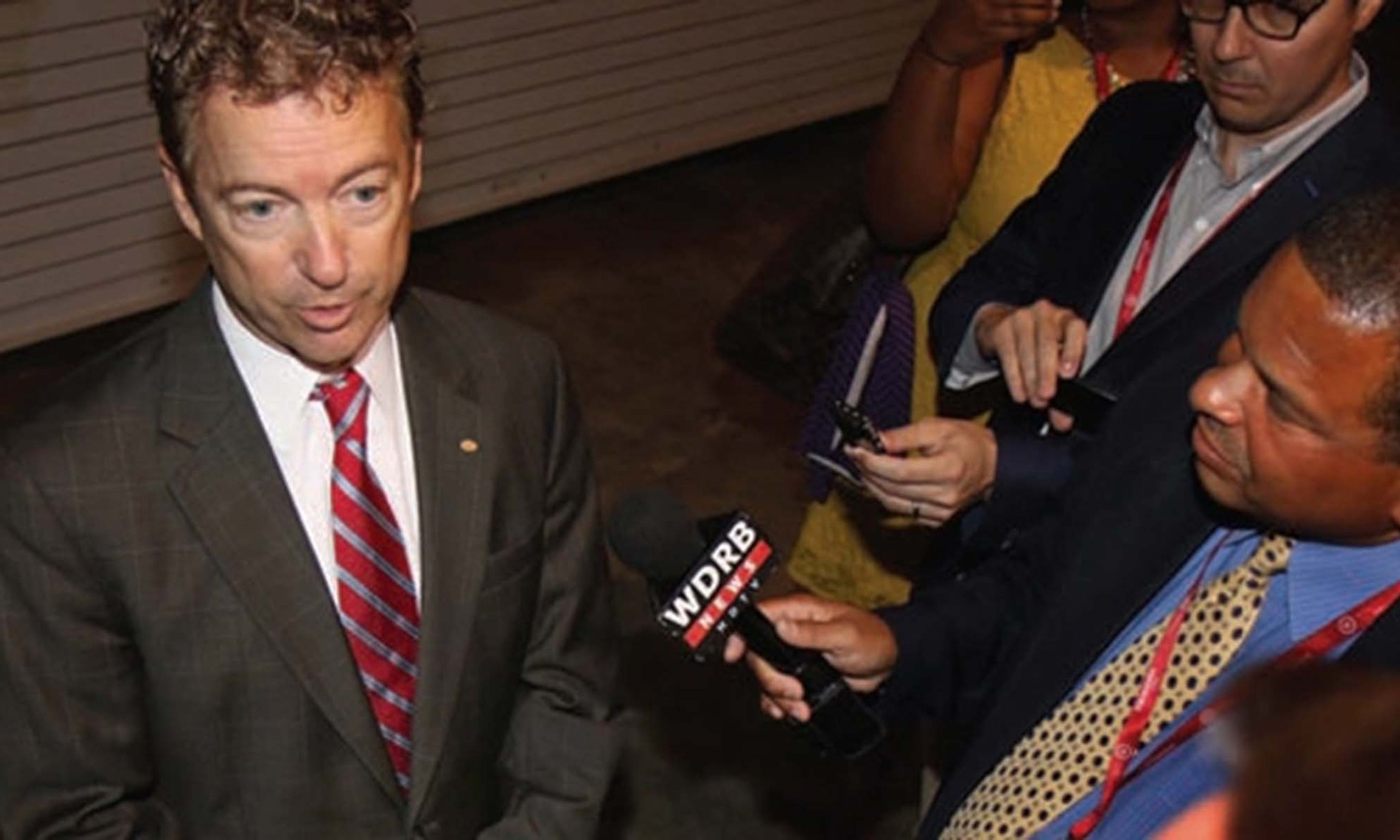
When Rand Paul first ran for the Senate in 2010, it was far from obvious that he’d become the GOP’s chief ambassador to African-American voters. Shortly after besting an establishment-backed candidate in Kentucky’s GOP Senate primary in May of that year, Paul famously discussed his views on the Civil Rights Act of 1964 in an appearance on MSNBC’s Rachel Maddow Show. Despite insisting that he opposed discrimination in any form and that he had no intention of revisiting civil-rights laws, Paul did allow that there was room for philosophical disagreement as to whether the owners of privately owned restaurants should be forced to desegregate, a comment that was interpreted by Paul’s detractors as an endorsement of segregation. Though these remarks didn’t prevent Paul from winning his Senate seat by a comfortable margin, the candidate was forced to spend much of the rest of his campaign scrambling to make up for his gaffe.
In the end, Paul managed to win 13 percent of the black vote, a respectable share for a Republican in the Obama era, when black support for GOP presidential candidates has fallen to new single-digit lows. Yet the whole imbroglio served as a reminder of why conservative candidates find it so difficult to make inroads among black and other minority voters.










Comments