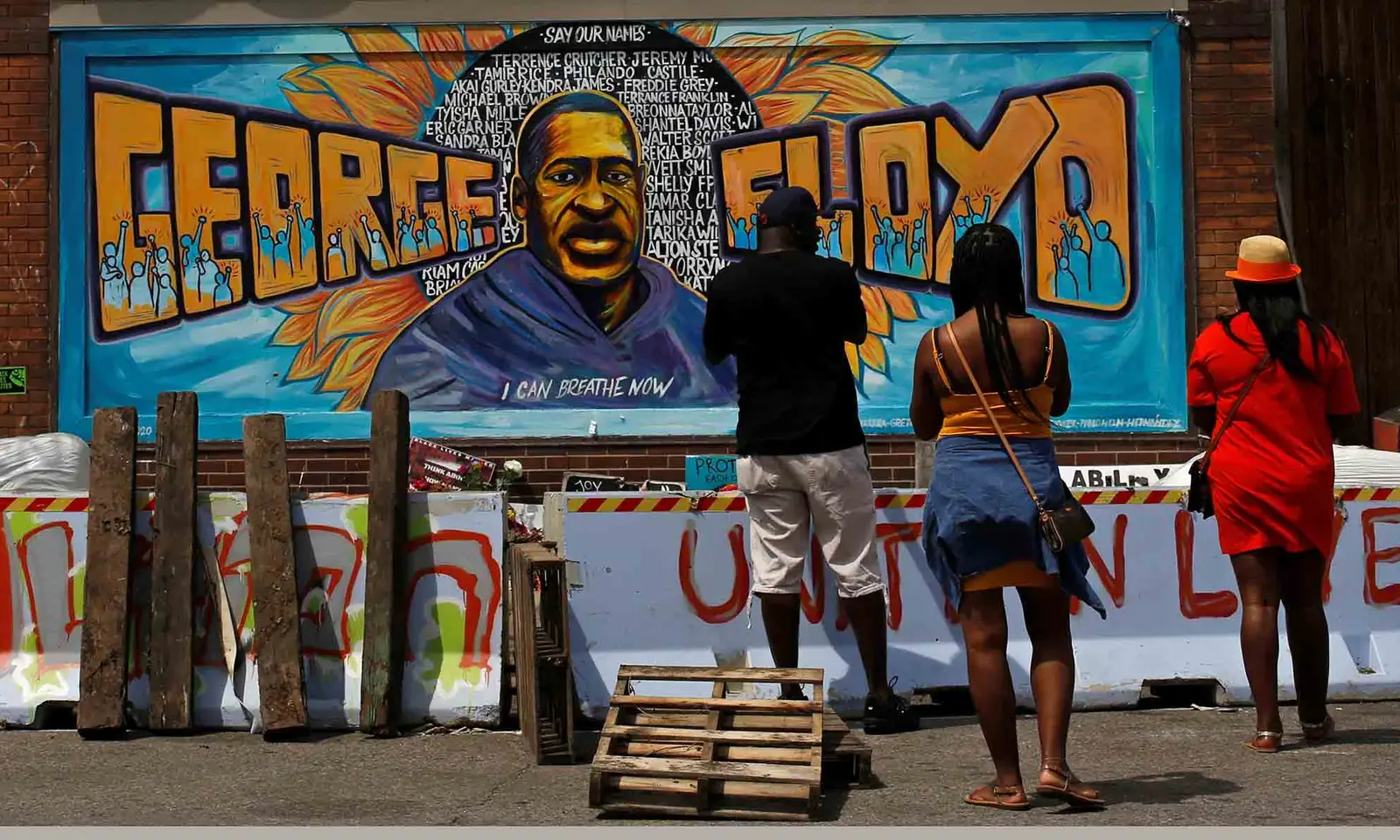
The owners of several businesses at the intersection where George Floyd was killed by a Minneapolis police officer in 2020 are suing the progressive city, claiming that they were financially harmed by the concrete barriers erected in the street for over a year and by an intentional draw-down of policing that led to a rise in lawlessness in the area.
The plaintiffs in the lawsuit include Cup Foods, now known as Unity Foods, the store where Floyd tried to pass a phony $20 bill before police were called, as well as businesses that operate within the store and an investment firm that operates out of the same address. The five businesses that are plaintiffs in the lawsuit are all owned by the same family, according to a Minnesota Public Radio report.
The plaintiffs are seeking more than $1.5 million in damages from the city. The 19-page lawsuit was filed in Hennepin County District Court in mid-November.
Days after Floyd was killed, the city “actively supported” the erection of cement barricades in the area, which remained up for over a year, according to the lawsuit. The barricades impeded access to the plaintiffs’ businesses, and deterred patrons and business partners.
The area is now known as George Floyd Square.
“The City also allowed crime to overtake the barricaded area, which led to severe physical and economic consequences for businesses within the area,” the lawsuit states.
“The Mayor, the City, the City Council, and the Minneapolis Police Department collectively agreed to severely limit police response in the barricaded area surrounding Plaintiffs’ businesses,” the lawsuit states, adding that police “only responded to the most serious calls and actively avoided the area.”
The lawsuit cites a series of crimes that occurred in and around the intersection in recent years, including the shootings and killings of a community leader a pregnant woman. The owner of a nearby autobody shop was attacked outside his business. One man was kidnapped by three suspects who took him to an abandoned gas station and assaulted him.
National Review previously reported on the spike in murders, rapes, assaults, and robberies in the area after Floyd’s killing. Residents described living in the area while it was held hostage by far-left racial justice activists as “frustrating” and “mentally draining.” Business owners said their customers were increasingly unwilling to risk their lives to come to the area.
“Criminals know the area lacks police protection, and they have now made the area so dangerous that it … has become known as the ‘No Go Zone,’” the lawsuit states.
The filing adds that Mayor Jacob Frey and other city leaders were aware of the damage the barriers caused to local businesses, pointing to a letter that city leaders sent to racial justice activists in November 2020. “The continued full closure of the street is harming local business, and some may not be able to survive much longer under current conditions,” the letter stated.
“We did everything possible to open the street safely amid very tenuous circumstances,” Ally Peters, a spokeswoman for Frey, said in a statement to the media. “When we finally did open the street, the City did so in a planned way where no one was hurt and the area remained safe for residents.”
The plaintiffs claim their businesses suffered at least $1.54 million in damages because of the city’s barricades. They also claim that the value of their properties dropped from about $2 million before Floyd’s murder to about $200,000 now.
The city’s treatment of the businesses is the opposite of racial justice, the lawsuit contends.
“Instead of helping Plaintiffs achieve racial equity and economic prosperity, the City consciously decided to allow concrete barriers to surround Cup Foods for over one year, which economically devastated a minority-owned business in a minority-dominant neighborhood,” the lawsuit states. “The City actively hindered Plaintiffs’ economic success and jeopardized the safety within and surrounding the Plaintiffs’ businesses.”





Comments
On “George Floyd Square Businesses Sue City of Minneapolis for Allowing Rampant Crime, Driving Away Customers”